

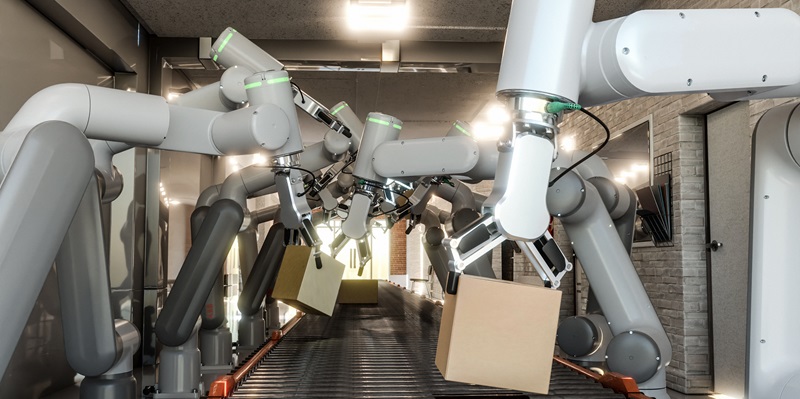
The landscape of industrial technology is on the precipice of a monumental shift with the advent of Industry 5.0, a revolutionary phase following the much-discussed Industry 4.0. Unlike its predecessor, which was characterized by the integration of cyber-physical systems and real-time machine communication, Industry 5.0 is set to redefine the industrial sector by emphasizing the harmony between human skills and advanced technologies. The integration of IoT, sensors, automation, and robotics with human capabilities promises to drive innovation, enhance productivity, and achieve sustainable goals.
The Market Potential of Industry 5.0
Projected Market Growth
The potential economic impact of Industry 5.0 cannot be overstated, with market estimations projecting substantial growth over the next decade. By 2032, the Industry 5.0 market is expected to reach an astonishing $658.4 billion, up from $131.13 billion in 2022. This remarkable growth trajectory, representing a compound annual growth rate (CAGR) of 18.0% from 2023 to 2032, underscores the significant investments and developments driving this technological evolution. Organizations are encouraged to leverage their existing investments in Industry 4.0 to transition smoothly into Industry 5.0, thereby maximizing the return on their technological investments.
In addition to financial investment, the recent pandemic has provided valuable lessons in adaptability and resilience, which are crucial for the successful integration of Industry 5.0. The emphasis on creating a workplace culture that values communication, empathy, trust, creativity, and innovation is especially pertinent. Such a culture not only fosters a human-centric environment but also equips organizations to navigate the complexities and challenges of Industry 5.0. By integrating these cultural paradigms, industries can create a nurturing environment that accelerates the adoption and effectiveness of next-gen technologies.
The Role of Renewable Energy
One of the most defining trends of Industry 5.0 is the shift from a sole focus on financial profitability and operational efficiency to a more comprehensive approach that includes societal and environmental impacts. Sustainability has become a cornerstone of this new industrial paradigm, with practices such as utilizing renewable energy sources like solar and wind power and embracing zero-waste manufacturing practices now being integrated into business operations. These sustainability practices not only reduce the carbon footprint but also pave the way for long-term cost savings and resource efficiency.
The role of Artificial Intelligence (AI) in optimizing various aspects of industrial operations cannot be overlooked. AI’s application in the supply chain is especially noteworthy, with the market expected to grow from $2.21 billion in 2018 to $13.48 billion by 2025. AI-driven solutions are instrumental in optimizing production timing, reducing unnecessary inventory, and enhancing overall supply chain resilience. These advancements ensure that industries can meet the dual objectives of economic efficiency and environmental sustainability, making AI a crucial enabler of the Industry 5.0 vision.
Creating Smart Ecosystems
Integration of IoT and AI
Industry 5.0 envisions the creation of smart ecosystems where machines, products, and people are interconnected in a seamless, symbiotic relationship. The integration of IoT and AI technologies facilitates real-time monitoring and predictive maintenance, significantly minimizing downtime, reducing costs, and boosting overall economic efficiency. This interconnectedness not only enhances operational performance but also extends the operational lifespan of industrial machinery and equipment, leading to long-term savings and efficiencies.
The adoption of smart ecosystems also opens up new dimensions in terms of predictive analytics and machine learning. By harnessing the power of big data, industries can gain valuable insights into operational patterns, anticipate potential disruptions, and take proactive measures to mitigate risks. This approach not only reduces unexpected breakdowns but also facilitates a more agile and responsive operational model, capable of adapting to market demands and external challenges swiftly and efficiently.
Harmonizing Industry and Environment
Another critical aspect of Industry 5.0 is the drive to create a harmonious relationship between industry and the environment. This includes advocating for durable and recyclable product designs that minimize environmental impact while unlocking new business opportunities. The principles of circularity—where products are designed for disassembly and reuse—are central to this vision. By adopting these sustainable practices, industries can not only address growing environmental concerns but also create a competitive edge in an increasingly eco-conscious market.
Moreover, the integration of advanced technologies such as IoT and AI supports the development of smart factories that are inherently more environmentally friendly. These smart factories can monitor and optimize energy consumption, reduce waste, and enhance resource efficiency, all while maintaining high levels of production quality and efficiency. This holistic approach to industrial operations redefines what it means to be successful in the industrial sector, placing equal emphasis on economic performance and environmental stewardship.
Human-Machine Collaboration
Workforce Training and Development
The seamless collaboration between humans and machines is a hallmark of Industry 5.0, pushing the boundaries of productivity and innovation. To realize the full potential of this new industrial era, it is imperative to invest in workforce training and development. Employees need to be equipped with the necessary skills to operate and collaborate with advanced technologies, ensuring that human-robot synergy is optimally realized. This investment in human capital not only enhances individual capabilities but also drives organizational growth and innovation.
Furthermore, fostering a culture of lifelong learning and continuous improvement is essential in this rapidly evolving landscape. By promoting an environment where employees are encouraged to upskill and reskill, organizations can ensure they remain competitive and adaptable. This proactive approach to workforce development helps bridge the gap between current skill sets and the demands of future technologies, thereby facilitating a smoother transition to Industry 5.0.
Principles of Circularity and Sustainability
The industrial technology landscape is on the brink of a monumental shift with the emergence of Industry 5.0, a revolutionary phase following the much-discussed Industry 4.0. While Industry 4.0 was defined by the integration of cyber-physical systems and the real-time communication between machines, Industry 5.0 aims to take this a step further by emphasizing the synergy between human skills and advanced technologies. The collaboration of human creativity and decision-making with the Internet of Things (IoT), sensors, automation, and robotics is poised to drive significant innovation. This new phase is not just about enhancing productivity but also about achieving sustainable industrial goals, ensuring that technology serves humanity’s broader interests. It represents a holistic approach, where human and machine coexist in a balanced industrial ecosystem, leveraging each other’s strengths. This harmony is expected to open new avenues for problem-solving and efficiency, pushing the boundaries of what is possible in manufacturing and other industrial sectors.