

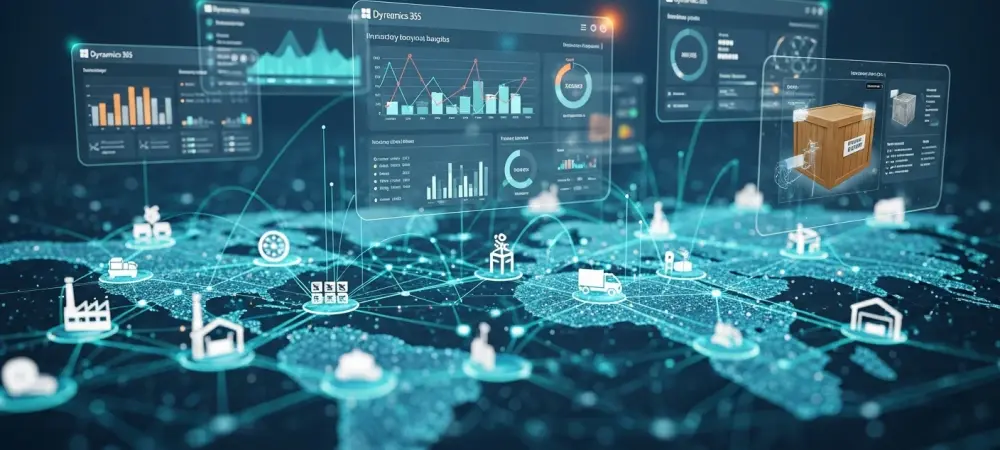
The rapid convergence of artificial intelligence and enterprise resource planning has fundamentally altered how global organizations perceive their operational infrastructure as they navigate the complexities of 2026. No longer viewed as a passive back-office repository for historical data, the modern ERP environment has matured into an active, intelligent, and highly connected strategic platform that dictates the pace of global commerce. For businesses currently grappling with market volatility, persistent labor shortages, and increasingly unpredictable consumer behavior, Microsoft Dynamics 365 Finance & Supply Chain Management has emerged as the essential foundation for building operational resilience. This shift represents a broader movement toward an era where software does more than simply track transactions; it serves as a co-pilot that participates in the critical decision-making process. As organizations integrate these advanced capabilities, the boundary between administrative record-keeping and real-time strategic execution continues to blur, creating a more responsive industrial landscape.
The Strategic Reorientation of ERP Systems
Shifting from Administrative Tools to Strategic Hubs
By 2026, the consensus among industry leaders is that ERP software functions as the central nervous system for the manufacturing, retail, and distribution sectors rather than a peripheral tool for accounting. Microsoft Dynamics 365 leads this transformation by providing a unified cloud-based environment that effectively dissolves the traditional barriers between disparate departments like finance, human resources, and commerce. This unified data architecture ensures that every stakeholder across the enterprise is working from a single version of the truth, which is critical for maintaining consistency in high-stakes environments. The move toward a “composable” operating model has allowed companies to remain agile, selecting and integrating specific functionalities that align with their unique operational requirements. This flexibility is powered by the broader Microsoft technology stack, enabling a seamless flow of information that was previously trapped in fragmented legacy systems or disconnected spreadsheets.
Furthermore, the integration of low-code extensibility through the Power Platform has democratized software customization, allowing organizations to adapt their ERP environment without the prohibitive costs of heavy custom development. In the current 2026 landscape, businesses are utilizing these tools to build tailored applications that address specific logistical challenges or regional compliance needs in real-time. This capability fosters a culture of continuous improvement, where internal teams can iterate on their processes without waiting for lengthy IT cycles. By leveraging Azure and Copilot, companies are now able to augment their core ERP functions with advanced intelligence that provides immediate insights into operational performance. This strategic shift away from static software toward a dynamic, evolving ecosystem ensures that the enterprise remains resilient in the face of sudden market shifts. Consequently, the role of the ERP has been elevated from a cost center to a primary driver of competitive advantage and long-term business growth.
The Rise of Agentic ERP and Autonomous Operations
Perhaps the most transformative development currently observed in 2026 is the emergence and widespread adoption of “Agentic ERP,” a concept that represents a significant leap beyond traditional automation. Unlike standard automated workflows that follow rigid, pre-defined rules, Agentic ERP involves the deployment of intelligent agents capable of executing complex tasks with a high degree of autonomy and situational awareness. These agents are designed to handle intricate functions such as reconciling multi-currency financial accounts, managing nuanced supplier communications, and optimizing internal warehouse movements without requiring constant human intervention. For supply chain leaders, the immediate value of these autonomous agents lies in their ability to process massive volumes of data and execute actions with a level of precision and speed that exceeds human capability. This allows the system to operate as a self-healing entity that can address minor disruptions before they escalate into significant operational crises.
The deployment of these intelligent agents has triggered a fundamental shift in the responsibilities of the human workforce, allowing personnel to pivot away from repetitive, high-volume administrative tasks. Instead of spending hours on manual data entry or routine status checks, employees are now focusing their efforts on managing high-level exceptions, making strategic decisions, and addressing complex issues that require human intuition and creative problem-solving. This evolution has turned the ERP from a passive repository of information into an active participant in supply chain performance, where the software suggests optimizations and even takes corrective actions based on real-time feedback. As these agents become more sophisticated through continuous machine learning, they are increasingly capable of understanding the context behind data, which leads to more accurate outcomes in procurement and inventory management. This autonomous approach not only improves operational efficiency but also enhances the overall job satisfaction of employees who are now engaged in more meaningful work.
Data-Driven Intelligence and Predictive Power
Transforming Forecasting with Advanced Analytics
The integration of advanced AI and predictive analytics has completely overhauled the methodology by which organizations approach forecasting and demand planning. By utilizing sophisticated tools such as Azure OpenAI Service and Azure Machine Learning, Dynamics 365 allows businesses to synthesize internal operational data with a vast array of external market indicators and economic signals. This trend reflects a definitive shift from historical, backward-looking planning models to a proactive, forward-looking strategy that anticipates market needs before they manifest. In 2026, the ability to interpret subtle patterns and identify potential disruptions in the global supply chain has become a primary competitive differentiator. Companies that can predict a surge in demand or a delay in raw material shipments are better positioned to adjust their logistics strategies accordingly. This predictive power ensures that businesses are no longer reacting to the past but are instead actively shaping their future based on data-driven insights.
Furthermore, the implementation of these intelligent forecasting tools has led to a much more responsive supply planning environment where inventory levels and production schedules are adjusted in real-time. Traditional forecasting models, which often relied on static monthly or quarterly projections, are no longer sufficient for navigating the erratic consumer behaviors and rapid market shifts seen in 2026. Today, Dynamics 365 provides the granular visibility needed to understand localized demand fluctuations, allowing for more precise stock positioning across global distribution networks. This intelligence is essential for minimizing excess inventory while simultaneously preventing stockouts that can damage brand reputation and customer loyalty. By bridging the gap between data science and operational execution, organizations are achieving a level of agility that allows them to thrive despite global economic volatility. This proactive stance on planning not only reduces waste but also optimizes the entire production lifecycle, from raw material procurement to final mile delivery.
Unified Asset Management and the Role of IoT
Historically, maintenance, repair, and operations data were often siloed away from the primary ERP environment, leading to significant inefficiencies in inventory management and production scheduling. However, the current landscape in 2026 shows a clear and necessary move toward integrated asset management, where maintenance data converges with warehouse management and purchasing workflows. Dynamics 365 facilitates this convergence by acting as a unified platform that monitors the health and performance of capital assets across the entire enterprise. When this system is coupled with Internet of Things (IoT) sensors and real-time monitoring devices, it enables a transition from reactive repairs to predictive maintenance strategies. This means that equipment is serviced based on its actual condition and usage patterns rather than arbitrary calendar dates. This data-driven approach to asset management ensures that production remains steady and that maintenance activities do not clash with high-priority manufacturing schedules.
The practical application of IoT integration within the ERP framework allows for a level of operational transparency that was previously unattainable. In 2026, machine-generated data provides real-time awareness of equipment status, energy consumption, and output quality, allowing managers to identify bottlenecks or performance degradation instantly. By fixing equipment before it fails, companies are significantly reducing unplanned downtime, extending the lifespan of expensive machinery, and improving overall safety on the factory floor. This connectivity ensures that the maintenance department is perfectly synchronized with the broader supply chain flow, as parts are ordered automatically and labor is scheduled during optimal windows. The result is a more reliable and efficient production environment where capital assets are utilized to their maximum potential. This unified approach to asset management not only protects the company’s bottom line but also ensures that the supply chain can meet its commitments to customers with a high degree of consistency and reliability.
Enhancing Operational Core and Global Connectivity
Modernizing the Core Through Automation
While high-tech artificial intelligence and autonomous agents often capture the industry’s attention, the modernization of core ERP functions remains a critical priority for maintaining operational excellence in 2026. Microsoft has focused heavily on reimagining traditional functions like planning, purchasing, and warehousing to ensure they are less manual, more consistent, and less prone to human error. Even the most advanced AI requires a solid foundation of clean, connected data and standardized processes to be effective in a high-speed environment. By automating the routine workflows associated with order processing, invoice matching, and inventory replenishment, Dynamics 365 reduces operational friction and allows for a faster flow of goods through the supply chain. This modernization ensures that the “boring” but essential parts of the business are running at peak performance, providing a stable platform for more advanced digital initiatives.
Moreover, the unification of data across cross-functional teams enables managers to gain a comprehensive, 360-degree view of the business, ensuring that financial coordination and operational execution are perfectly aligned. In 2026, the disconnect between what the warehouse sees and what the finance department reports has been largely eliminated through real-time data synchronization. This level of visibility is crucial for making informed decisions regarding capital allocation, resource management, and strategic expansion. By simplifying the user experience and reducing the complexity of core tasks, Dynamics 365 has made ERP systems more accessible to a wider range of employees, fostering better collaboration across the organization. This focus on the “operational core” ensures that the business is resilient from the ground up, with robust processes that can withstand the pressures of a demanding global market. Modernizing these essential functions is not just about efficiency; it is about creating a scalable architecture that can support the rapid growth and evolution of the modern enterprise.
Connectivity as a Universal Theme
A defining theme for the supply chain landscape in 2026 is the absolute necessity of total connectivity, which Dynamics 365 provides by serving as a central hub for people, systems, and equipment. This connectivity extends far beyond internal software integrations with tools like Microsoft Teams or Power BI; it encompasses the entire ecosystem of external relationships with suppliers, logistics providers, and end customers. By establishing a seamless flow of information through self-service portals and standardized data exchange protocols, organizations are creating a more transparent and efficient supply chain environment. Suppliers can now access real-time demand signals to better align their production with the buyer’s needs, while customers receive accurate, up-to-the-minute updates on their order status. This level of transparency builds trust and allows all parties to respond more effectively to changes or disruptions as they occur in the global network.
In modern manufacturing and distribution centers, machine-generated data provides real-time awareness of every physical movement, which is then reflected immediately in the digital ERP environment. This physical-to-digital connectivity is what allows a modern supply chain to remain agile, as it provides the data necessary to optimize routes, reallocate inventory, and manage warehouse labor more effectively. Furthermore, the move toward a fully connected ecosystem allows for the implementation of advanced track-and-trace capabilities, which are essential for meeting the increasingly strict regulatory requirements regarding product provenance and safety. The ability to flow information seamlessly through these various channels—from a sensor on a forklift to a financial report in the boardroom—is what distinguishes successful organizations in the mid-to-late 2020s. This universal connectivity ensures that the supply chain is no longer a series of isolated steps but a continuous, synchronized flow of information and physical goods that can adapt instantly to the needs of the market.
Building End-to-End Resilience
The ultimate objective of these technological advancements within the Dynamics 365 ecosystem is to achieve end-to-end resilience, where the ability to adapt is considered just as important as traditional metrics of efficiency. Efficiency alone is no longer a sufficient measure of success in 2026; instead, the ability to maintain operations and service levels under extreme pressure or during unforeseen global events is the true hallmark of a mature supply chain. Dynamics 365 supports this resilience by combining intelligence, connectivity, and execution into a single, cohesive environment that can simulate various “what-if” scenarios. By utilizing digital twins and advanced simulation tools, organizations can model the impact of potential disruptions—such as a port closure or a raw material shortage—and develop contingency plans before those events actually occur. This proactive approach to risk management allows businesses to remain stable and profitable even when faced with significant external challenges.
As organizations look toward the coming years, the roadmap for Dynamics 365 includes even more sophisticated developments, such as enhanced sustainability reporting tools and deeper integration with circular economy principles. These innovations are designed to help companies meet evolving regulatory requirements and consumer expectations regarding environmental responsibility without sacrificing operational performance. The integration of ESG data directly into the supply chain management workflow allows for more transparent reporting and more informed decision-making regarding carbon footprints and resource usage. This focus on long-term sustainability is a key component of resilience, as it ensures that the business can continue to operate in a world where environmental impact is a primary consideration for investors and customers alike. By combining these forward-looking tools with a robust operational foundation, businesses are transforming their supply chains into resilient, data-driven engines of growth that are capable of navigating the complexities of a rapidly changing global landscape.
Actionable Priorities for the Digital Supply Chain
To remain competitive in this high-speed environment, supply chain leaders had to prioritize several key strategic initiatives that moved beyond traditional ERP implementations. The successful organizations of today are those that have embraced cloud-native AI capabilities and invested heavily in the data literacy of their workforce to ensure that insights are actually translated into action. A primary takeaway from the current era is that without a clean, structured, and reliable data foundation, the benefits of agentic ERP and predictive analytics cannot be fully realized. Companies focused on auditing their data quality and breaking down internal silos to ensure that information flowed freely between departments. This data-first mindset allowed for the successful deployment of autonomous agents and advanced forecasting tools that have now become the standard for operational excellence across various industries worldwide.
Furthermore, expanding IoT connectivity across the physical supply chain proved essential for gaining the real-time visibility required to manage modern logistics and production efficiently. Business leaders who integrated sensor data directly into their Dynamics 365 environment were able to achieve a level of transparency that significantly reduced waste and improved asset utilization. Moving forward, organizations should continue to refine their digital twin models and explore how emerging technologies can further enhance their sustainability and resilience efforts. The transition toward an intelligent, autonomous, and connected ERP model was inevitable for those seeking to thrive in the complexities of the mid-to-late 2020s. By leveraging the comprehensive Microsoft ecosystem, businesses successfully transformed their supply chains into resilient operations that are now better equipped to handle the demands of a constantly changing global market through the intelligent orchestration of resources.