

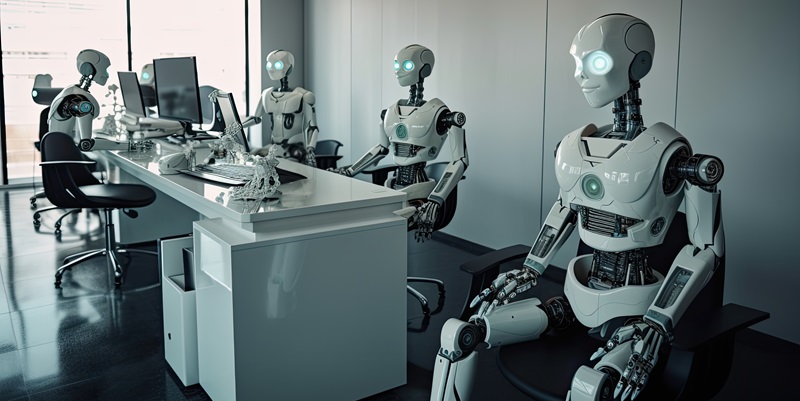
The rapid evolution of artificial intelligence (AI) is transforming the workplace at a pace few could have predicted, with technologies once considered science fiction now seamlessly integrated into daily operations. As we look forward to 2030, emerging AI innovations promise to fundamentally alter how businesses operate and how employees perform their roles.
Integration of AI Agents
By the year 2030, AI agents are expected to serve as collaborative team members, handling routine tasks and providing real-time insights. Advances in language models, such as Google’s Gemini and OpenAI’s latest "o1" model, will drive this transformation, making AI indispensable in the workplace. These agents will not only automate mundane tasks but also assist in project management and data analysis, enabling human workers to focus on more strategic endeavors.
Emergence of Digital Humans
One of the most exciting developments is the creation of digital humans—AI-powered avatars that interact with customers as though they were real people. These lifelike digital beings will fundamentally change roles in customer service and sales by making interactions more intuitive and less transactional. The ability of digital humans to understand and respond to human emotions will set a new standard for customer engagement, aiming to create more personalized and satisfactory experiences.
AI-Driven Conversational Interfaces
Fully human-sounding, interactive speech technology is expected to become the norm, significantly enhancing customer service and organizational meetings. These AI-driven conversational interfaces will be capable of understanding context and nuances in human conversations. For instance, Google’s NotebookLM can turn written documents into audio discussions, making interactions feel more natural and engaging. This level of AI integration will streamline communication within organizations, improving both internal and external interactions.
AI-Enhanced Decision-Making
Executives and managers will increasingly rely on AI for real-time insights and strategic advice by 2030. AI tools will assist with leadership meetings by offering suggestions, running simulations, and providing data-driven insights that inform decision-making. The ability to quickly generate multiple scenarios and predict outcomes will allow leaders to make more informed and timely decisions, ultimately guiding their organizations more effectively.
Innovation and Research
AI will play a pivotal role in research and innovation, particularly in testing new products and strategies through simulations and predictive modeling. By utilizing AI-driven insights, companies can accelerate brainstorming and interdisciplinary collaboration. This will not only speed up the development of new products but also open up new avenues for innovation that were previously unimaginable.
Changing Job Roles and Skills
As routine data-heavy tasks become increasingly automated, the nature of jobs will shift towards oversight, creativity, and other human-centered skills. New roles, such as AI trainers and ethics officers, will emerge, highlighting the need for continuous reskilling. Workers who embrace this shift and develop new skills will thrive, while those resistant to change may find themselves at a disadvantage.
The Importance of AI Governance
Artificial intelligence (AI) is revolutionizing the workplace, advancing at a rate few imagined possible just a few years ago. Technologies that were once found only in science fiction are now seamlessly woven into our everyday work processes. These AI systems are not merely assisting; they are reshaping the way businesses operate and employees perform their jobs. From automating repetitive tasks to providing data-driven insights that lead to better decision-making, AI is an integral part of modern-day business strategy.
Looking ahead to 2030, the impact of AI will only intensify. Emerging AI innovations promise to fundamentally alter the dynamics of the workplace. Automation will extend beyond routine functions to encompass complex problem-solving and creative tasks. Intelligent algorithms are expected to handle activities that require a high degree of cognitive capability, freeing employees to focus on higher-value tasks and strategic thinking. This shift will not only enhance productivity but also create new roles and opportunities, requiring a workforce adept in hybrid human-machine collaboration.
In essence, the future workplace will be a blend of human ingenuity and machine intelligence, where AI acts as a key enabler of efficiency and innovation. Businesses that adapt to this evolving landscape will not only survive but thrive, leveraging AI to gain a competitive edge and foster a more dynamic work environment.