

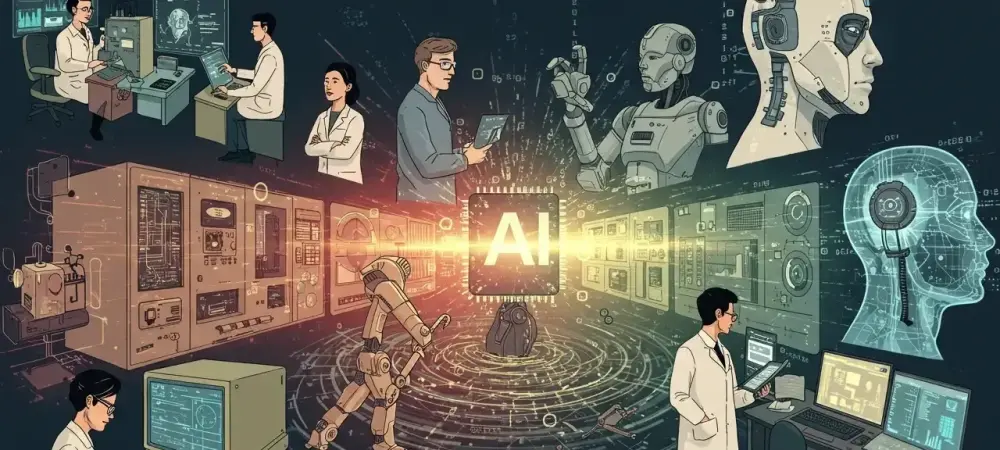
In this insightful interview, we delve into the thoughts of Dominic Jainy, an IT professional with vast experience in AI, machine learning, and blockchain. With six major technological changes shaping his career, Dominic explores the implications of the Seventh Wave of tech change—artificial intelligence. He shares his distinctive views on how AI sets itself apart from previous tech revolutions, the historical responses of legacy companies to new waves, and strategic insights influenced by “The Innovator’s Dilemma.” Dominic also discusses the role of AI in transforming enterprise software, hardware, tech services, and telecommunications sectors. Furthermore, he gives a detailed analysis of how AI impacts the Big Five tech companies, alongside the challenges and opportunities presented by the current antitrust environment.
Can you summarize the six major tech changes that have defined your career and explain how each wave impacted legacy companies?
Throughout my career, I’ve witnessed six transformative tech waves: minicomputers, PCs, the internet, social media, mobile technology, and the cloud. Each revolution toppled certain legacy companies that failed to adapt. For instance, minicomputers overtook mainframes, and PCs then replaced minicomputers. The internet wave buried many old-school IT companies, while social media reshaped communication and advertising landscapes. As mobile tech surged, it marginalized existing platforms, and cloud computing forced established software vendors to rethink their delivery and business models. The rapid pace of each wave emphasizes the Darwinian “adapt or die” philosophy in tech.
What makes AI the Seventh Wave of major tech change, and how does it differ from the previous six revolutions?
AI stands out as the Seventh Wave because it’s not just another technology; it’s transformative in terms of creating intelligent, adaptive systems. Unlike past innovations that focused primarily on hardware or connectivity, AI offers dynamic learning capacities and the ability to handle complex problem-solving tasks. This shift isn’t just technological but also behavioral, redefining how we interact with software, making it more intuitive and engagement-focused.
How did legacy tech companies historically respond to new technological waves, and what lessons can be learned from their responses?
Legacy companies typically hesitated, clinging to obsolete models, which often led to their downfall. Companies like Wang Laboratories and Digital Equipment tried to pivot too late. This pattern teaches us the importance of foresight and flexibility. Those who proactively embraced change, like IBM with the move to services, managed to survive and even thrive. The ability to reassess and realign business practices promptly in response to market demands is crucial.
How has Clay Christensen’s “The Innovator’s Dilemma” influenced the strategies of new tech companies when faced with paradigm changes?
Christensen’s book highlighted the trap of protectionist strategies in the face of innovation. New companies learned to avoid getting stuck in outdated models by embracing disruptive technologies themselves. They’ve understood the power of deploying innovative business models, staying agile, and sometimes even cannibalizing their own products to stay ahead, as opposed to merely defending existing fortresses until they become obsolete.
What are the four legacy defensive strategies used by tech companies to manage paradigm shifts, and how effective are they?
The strategies include: acquiring disruptors, blocking new entrants with regulations or partnerships, pretending to lead in new tech, and linking older products with new features. Their effectiveness varies. Buying disruptors can bring fresh talent and tech, like Facebook did with Instagram. Blocking sometimes delays competition, but it’s a temporary fix. Pretending often backfires, while linking can retain customer base if done genuinely. These maneuvers work better than outright denial, but none offer a bulletproof guarantee for long-term success.
How will AI influence the enterprise software business, considering the current challenges facing this sector?
AI is set to revolutionize enterprise software by offering more agile, adaptable systems. With AI, software could evolve continuously without hefty customization costs. Cheap code will challenge low-code platforms, while better functionality promises systems that adapt automatically to business changes. However, resistance may come from those invested in legacy systems. Success hinges on balancing innovation with integration to meet business agility demands.
How do you foresee the dynamics between CIOs, business leaders, and development staffs evolving as AI becomes more prevalent in enterprise software?
The dynamics will shift towards collaboration and education. As business leaders are drawn to AI’s adaptability, CIOs and developers must align on new skill sets and strategies. This interplay will require a shared vision to balance legacy system constraints with AI advancements. The push for AI adoption will likely drive upskilling across teams, promoting a culture of continuous learning and adaptation.
In what ways will hardware, technology services, and telecommunications sectors be impacted by the AI wave?
AI will accelerate transition in hardware, particularly from CPUs to GPUs. This shift may take around 12 to 15 months as demands for data processing capabilities grow. Tech services will pivot towards AI expertise, with traditional system implementations being challenged. Meanwhile, telecommunications could experience doubled growth rates as AI demands more robust networks and infrastructure to support heavy data exchanges.
What challenges do the Big Five consumer tech companies face with the rise of AI, and how might they respond?
Each of the Big Five faces unique challenges in integrating AI, from maintaining current business models to harnessing AI’s potential. Google must transition its ad model, Meta faces competitors in AI-driven social platforms, Amazon will battle its own legacy to innovate further, Microsoft must fend off “fatigue,” and Apple needs to catch up in AI development. Strategic acquisitions, investing in AI expertise, or redefining offerings will be their likely courses of action.
Why is Apple considered the biggest AI laggard among the major tech companies, and what might they do to catch up?
Apple’s delay lies in its complex software challenges and internal efforts lacking innovation. To catch up, Apple could leverage its cash reserves to acquire a leading AI company, jumpstarting its capabilities. Companies like Mistral or Anthropic could be strategic targets to enhance Apple’s position in AI swiftly.
With current antitrust oversight and the state of private equity and venture markets, how do you foresee these factors impacting tech companies during the Seventh Wave?
Looser antitrust oversight might favor incumbents by allowing strategic acquisitions that strengthen defenses against disruptors. Conversely, confusion in private equity and venture markets could stall newcomers, as existing illiquid assets might hinder fresh capital for AI ventures. This environment could reinforce the status quo unless substantial policy shifts occur.
What strategies should CIOs consider in navigating AI’s impact on their businesses?
CIOs should critically evaluate legacy vendors offering AI solutions, as many might be overselling capabilities. They should increase their understanding of AI to distinguish real innovations from hype. Moreover, delaying major software changes might be prudent until truly AI-native solutions emerge, expected around 2026-2027. Caution, along with informed decision-making, will be vital.