

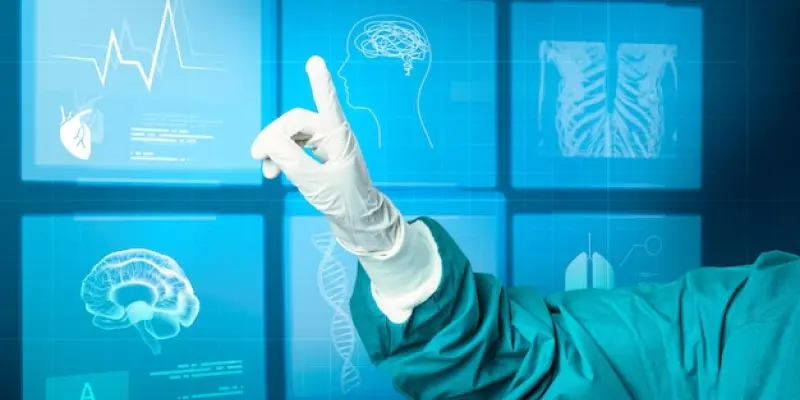
The incorporation of artificial intelligence (AI) in the healthcare arena is cultivating a new era marked by innovative collaborations between humans and machines. This technological advancement is reshaping medical practices, elevating patient care, and refining operational processes while ensuring the preservation of the inherently humanistic aspect of healthcare. With its transformative impact across multiple domains, AI is positioned as an invaluable asset rather than a competitor to human medical professionals. As the healthcare sector embraces this revolution, it faces both opportunities to enhance efficiencies and challenges requiring thoughtful integration to uphold ethical standards and improve clinical outcomes.
Revolutionizing Medical Diagnostics
AI is making substantial strides in medical diagnostics, significantly enhancing precision and efficiency in fields such as radiology and pathology. By analyzing vast amounts of imaging data, AI tools can detect abnormalities like early-stage cancers and fractures with an accuracy that frequently equals and sometimes surpasses that of human specialists. This capability not only reduces the margin for human error but also supports earlier and more accurate diagnosis, facilitating timely interventions that lead to improved patient outcomes. Moreover, AI-powered systems streamline the analysis of pathology samples, expediting the process of disease detection and contributing to faster treatment initiation.
In addition to improving diagnostic accuracy, AI’s ability to process large datasets swiftly provides an unprecedented level of support to radiologists and pathologists, who benefit from technology that highlights diagnostic anomalies potentially overlooked by human eyes. This collaboration between human expertise and machine precision allows healthcare professionals to deliver more reliable conclusions, ultimately enhancing patient care. As AI tools continue to develop, their potential to revolutionize medical diagnostics further offers promise for the continuing advancement of diagnostic medicine and the reduction of diagnostic delays, paving the way for more proactive patient management.
Automating Healthcare Administration
Within healthcare administration, AI is instrumental in alleviating the documentation workloads that often lead to physician burnout, enhancing overall job satisfaction and allowing for more direct patient engagement. AI-powered voice recognition technologies are designed to transcribe conversations between physicians and patients in real time, reducing the need for manual documentation and enabling healthcare providers to dedicate more attention to patient interaction. Additionally, AI enhances scheduling and billing systems, optimizing resource management and reducing patient wait times, which contributes to a more efficient healthcare experience.
Through the automation of routine administrative tasks, AI not only lightens burdens on healthcare staff but also improves accuracy and reduces errors in patient records and billing processes. Consequently, AI applications in administration facilitate a smoother, more streamlined workflow across healthcare settings. The increased efficiency and reduced potential for error bolster provider productivity and enhance patient trust. As healthcare demands continue to evolve, integrating AI into administrative processes promises to be a crucial factor in maintaining high standards of care and optimizing the utilization of healthcare resources.
Enhancing Clinical Decision Support
AI is transforming clinical decision-making by enhancing the capabilities of healthcare providers in diagnosis and treatment planning. Advanced AI-driven clinical decision support systems leverage patient histories, genetic data, and real-time health metrics to generate data-backed recommendations, assisting clinicians in making more informed decisions. These systems can predict disease likelihoods, such as diabetes and cardiovascular conditions, enabling early interventions that can prevent the progression of these diseases. AI also plays a critical role in medication management, assisting in identifying potential drug interactions and optimizing dosages, thereby minimizing adverse drug reactions and promoting patient safety.
By providing clinicians with comprehensive insights into patient health data, AI-driven support systems foster an environment of personalized medicine wherein treatment plans are tailored to each individual’s unique health profile. This approach not only enhances patient outcomes but also contributes to more efficient healthcare delivery by reducing the trial-and-error process often associated with traditional medical treatments. As AI continues to evolve, its integration into clinical decision-making processes holds substantial potential to revolutionize not just how diseases are diagnosed and treated but also how patient care is conceptualized and delivered.
Advancing Surgical Procedures
The surgical landscape is undergoing a transformation through the infusion of AI technology, leading to safer and more precise interventions. AI-powered robotic systems are instrumental in assisting surgeons during minimally invasive procedures, improving surgery outcomes by reducing recovery times and minimizing post-operative complications. With the enhancement of surgical precision, these systems provide surgeons with greater control, allowing for complex procedures to be executed with reduced margins for error. In addition to their role in the operating room, AI technologies extend their influence to postoperative care, predicting potential complications before they occur and facilitating prompt clinical responses. The adoption of AI in surgery exemplifies a crucial shift towards technology-driven medical practices, highlighting the synergistic potential of human expertise and machine precision. This collaboration not only improves procedural outcomes but also optimizes resource allocation by reducing lengths of hospital stays and readmissions. As the technology evolves, the surgical field stands to benefit significantly from continued advancements in AI, with the potential for further integration of robotic assistance leading to a broader range of procedures being performed efficiently and effectively, with enhanced patient safety and satisfaction.
Personalizing Medicine and Treatment
AI’s integration into personalized medicine is revolutionizing how treatments are tailored to individual patients, offering significant benefits in fields like oncology. By analyzing a combination of genetic information and lifestyle factors, AI systems customize treatment plans that optimize therapeutic efficacy and improve patient outcomes. Such technologies are especially valuable in cancer care, where AI predicts patient responses to various therapies, enabling healthcare providers to refine treatment strategies for enhanced effectiveness. This approach is also relevant for managing chronic conditions like diabetes, where AI assists in real-time monitoring and the development of adaptive, patient-specific care plans. This level of personalization in medicine not only enhances the quality of care but also reduces the financial and emotional burdens on patients by preventing unnecessary treatments and hospitalizations. Through proactive disease management and precision medicine, AI-driven insights facilitate earlier interventions and more accurate prognoses, ultimately fostering a healthcare environment that prioritizes patient-centered care. As AI continues to mature within the realm of personalized medicine, its potential to reshape treatment paradigms and improve long-term patient outcomes only becomes more pronounced.
Adapting Workforce and Addressing Ethical Implications
The integration of artificial intelligence (AI) into healthcare signifies a dawning era where the collaboration between humans and machines introduces groundbreaking developments. This technological leap is not just reshaping how medical practices are performed but also enhancing patient care, streamlining operations, and maintaining the essential human touch that is critical in healthcare. AI’s transformative capabilities span various fields, making it an invaluable resource rather than an adversary for medical professionals. As the healthcare industry embraces this wave of change, it grapples with the dual prospects of fostering greater efficiency and the challenges of ethical integration. The key lies in thoughtfully embedding AI to ensure that ethical standards are preserved while clinical outcomes are elevated. This delicate balance between technology and tradition underscores AI’s potential as a complementary force, aiming to work alongside healthcare providers in delivering superior care without compromising the essence of human compassion and judgment.