

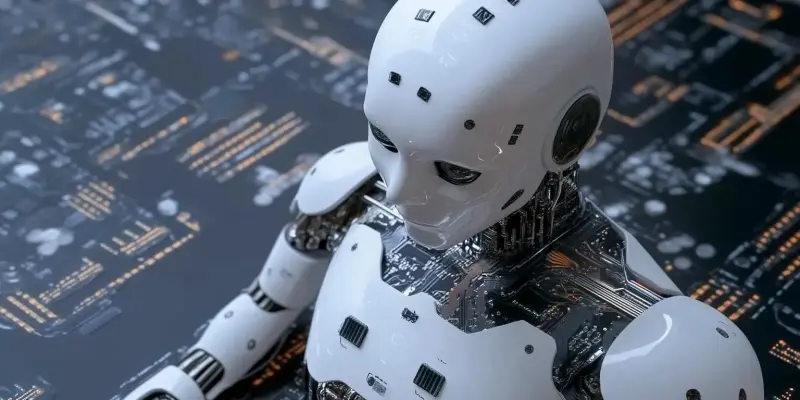
The digital landscape has continuously evolved, introducing new technologies that challenge existing norms and redefine possibilities.Among these transformative innovations, smart contracts stand out as instrumental pillars in the decentralized web, known as Web3. However, the emergence of AI-driven smart contracts has propelled their capabilities beyond the traditional framework, promising a revolution in how contracts are executed and managed within decentralized systems.This advancement is set to radically enhance the efficiency, adaptability, and intelligence of these digital agreements, potentially reshaping the future of blockchain applications and decentralized solutions.
Enhancing Efficiency with AI Integration
Integrating AI into smart contracts offers a significant leap in automation and accuracy, addressing the limitations of traditional smart contracts that require predefined rules and conditions without flexibility or real-time adaptability. These AI-driven contracts utilize advanced machine learning algorithms to interpret vast amounts of blockchain data, draw insights, and make predictive decisions that optimize operations. This dynamic approach ensures that contracts are not just automated but become self-sufficient entities capable of evolving based on incoming data. It reduces human intervention and error, leading to more reliable and efficient execution.The AI framework incorporated within smart contracts also empowers them to handle complex computations and analyses that would be time-consuming and prone to inaccuracies if done manually. For instance, AI can analyze user behavior patterns, historical transaction data, and market conditions to adjust contract terms proactively.This adaptability creates a responsive and resilient system that can maintain optimal performance even in fluctuating demand and varying operational conditions. By minimizing manual oversight, AI-driven smart contracts offer a seamless and robust solution that can enhance the overall efficiency of decentralized applications (dApps).
Real-Time Adaptability and Predictive Decisions
Traditional smart contracts operate on predefined scripts, limiting their ability to adapt to unforeseen conditions.AI-driven smart contracts, however, introduce real-time adaptability, enabling contracts to evolve and respond to changes dynamically. By leveraging machine learning, these contracts continuously learn from new data inputs, improving their decision-making accuracy over time.This real-time adaptability ensures that the contracts remain relevant and effective in varied blockchain conditions, providing a level of flexibility crucial for scaling decentralized applications.
Furthermore, AI-driven contracts can make predictive decisions based on trends and patterns detected within blockchain data.This predictive capability allows the contracts to anticipate potential issues and adjust terms accordingly to mitigate risks. For example, AI can foresee network congestion or market shifts that might impact transaction costs and modify contractual clauses to ensure cost-efficiency and avoid delays.This proactive approach significantly enhances the reliability and performance of Web3 applications, allowing businesses to operate more confidently and efficiently within a decentralized environment.
Self-Regulating Decentralized Applications
The integration of AI into smart contracts paves the way for self-regulating decentralized applications that maintain high efficiency and security autonomously. These intelligent contracts can monitor their performance, identify deviations, and auto-correct issues without human intervention.This self-regulation capability supports scalable applications that can adapt operations based on real-time feedback, ensuring consistent quality and robustness despite increasing user demands or technical challenges.
AGII’s autonomous AI frameworks exemplify this innovative approach, enabling smart contracts to adjust their operations dynamically to optimize performance continuously. By incorporating machine learning into the core logic of these contracts, developers can design dApps that are more resilient and capable of handling operational complexities with minimal oversight.This capability not only enhances the user experience but also broadens the appeal of Web3 solutions to enterprise-level applications, as businesses can leverage intelligent contracts to streamline operations and reduce vulnerabilities.
Redefining Blockchain and Decentralized Application Design
The introduction of AI-driven smart contracts signifies a pivotal moment in the evolution of blockchain and decentralized application design, promising to transform the operational landscape fundamentally. Intelligent frameworks capable of self-management address several challenges associated with traditional decentralized systems, including scalability, security, and adaptability.By fostering a more autonomous and responsive environment, AI-driven contracts facilitate smoother integration and adoption of blockchain technology in various sectors, from finance to supply chain management.
AGII’s AI-driven approach underlines the importance of continuous innovation in decentralized application design, encouraging developers to explore new possibilities that enhance dApp functionalities.These intelligent contracts not only optimize performance but also ensure the system’s resilience by adapting proactively to changing conditions. As the decentralized ecosystem continues to grow more complex, the role of AI in maintaining efficient and secure operations becomes increasingly significant, highlighting the transformative potential of AI-driven smart contracts.
Strategic Implications for the Future of Web3
The digital landscape is constantly evolving, launching new technologies that challenge established norms and redefine what’s possible. Among these trailblazing innovations, smart contracts have become key components of the decentralized web, known as Web3.What makes this even more groundbreaking is the advent of AI-driven smart contracts. These advancements propel their capabilities far beyond the traditional framework.
The introduction of AI into smart contracts promises a revolutionary shift in how these contracts are executed and managed within decentralized systems. This significant progress is poised to dramatically enhance the efficiency, flexibility, and intelligence of these digital agreements.As a result, it could significantly reshape the future use of blockchain technologies and decentralized applications. Unlike traditional smart contracts, AI-driven versions can autonomously adapt to changing conditions, offering a higher level of automation and decision-making.
In essence, AI-infused smart contracts mark a significant leap forward, potentially transforming the landscape of decentralized solutions and providing more seamless and intelligent interactions within the blockchain ecosystem.