

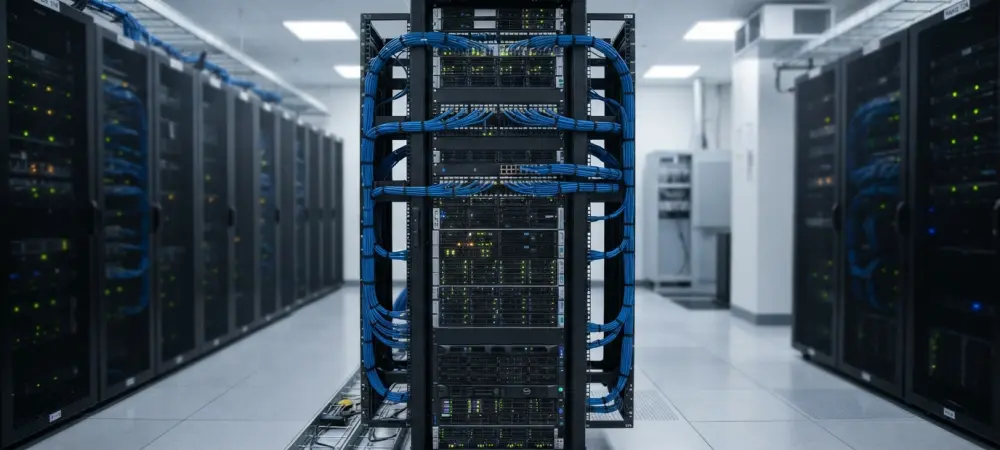
The transition from wild experiments to disciplined production systems is the defining shift in software engineering as agents move from local terminals to managed cloud clusters. For years, the spectacle of a model generating code in a terminal was enough to impress, but that era of novelty has vanished. In the high-stakes environment of modern enterprise software, a script running autonomously on a developer’s workstation is no longer an asset; it is a profound security liability. The industry is currently moving toward a model where AI agents are integrated into the broader fabric of the software factory, subjected to the same rigorous oversight as any other critical microservice or infrastructure component. This shift toward managed autonomy represents a necessary professionalization of the AI field. While individual engineers may have initially seen a boost in personal velocity from ad hoc tools, the lack of governance in those unmanaged setups has created significant friction for security and compliance teams. Treating these agents as production workloads means moving beyond the “laptop-centric” phase and adopting the same rigors applied to CI/CD pipelines. This ensures that every line of code generated by an autonomous system is as trustworthy, versioned, and auditable as code written by a senior human engineer.
The End of the “Laptop-Centric” AI Experiment
The era of developers running autonomous agents through ad hoc local terminal sessions is rapidly becoming a liability for the modern enterprise. While individual engineers might see a boost in personal velocity, these unmanaged setups lack the governance, security, and reproducibility required for professional software delivery. Moving beyond the “shadow AI” phase requires a shift in perspective: treating AI agents not as personal assistants, but as production workloads that must adhere to the same rigors as a CI/CD pipeline or a microservice.
This evolution reflects a broader realization that raw intelligence is secondary to operational control. Organizations that fail to centralize these agentic workflows find themselves managing a chaotic web of unauthorized API keys and divergent local environments. By formalizing these processes, teams transition from a world of unpredictable experimental output to a structured environment where every line of AI-generated code is traceable and secure. This shift ensures that the velocity gained from automation is not lost to the overhead of correcting unmanaged errors.
Why Infrastructure Standards Dictate AI Success
In the current landscape, the gap between an experimental script and a production-grade agent is defined by environmental stability. Without a standardized runtime, organizations face an “it works on my machine” crisis at a massive scale. If an agent operates in an environment that is not versioned or audited, its output becomes non-deterministic and untrustworthy. Establishing production discipline is the only way to transform these agents from unpredictable tools into reliable enterprise assets that can scale without constant human intervention.
Consistency in execution is the bedrock of trust in automated systems. When an agent attempts to refactor a legacy codebase, it must do so within a context that mirrors the eventual production target. The discrepancy between a developer’s local machine and the cloud often leads to subtle bugs that a human might catch but an agent might overlook. By mandating a uniform infrastructure standard, companies ensure that the agent’s logic is tested against the reality of the deployment environment, not a sanitized local simulation.
Architectural Pillars: A Disciplined Agent Environment
To achieve consistency, agent environments must be defined using Infrastructure as Code (IaC) and managed via platforms like Kubernetes. This ensures every agent operates within a versioned container image with predefined dependencies and operational limits. By utilizing specialized tools like the Kubernetes SIG Apps Agent Sandbox, teams can leverage isolation technologies such as gVisor or Kata Containers to ensure that even if an agent executes a destructive command, the impact is contained within a secure sandbox. This architectural isolation is the first line of defense against the inherent unpredictability of autonomous execution. A fundamental rule of production discipline is that an AI agent should never operate under a human developer’s personal login. Instead, agents must be assigned dedicated service accounts with specific cluster identities. This allows for the implementation of the principle of least privilege, where an agent’s access is restricted to specific repositories or internal tools. Short-lived, scoped credentials ensure that the audit trail clearly distinguishes between human actions and autonomous agent activities, providing a transparent record of every modification made to the codebase. Effective production discipline also requires several layers of enforcement regarding resource consumption. Egress controls prevent agents from sending source code to unvetted external endpoints, while inference gateways impose limits on token consumption to prevent budget overruns during unattended tasks. Furthermore, hard caps on execution time and the number of retries ensure that an agent does not waste resources on a problem it lacks the logic to solve. These guardrails transform a potentially erratic autonomous process into a predictable, cost-managed operational workload.
Maintaining Data Sovereignty and Governance
The most sophisticated sandbox is useless if the agent sends sensitive internal logic to a public, third-party Large Language Model without oversight. A disciplined approach prioritizes data sovereignty by leveraging open-weight models hosted on internal infrastructure. This ensures that the code, prompts, and metadata never leave the enterprise boundary. When frontier models from external providers are necessary, their use must be an intentional, logged decision rather than a default configuration, maintaining a strict barrier between proprietary intellectual property and the public cloud.
A production-grade system must capture its own logs, traces, and metrics without leaking them to external tracing services. Furthermore, the system must have a fail-safe escalation procedure. If an approved inference service goes offline, the agent must not be allowed to automatically fall back to an unvetted public API. Instead, the process must pause, preserving its current state and returning the task to a human engineer for review. This prevents a temporary service outage from becoming a permanent security breach through unauthorized data leakage.
Frameworks: Practical Implementation for Modern Teams
To avoid the risks of circular logic, the same AI model that writes the code should never be the sole entity responsible for testing and verifying it. Production discipline requires that an agent’s primary output be subjected to an independent, deterministic CI/CD pipeline.