

Introduction
Transforming a completed audio track into a visually compelling dance performance has historically required a massive investment in rehearsals, professional performers, and expensive location scouting. In the current media landscape of 2026, generative artificial intelligence has fundamentally altered this dynamic by providing artists with the tools to construct elaborate choreography and atmospheric settings from a digital interface. By utilizing character images to establish the dancer and visual references to guide movement, creators can now bypass the logistical hurdles of traditional film shoots while maintaining high aesthetic standards. This technology empowers independent musicians to pair their sound with professional-grade visuals that were once reserved for high-budget studio productions.
The objective of this guide is to explore the practical applications of TopMediai in the realm of music video production, answering critical questions about style, workflow, and technical execution. Readers will discover how to navigate the complexities of AI-generated movement, from maintaining character consistency to aligning visual beats with an audio track. This article provides a comprehensive overview of the methodologies available to modern creators, ensuring that the final output resonates with the intended emotional and rhythmic energy of the music.
The scope of this content covers everything from the initial conceptualization of a dance style to the final quality checks required for a professional release. It addresses the common pitfalls of AI video generation and offers solutions through specific software features and strategic planning. Whether an artist is looking to create a high-energy pop performance or a stylized anime sequence, the following sections provide the necessary insights to master the intersection of music and artificial intelligence.
Key Questions or Key Topics Section
Why Does Choreographing Dance Within AI Video Generation Require Specialized Technical Attention?
Dance is an art form defined by continuous, fluid motion, which leaves very little room to hide the common errors associated with artificial intelligence. Unlike static scenes or slow-moving landscapes, high-tempo choreography demands that the AI accurately track the human form through complex rotations and weight shifts. Small defects, such as feet that slide across the floor when they should be planted or fingers that morph during a hand gesture, can immediately break the viewer immersion. These technical challenges arise because the audience has a natural expectation of how a body should behave in motion, making any anatomical inconsistency feel jarring.
Furthermore, the relationship between the music and the movement introduces a layer of rhythmic complexity that standard video generation often overlooks. While an AI music video maker can organize scenes around a specific track, the actual rendered performance must be carefully checked against the drum hits and melodic shifts. A successful video requires more than just a general high-energy atmosphere; it needs specific instructions to complete a turn as a chorus enters or to hit a pose on a final beat. Precise prompting that defines action rather than just mood is the key to ensuring the movement looks intentional rather than randomized.
How Do Specific Dance Genres Influence the Visual Direction and Framing of an AI Music Video?
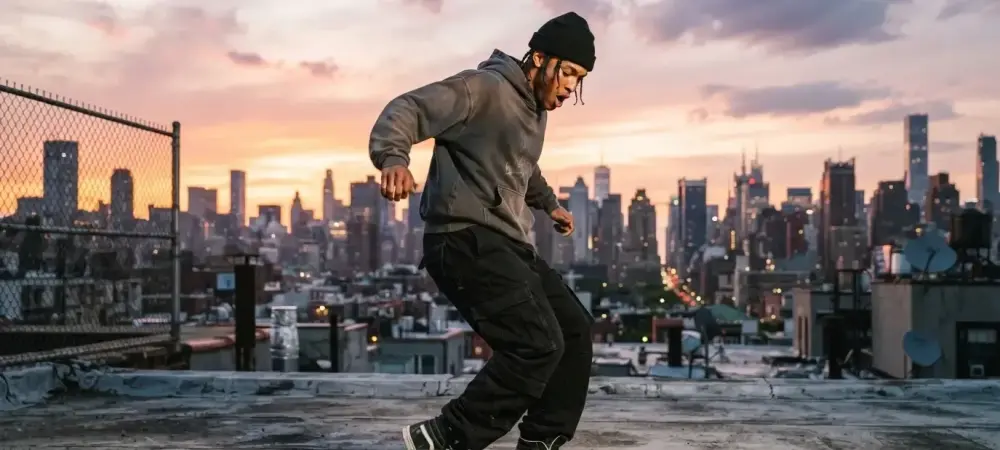
Different dance styles require unique framing and camera behaviors to properly communicate their energy and technique to the audience. In a pop stage performance, for instance, the visuals often focus on coordinated arm movements and formation changes that coincide with the arrival of the chorus. Wide shots are essential for group routines to ensure that the individual dancers remain distinct while moving in unison. In contrast, hip-hop-inspired movement often relies on intricate footwork and groove-heavy transitions, which necessitates a framing that does not crop out the lower body. If the camera is positioned too tightly on the performer, the nuances of the routine are lost, and the strongest musical accents may lack visual impact.
Expressive genres like contemporary dance shift the focus toward emotional changes and the use of negative space, requiring a different directorial approach. Instead of repeating gestures to match a rhythmic loop, the AI must be guided to follow a performer reaching toward an empty space or pausing in a moment of vulnerability. When working with stylized characters, such as anime leads or fictional mascots, the visual language changes even further. While the choreography might mirror pop movements, the character’s unique proportions and attitude must be established early to ensure that their appearance remains stable across various scenes. Reusing visual references is the most effective way to prevent the AI from reinventing the character design between shots.
What Are the Distinct Workflows for Building a Dance Music Video Through the TopMediai Platform?
Creators generally choose between two primary methods when using TopMediai, depending on how much of the sequence is planned in advance. The direct method utilizes the integrated music video maker, where the artist uploads an MP3 or WAV file and describes the performer and setting within the tool itself. This workflow is ideal for those who want to explore visual ideas alongside an existing song, as the system generates a storyboard for review before any video rendering begins. This allows for the correction of scene directions or the rejection of weak concepts early in the process, ensuring that the final generation aligns with the musical structure. The second method is a more modular, music-first approach that provides greater control over every individual frame. In this scenario, the artist creates the storyboard images separately using high-performance models like GPT Image 2.5 Sunburst, Nano Banana 2.1, or Seedream 5.0 Pro. By developing the performer’s face, outfit, and setting as static images first, the creator can guarantee visual continuity before moving into the video phase. Once the images are approved, video models such as Seedance 2.5 use these references to generate motion that respects the established composition. This method is particularly effective for complex projects where the opening, chorus gestures, and ending poses must follow a strict storyboard.
How Can Creators Maintain Visual Consistency and Fix Common Errors During the AI Generation Process?
Maintaining a consistent performer across multiple transitions is one of the most significant hurdles in AI video production. Even with high-quality character references, the AI may occasionally alter facial features or clothing details during intense movement sequences. To combat this, creators must rigorously inspect each transition and use character constraints to keep the proportions stable. If a particular shot displays a loss of balance or anatomical distortion, it is often better to regenerate that specific segment rather than attempting to cut around a glaring defect. The goal is to ensure that the entire movement phrase, from the initial preparation to the final landing, remains physically plausible.
Technical quality also extends to the audio-visual alignment, which can sometimes drift during the generation process. If a video model alters the underlying audio track, the best practice is to retain the original high-quality recording in a separate editing suite and manually align the generated footage to it. This preservation of the release track ensures that the song’s integrity remains intact while allowing for the creative flexibility of AI-driven visuals. Additionally, the platform currently hosts the AI Dance MV Challenge, offering a two thousand dollar prize pool for creators who can master these techniques. This competition, which concludes on November 8, 2026, encourages artists to pair original AI-generated music with a minimum of fifteen seconds of high-quality dance footage.
Summary or Recap
Generating an AI dance music video requires a delicate balance between artistic vision and technical precision. The process begins with selecting the right workflow, whether it is the direct storyboard method for rapid exploration or the modular image-to-video method for maximum control. Success in this medium depends on the creator’s ability to provide clear, action-oriented prompts that guide the AI toward specific choreographic movements that match the rhythm of the music. By understanding the framing requirements of various genres, from the wide shots of pop stages to the focused footwork of hip-hop, an artist can create a more professional and engaging visual experience.
The availability of specialized models like Seedance 2.5 and GPT Image 2.5 Flare provides the necessary infrastructure to maintain character consistency and high resolution. While the technology can occasionally produce artifacts or timing errors, these are manageable through iterative generation and careful final editing. Ultimately, the integration of AI into music video production allows for a level of creative experimentation that was previously impossible for most independent artists. Utilizing these tools effectively ensures that the visual component of a music release is just as impactful as the audio itself.
Conclusion or Final Thoughts
The emergence of AI-driven dance choreography represented a significant shift in how visual media was conceptualized and produced. Artists who once felt limited by their lack of access to dance troupes or filming locations found a new sense of freedom within the digital workspace. The transition from static imagery to fluid, music-aware motion proved that the barriers between high-budget studios and independent creators had finally thinned. As users explored the various workflows, they discovered that the most successful projects were those where the human artist acted as a rigorous director, refining every movement and ensuring every transition felt purposeful.
This evolution in production invited a broader range of voices into the music industry, as the focus shifted from managing logistics to mastering the art of the prompt and the reference image. The community demonstrated a remarkable ability to adapt to these tools, pushing the boundaries of what was possible in the current year. Moving forward, creators will likely find that the key to standing out lies in how they blend these automated capabilities with their unique personal style. Taking the next step toward professional AI video production involved a commitment to learning the nuances of motion consistency and rhythmic alignment. By engaging with these technologies today, artists positioned themselves at the forefront of a new era in digital storytelling.