

Legacy facilities represent a significant sustainability hurdle, as many are physically locked into water-intensive evaporative cooling due to outdated municipal infrastructure. Current research highlights a staggering level of variability, showing that water usage rates can differ by as much as 10,000 times between facilities. This discrepancy stems from how workloads are managed and the specific water intensity of the local power grid. Modern engineering efforts are now focused on severing the link between necessary digital growth and the depletion of local water tables.
The Growing Demands of Artificial Intelligence
The rapid emergence of generative artificial intelligence has fundamentally altered the resource trajectory for modern digital infrastructure. According to the International Energy Agency, a single 100MW artificial intelligence facility now draws as much energy as 100,000 standard residential households. This massive energy draw translates directly into thermal challenges, leading to projections that AI-driven water demand will surge by 129% from 2026 to 2050. These high-density workloads generate an incredible amount of heat, which forces engineers to rethink traditional cooling methods that were never designed for such concentrated power. Hardware failure becomes a constant risk without aggressive thermal management, yet the pursuit of stability often comes at a high environmental cost. Industry leaders are currently investigating how to balance these high-compute requirements with stringent sustainability goals that are increasingly mandated by local governments and international climate accords.
Despite the clear environmental implications of this computational growth, a significant transparency gap continues to plague the industry. Currently, only about half of global datacentre operators disclose their specific water usage metrics, such as Water Usage Effectiveness scores. This lack of standardized reporting often creates a vacuum where sensationalist claims can overshadow the genuine technical progress made by high-efficiency operations. Without consistent data, it remains difficult for policymakers to distinguish between outdated, wasteful facilities and modern sites that utilize advanced closed-loop systems. To address this, various industry consortiums are now pushing for mandatory reporting frameworks that would normalize the disclosure of both direct water consumption and the indirect water footprint of the electricity consumed. Establishing these benchmarks is essential for moving the conversation from anecdotal evidence to data-driven environmental management.
Engineering Strategies for Thermal Management
To properly evaluate the sustainability of a modern facility, it is necessary to distinguish between primary cooling at the server level and heat rejection at the facility level. Traditional air cooling, which relies on high-velocity fans and pressurized corridors, is proving insufficient for the high-density clusters required by current computing standards. Consequently, the industry is accelerating its adoption of liquid cooling technologies, utilizing either dielectric fluids or water-glycol mixtures. Liquid has a significantly higher thermal capacity than air, making it far more effective at transporting heat away from high-performance processors and memory modules. This shift is not merely a matter of efficiency; it is a fundamental requirement for the survival of the hardware itself. By utilizing these advanced fluids, operators can manage the thermal output of much denser server configurations while reducing the overall energy needed for the cooling fans themselves.
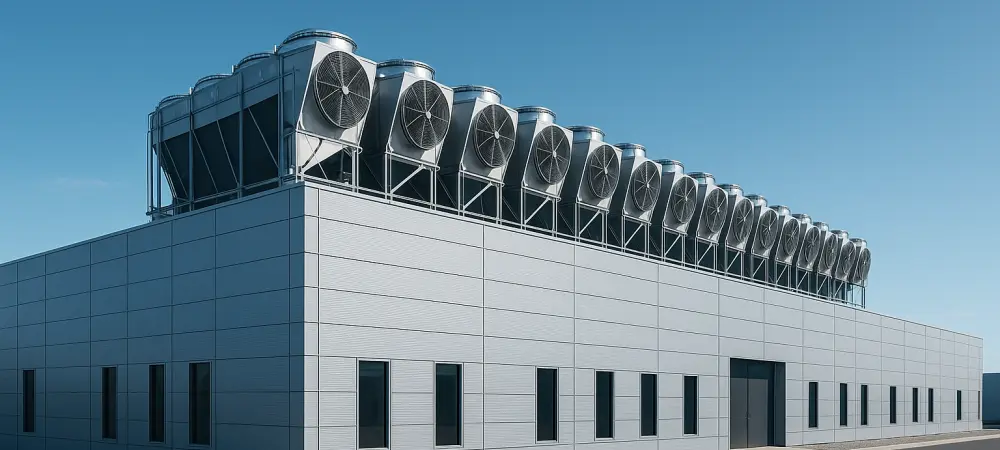
The specific method by which a facility rejects its collected thermal energy into the outside environment serves as the primary determinant of its water footprint. Evaporative cooling towers remain common because they are highly effective in hot climates, yet they are the largest consumers of water because they rely on evaporation to strip away heat. In contrast, dry cooling functions as a robust closed-loop system, employing massive outdoor radiators and fans to reject heat into the air without any actual water consumption. This approach is highly sustainable provided the ambient outdoor temperature remains within a manageable range for the hardware specifications. However, as global temperatures rise, the efficiency of dry cooling can diminish, leading some engineers to look toward hybrid solutions that can maintain stability during peak summer months. Finding the right balance between these technologies is a critical design step for any new infrastructure project aimed at achieving net-zero goals.
The Shift Toward Closed-Loop Systems
A significant transition is currently underway as hyperscale operators move away from legacy water-intensive systems toward more sustainable closed-loop architectures. While older facilities often rely on constant evaporation to manage their thermal loads, newer builds are increasingly adopting advanced adiabatic systems. These units operate as dry systems for the majority of the year, only engaging a fine mist of water during extreme temperature spikes to boost cooling capacity via evaporation. In cooler climates, these technical advancements allow facilities to achieve near-zero water consumption for cooling purposes, effectively decoupling their operations from the local municipal supply. This engineering evolution reflects a broader commitment to industrial circularity, where water is treated as a finite resource rather than an infinite utility. The implementation of these systems requires significant upfront capital investment but offers long-term operational resilience against water scarcity.
Major industry participants are proving that it is possible to maintain massive computational scales without depleting local water reservoirs. Some of the largest global operators now report that a majority of their new facilities use no water for cooling at all, leaving their primary footprint to consist only of minimal needs like landscape irrigation or sanitation. This shift makes such datacentres comparable to standard office buildings in terms of their impact on local water tables. Furthermore, the integration of non-potable and recycled water in major technological hubs is helping to preserve precious drinking water budgets for local residents. By investing in on-site treatment plants and specialized plumbing, these facilities can utilize industrial-grade water that would otherwise be discarded. This strategy not only lowers the environmental impact but also protects the facility from the regulatory risks associated with municipal water rationing.
Geographic and Structural Constraints
Despite the availability of advanced technology, the transition to water-efficient infrastructure is frequently hindered by factors beyond the control of any single company. Many older sites are effectively locked into evaporative cooling models because the physical cost of replacing entire piping systems and mechanical plants is prohibitively high. Additionally, the necessary municipal infrastructure for delivering recycled or non-potable water may not exist in the specific locations where these facilities were originally established. These legacy constraints mean that the environmental performance of a datacentre is often the result of a geographic lottery based on historical planning decisions. Facilities in major hubs like Northern Virginia or parts of the United Kingdom face unique challenges due to the high concentration of older hardware that was commissioned before water scarcity became a primary design concern. Retrofitting these sites remains one of the greatest hurdles.
Local climate conditions play a decisive and often unforgiving role in the overall sustainability of digital infrastructure. In extremely dry or arid environments, water is not only used for cooling but is also required for humidification to prevent electrostatic discharge from damaging sensitive electronic components. Conversely, facilities located in northern latitudes can take full advantage of naturally cool ambient air to achieve high thermal efficiency without any reliance on evaporative systems. This geographic disparity means that a cooling strategy that works perfectly in Scandinavia might be entirely unfeasible in the American Southwest or the Middle East. Consequently, engineers must tailor their sustainability strategies to the specific atmospheric conditions of each site, balancing humidity control with heat rejection requirements. This localized approach is essential for optimizing performance while ensuring that the facility does not place an undue burden on the local ecosystem’s water resources.
Future Pathways: The Evolution of Industrial Hydration
Looking back at the evolution of digital infrastructure, it became clear that sustainable water management required a fundamental shift in design philosophy. Industry leaders realized that relying on legacy cooling methods was no longer viable in a world where water scarcity moved from a theoretical risk to a daily reality. The focus shifted toward the implementation of liquid-to-chip cooling and the expansion of adiabatic technologies that prioritized resource preservation over cheap installation. Governments eventually intervened by mandating standardized reporting, which forced a level of transparency that was previously absent from the market. These regulatory steps encouraged the widespread adoption of circular water systems and the use of non-potable sources, effectively turning datacentres into responsible participants in local utility networks. The most successful operators were those who integrated modularity into their designs, allowing for future hardware upgrades without necessitating a complete overhaul.
Furthermore, the transition was bolstered by a newfound focus on site selection and architectural modularity. Operators recognized that the most effective way to minimize environmental footprints was to build facilities that could adapt to changing atmospheric conditions. By implementing standardized cooling modules, companies were able to swap out older, water-intensive components for more efficient technologies without disrupting the entire operation. This modular approach reduced the long-term capital expenditure and ensured that the facilities remained competitive in a landscape where water costs began to rise significantly. Investors also played a crucial role by prioritizing assets that met stringent environmental, social, and governance criteria, which redirected capital away from wasteful designs. Ultimately, the successful management of water consumption became a hallmark of operational excellence, proving that digital growth could be achieved without sacrificing the health of local ecosystems.