

The global technological ecosystem stands at a historic crossroads where the rapid integration of artificial intelligence necessitates a profound transformation of physical infrastructure. Analysts currently project that total spending on AI-related IT infrastructure will approach a staggering $7 trillion by the end of 2030, with approximately $3 trillion specifically earmarked for data center expansion and $4 trillion for computing and telecom hardware. This financial surge reflects a collective drive to double worldwide data center capacity within the next four years to accommodate the insatiable demand for processing power. However, for the average large enterprise, this transition is not merely about scaling up but about harmonizing these cutting-edge capabilities with established legacy systems. Unlike the massive hyperscalers like Google or Microsoft that build dedicated AI monoliths, corporations must navigate a complex landscape where AI initiatives coexist with vital functions like manufacturing and distribution.
1. The Evolving Landscape: Data Center Planning
Enterprise leaders are currently grappling with an unprecedented level of urgency as the competitive advantage of artificial intelligence becomes increasingly apparent across all sectors. A significant majority of data center operators and Chief Information Officers now express deep concern regarding their ability to accurately forecast the power and space requirements necessary for the next decade of operations. This anxiety is frequently driven by a fear of falling behind competitors who have already secured high-density capacity in prime markets. Recent industry surveys indicate that organizations plan to nearly double their investments in AI infrastructure this year compared to previous cycles, reflecting a high level of confidence that these expenditures will eventually yield substantial returns. This aggressive expansion requires a meticulous approach to capacity planning that accounts for both the immediate needs of pilot programs and the long-term requirements of full-scale production environments.
While hyperscale cloud providers often dominate the headlines with massive campus developments, the reality for most corporations involves a much more nuanced balancing act between AI and traditional computing. Standard enterprise data centers must continue to support essential business operations, including research and development, accounting, and supply chain management, while simultaneously integrating specialized AI clusters. This dual responsibility creates unique challenges in facility design, as the cooling and power profiles of traditional servers differ significantly from those required by modern graphics processing units. Planning for this coexistence means that infrastructure must be modular and adaptable, allowing for the gradual transition of legacy space into high-density zones without disrupting existing mission-critical workflows. Effective strategy in this area involves identifying which workloads can remain on standard air-cooled racks and which require the specialized environments associated with advanced machine learning.
2. The Functional Split: AI Training Versus AI Inference
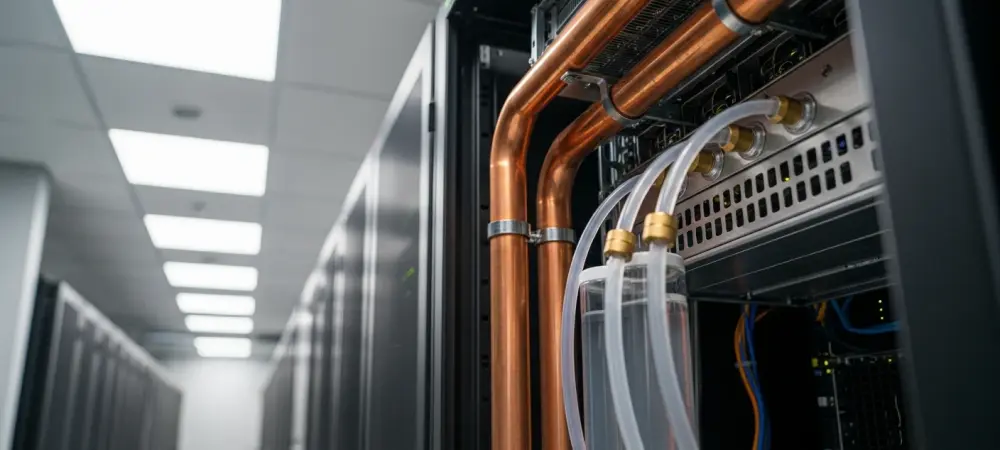
Understanding the fundamental differences between AI model training and inference is critical for any enterprise attempting to design a functional roadmap for its physical infrastructure. Training large-scale models is an incredibly resource-intensive process that prioritizes massive power availability and computational density over absolute uptime or low-latency network connections. These workloads often reside in specialized cabinets drawing between 80 and 160 kilowatts, necessitating the use of advanced liquid cooling technologies such as rear-door heat exchangers or direct-to-chip systems. Because training processes can typically be paused and restarted without catastrophic data loss, these facilities are sometimes located in remote geographic regions where electricity is cheaper and land is plentiful, even if telecom redundancy is less robust than in major urban hubs. Most enterprises choose to outsource this heavy lifting to specialist developers or use public cloud resources rather than building the infrastructure themselves. In contrast to the brute-force requirements of training, AI inference focuses on the real-time delivery of results to end-users and internal business systems, making reliability and low latency paramount. For an enterprise, inference processing must be situated near existing data sources—such as customer transaction logs or manufacturing sensor feeds—to ensure that the generated responses are both timely and accurate. This requirement encourages the placement of inference clusters within established corporate data centers or edge facilities that offer high-speed connectivity to the rest of the business ecosystem. Inference hardware typically operates at more moderate densities, often between 25 and 70 kilowatts per cabinet, which allows for a smoother integration into modern facility designs. Furthermore, many organizations prefer to keep inference computing within their private environments to protect sensitive intellectual property and ensure that proprietary data remains secure throughout the entire lifecycle of the AI application.
3. Deployment Models: Implementing a Hybrid Occupancy Strategy
The selection of a delivery model represents one of the most consequential decisions an organization will face when preparing for the integration of modern high-performance computing. A hybrid cloud strategy, which combines public cloud resources with colocation or on-premises facilities, has emerged as the most flexible and cost-effective approach for the majority of large-scale enterprises. Public cloud environments offer the advantage of rapid deployment and global reach, allowing teams to experiment with new AI tools without committing to heavy upfront capital expenditures. However, concerns regarding unbudgeted costs and high-profile service outages have led many organizations to rethink a cloud-only topology. Recent studies suggest that a significant percentage of firms are now repatriating certain critical functions back to private environments to gain better control over performance and security. Colocation providers bridge this gap by offering the benefits of professional management and scale while allowing the tenant to maintain physical ownership.
Legacy on-premises facilities often face significant hurdles when attempting to accommodate the cooling and power demands of modern AI clusters, leading to a surge in specialized upgrades. Many existing data centers were designed to handle relatively low-density workloads, and retrofitting these spaces for high-performance hardware can be both costly and time-consuming. To address this, forward-thinking enterprises are now prioritizing future-proof designs that can support a transition from traditional air cooling to liquid-based systems without requiring a complete overhaul of the building. This often involves the preemptive installation of liquid refrigerant piping and secondary cooling loops that can handle cabinet densities exceeding 70 kilowatts when the need eventually arises. By creating a flexible floor plan that supports both standard and high-density hardware, organizations can maintain their predictable traditional workloads while slowly scaling their AI capabilities in a way that remains manageable from both an operational and financial perspective.
4. Strategic Execution: Practical Steps for AI Readiness
The creation of a successful AI-ready roadmap begins with the assembly of a multi-disciplinary team that brings together stakeholders from IT, networking, facility operations, and risk management. This group must work in concert with external consultants and AI integration experts to refine the organization’s long-term goals and accelerate the deployment schedule while maintaining a focus on cost reduction. One of the first tasks for this team involves a comprehensive audit of existing software applications to determine which programs are optimized for cloud environments and which might suffer from performance gaps or compliance issues. Identifying these limitations early allows the enterprise to make informed decisions about where to place specific workloads to ensure maximum efficiency. Furthermore, establishing clear milestones and responsible parties for every stage of the procurement and selection process ensures that senior leadership remains informed and that the project remains aligned with the broader corporate strategy.
To finalize the preparation for this technological shift, enterprises evaluated the impact of network stability and latency on the movement of data between diverse cloud and colocation sites. This process required a deep analysis of current usage metrics and projected growth scenarios to estimate the total computing capacity needed for both conservative and aggressive adoption models. Financial teams contrasted the upfront capital investments required for on-site hardware against the long-term operational costs of various hosting environments to determine the most sustainable path forward. By distinguishing essential must-have infrastructure requirements from desirable but non-critical features, organizations successfully prioritized the investments that offered the highest impact on business value. These strategic actions ensured that the necessary facility capabilities were in place to support real-time inference and data security. Ultimately, this comprehensive planning phase provided the foundational stability required for the seamless integration of artificial intelligence into the corporate landscape.