

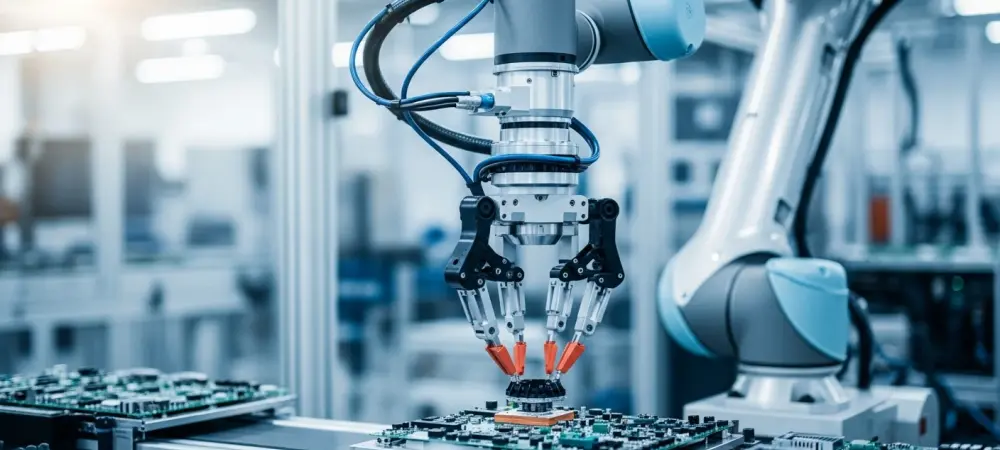
The delicate touch of a silicon fingertip can now rival the dexterity of a master watchmaker while maintaining the raw power required to lift a ton of steel without breaking a sweat. This dual capability represents the pinnacle of modern mechanical engineering, marking a departure from the clunky, rigid robots of the previous decade. Research indicates that the transition of robotic gripping systems into foundational industrial components is no longer just an incremental improvement but a radical redefinition of how objects are moved and processed across the planet. This study examines the shift from basic mechanization toward autonomous, sensor-driven systems that navigate complex environments with minimal human intervention.
The central challenge addressed by this research involves the evolution of production environments from manual labor to high-precision automation. As manufacturing becomes more intricate, the demand for grippers that can mimic human versatility has skyrocketed. Key questions explored in this analysis include how these systems redefine operational efficiency and the extent to which they alter the traditional division of labor between biological workers and machines. Ultimately, the integration of advanced manipulation tools serves as a safeguard for human safety within hazardous industrial and medical settings.
The Socio-Technical Evolution of Automation
The backdrop of this evolution is rooted in the rise of Industry 4.0, a period defined by the convergence of digital and physical manufacturing systems. High-precision automation is no longer an experiment; it is a competitive necessity for any corporation seeking to maintain a foothold in the global supply chain. Historically, factory floors relied on human dexterity for complex assembly tasks. However, the emergence of advanced grippers has redirected the industrial focus toward consistency and 24/7 output. This transition is important because it highlights how robotics serves as the backbone for everything from electronics assembly to emergency medical responses.
Beyond mere productivity, the shift represents a deeper socio-technical change in how humans perceive work. The focus has moved from the physical act of “doing” to the technical act of “managing.” In this new industrial paradigm, the robotic arm is not an intruder but a collaborative partner. This study underscores the relevance of these technologies as they migrate from the predictable environment of a factory floor into the chaotic reality of humanitarian aid and logistics. As these systems become more intuitive, they bridge the gap between mechanical strength and the nuanced requirements of a modern, service-oriented economy.
Research Methodology: Findings and Implications
Methodology
The research utilized a multi-dimensional approach to evaluate the efficacy and reach of modern robotic gripping systems. This included a comparative analysis of production throughput data across the automotive and electronics sectors, specifically looking at how different sensor architectures affected error rates. Technical reviews of feedback-loop systems, such as high-resolution encoders and laser scanners, provided data on spatial orientation and grip precision. Furthermore, case studies of telepresence robotics in disaster management were conducted to understand the qualitative benefits of high-dexterity arms in environments where human presence is restricted.
Findings
The study identified that precision and repeatability are the most significant drivers of robotic adoption in the current market. Modern systems are now capable of maintaining microscopic tolerances that human workers simply cannot sustain over a long shift. Findings reveal that the versatility of grippers has expanded to handle a diverse range of objects, from heavy automotive chassis to fragile circuit board components. Additionally, the research highlighted a successful migration of industrial technology into humanitarian fields, proving that high-dexterity arms can perform remote medical triage using virtual reality interfaces in contaminated or high-risk zones.
Implications
The practical implications of these findings suggest that global industries must pivot toward collaborative workspaces where human-machine interaction is the standard. Theoretically, this research challenges the “replacement narrative” by showing that automation necessitates a more technologically sophisticated workforce focused on systems diagnostics and data analysis rather than manual repetition. Societally, the application of these systems in crisis management implies a future where robotic precision can mitigate human risk in high-stakes environments, such as chemical spills or infectious disease zones, effectively saving lives while maintaining logistical efficiency.
The Path Forward: Reflection and Future Directions
Reflection
Reflecting on the study process, the primary challenge was reconciling the vast differences in requirements between diverse industrial sectors. The high-strength needs of heavy car manufacturing do not always align with the delicate dexterity required for the electronics or food processing industries. While the research successfully mapped the current landscape, it could have been expanded by including a deeper economic analysis of the initial capital investment versus the long-term return on investment for small-to-medium enterprises. The study confirms that the primary hurdle to adoption is no longer technical capability but the integration of these systems into legacy infrastructures.
Future Directions
Future research should explore the integration of artificial intelligence with tactile sensing to allow robots to “feel” and adapt to unknown objects in real-time without the need for pre-programming. Unanswered questions remain regarding the long-term psychological impact on workers in highly automated “lights-out” factories where human presence is minimal. Further exploration is also needed into the standardization of humanoid robotics to ensure cross-platform compatibility. If machines are to operate in environments designed for human ergonomics, they must achieve a universal level of mobility and interface consistency that does not yet exist on a global scale.
The Strategic Path Forward for Automated Industry
The implementation of robotic gripping systems fundamentally altered the architecture of the global industrial complex by providing unmatched precision and versatility. The research reaffirmed that these technologies did not simply replace human effort but rather elevated it by moving the workforce into roles focused on innovation and orchestration. As these systems bridged the gap between manufacturing and emergency response, they established a new perspective on a world where human intelligence and mechanical reliability were inextricably linked. Ultimately, this strategic integration created a more resilient and efficient global economy that was better equipped to handle both commercial demands and humanitarian crises. This technological transition proved that the future of labor was not a choice between humans and machines, but a synthesis of both. The study showed that as robots took on more dangerous and repetitive tasks, the human element of industry became more valuable in a creative and supervisory capacity. New investments in educational training were identified as the logical next step to prepare the workforce for this shift. By focusing on the synergy of mechanical strength and human oversight, global leaders developed a blueprint for a production landscape that prioritized both safety and high-speed output. These advancements ensured that the industrial sector remained adaptable to the unpredictable challenges of a rapidly changing world.