

A Strategic Leap in Industrial Intelligence
The traditional perception of a robotic revolution often conjures images of sleek humanoids performing domestic chores, yet the true transformation is currently unfolding within the concrete walls of the global logistics network. Mind Robotics has officially disrupted the automation landscape with a massive $500 million Series A funding round, catapulting the Rivian spinout to a $2 billion valuation. This capital injection marks a definitive shift in investor sentiment, moving the focus away from experimental humanoid prototypes toward pragmatic, high-dexterity systems designed for immediate deployment.
By prioritizing the rigorous demands of logistics and factory environments, the company aims to solve the industry’s most persistent bottlenecks. This massive influx of capital suggests that the market is no longer satisfied with speculative research; instead, there is a burgeoning demand for machines that can deliver measurable return on investment today. Mind Robotics is redefining the “labor” in supply chains, moving beyond general-purpose robotics to deliver specialized, task-oriented machines that bridge the gap between AI theory and physical execution.
The Evolution of Automation: From EV Roots to Warehouse Floors
The emergence of Mind Robotics is not an isolated event but a byproduct of a decade of breakthroughs in autonomous vehicle technology and battery manufacturing. Drawing talent from industry giants like Waymo, Zoox, and Google, the company has repurposed the precision sensing and real-time decision-making systems used in self-driving cars for the structured chaos of the distribution center. This cross-pollination of expertise has allowed the firm to bypass many of the developmental hurdles that typically plague robotics startups, moving straight into high-performance industrial applications.
Historically, warehouse automation was limited to rigid conveyor systems or basic mobile robots that moved goods from point A to point B. However, the industry has reached a tipping point where movement alone is insufficient. The legacy of the Mind Robotics team suggests that the future of the sector lies in “embodied AI”—where the intelligence of the machine is as sophisticated as the hardware it controls. This shift from simple automation to intelligent manipulation represents a fundamental change in how industrial facilities are conceptualized and built.
Challenging the Humanoid Assumption in Logistics
Precision Engineering: Overcoming Human Resemblance
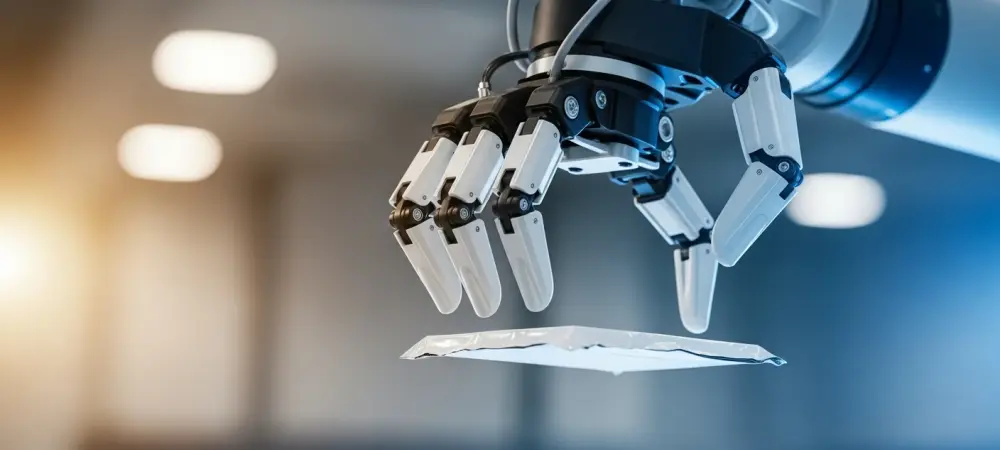
A core tenet of the Mind Robotics strategy is the rejection of the “humanoid assumption,” which suggests that robots must mimic human physiology to be effective. In a structured industrial setting, the bipedal human form is often a mechanical liability rather than an asset. Instead, the company focuses on high-dexterity systems optimized for specific tasks like picking, sorting, and kitting. By utilizing task-specific designs, these machines achieve higher reliability and lower mechanical failure rates than their humanoid counterparts.
This approach allows for faster integration into existing workflows, as these systems are built to fit the facility’s needs rather than requiring the facility to accommodate a human-like gait or reach. Moreover, these specialized units often occupy a smaller footprint and consume less power, offering a more sustainable path to full-scale automation. By stripping away the aesthetic requirements of human-like machines, the company has doubled down on the raw functionality required to keep global supply chains moving without interruption.
Handling Complexity: Solving the Final Frontier of Robotic Dexterity
While mobile robots have successfully automated the “transport” phase of logistics, the “handling” phase remains the industry’s greatest challenge. Fine motor skills and precision manipulation have long been the exclusive domain of human workers due to the variability of objects in a warehouse. Mind Robotics utilizes advanced tactile sensors and vision systems to bridge this gap, allowing machines to handle items of various shapes, weights, and textures with human-like sensitivity.
By conquering this “final frontier” of dexterity, the company is enabling automation in sectors previously thought too complex, such as returns processing and light manufacturing assembly. These areas require a level of finesse that traditional vacuum-grip or rigid-claw robots simply cannot provide. The introduction of adaptive grippers and real-time haptic feedback means that even delicate or irregularly shaped electronics and consumer goods can now be processed at machine speeds, drastically reducing the time a product sits in a distribution center.
Economic Drivers: The Closing of the AI Loop
The shift toward specialized robotics is fueled by structural economic pressures, including chronic labor shortages and a relentless demand for faster delivery speeds. As artificial intelligence matures, it is evolving from a software tool for planning into an operational layer for real-time execution. When AI-driven decision-making is paired with robotic dexterity, it creates a closed-loop system that optimizes every movement within a facility. This prevents the bottlenecks that typically occur when a fast digital system meets a slow, manual physical process.
This integration signals a future where warehouses are no longer designed around human ergonomics but are built entirely for machine efficiency, significantly reducing the cost per task and increasing overall throughput. Industry leaders recognize that the goal is no longer just to replace a person, but to create a system that can operate in environments—such as sub-zero cold storage or high-density vertical racks—that are fundamentally unsuitable for human workers.
The Future: Toward Task-Oriented Machine Intelligence
The trajectory of the automation industry is moving away from the pursuit of a “general-purpose” robot in favor of a fleet of specialized, high-performance machines. We are likely to see a tiered ecosystem where different robotic archetypes handle specific segments of the supply chain, all connected via a central AI “brain.” This centralized coordination allows for a level of synchronization that was previously impossible, as every robot in the fleet can learn from the collective experience of the group.
As these systems become more affordable and easier to deploy, the barrier to entry for mid-sized logistics providers will drop, leading to a broader democratization of advanced automation. Furthermore, as regulatory frameworks begin to catch up with robotic safety standards, the speed of deployment is expected to accelerate. High-dexterity robots are poised to become a standard feature of the modern global economy, moving from high-tech novelties to essential infrastructure components that underpin the flow of goods across borders.
Actionable Strategies: Integrating Advanced Systems
For businesses and logistics leaders, the rise of Mind Robotics provides a clear roadmap for modernization. To stay competitive, companies should focus on incremental automation rather than waiting for a “silver bullet” solution. Adopting a modular approach allows firms to target their most significant pain points first, rather than attempting a total facility overhaul that could disrupt current operations.
- Audit High-Variability Tasks: Identify areas such as kitting or returns where human labor is currently essential and assess how high-dexterity robotics can augment these roles.
- Prioritize Interoperability: Ensure that new robotic systems can integrate seamlessly with existing Warehouse Management Systems (WMS) to create a unified data loop.
- Focus on Cost Per Task: Evaluate automation investments based on their ability to reduce the marginal cost of specific actions rather than just overall headcount reduction.By adopting a task-oriented approach, firms built a resilient, scalable operation that prepared them for the next generation of industrial intelligence.
Conclusion: A New Standard for Global Logistics
The $500 million investment in Mind Robotics confirmed that the future of automation was grounded in practicality and precision. By moving past the novelty of humanoid robots and focusing on the mechanical realities of the warehouse, the industry set a new standard for how goods were handled, sorted, and shipped. This shift represented more than just a technological upgrade; it was a fundamental redesign of the global supply chain to be more efficient, reliable, and adaptable. Decision-makers who pivoted toward specialized dexterity found themselves at the forefront of a more robust economy, while those waiting for general-purpose machines faced mounting inefficiencies. Ultimately, the success of this funding round proved that the most valuable robots were not those that looked like us, but those that solved the problems we could not.