

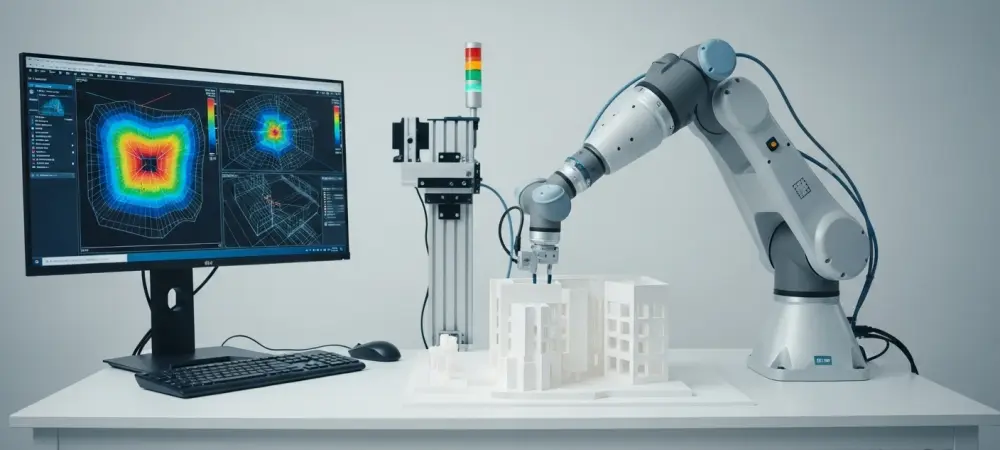
The Dawn of Spatial Intelligence: Moving Beyond Digital Conversation
The rapid transition from models that merely simulate human conversation to systems that perceive the three-dimensional intricacies of our physical reality marks the most significant pivot in computational history. While the previous era of artificial intelligence was defined by Large Language Models predicting the next word in a sequence, a new paradigm is emerging where machines must understand depth, friction, and the laws of physics. World Labs, spearheaded by visionary researchers, is at the forefront of this movement, shifting the focus from pixels on a screen to the architectural foundations of the material world.
From Pixels to Physics: The Evolution of Visual Understanding
The journey toward this level of awareness is rooted in decades of computer vision research that originally sought only to label static objects. Historically, the industry moved from simple image recognition to generative art, yet these models frequently produced visual glitches that ignored the basic constraints of gravity and volume. This lack of a “world model” meant that while AI could paint a picture, it could not understand the space within it. Today, the focus has shifted toward foundational models that respect physical boundaries, providing the essential “common sense” required for the next generation of automation and design.
Building the Foundation of Three-Dimensional AI
Synthesizing Geometry and Semantic Meaning
World Labs has achieved a critical breakthrough by fusing semantic understanding—the knowledge of what an object is—with geometric precision. Unlike traditional tools that generate flat video content, this technology constructs sophisticated 3D models where every entity possesses volume and a defined position. Such an approach allows for the creation of environments that function as interactive spaces rather than mere visual loops. This shift provides the spatial reasoning necessary for machines to navigate complex real-world scenarios, moving beyond statistical probability toward a genuine grasp of structural reality.
Empowering Industries Through Generative Virtual Worlds
The introduction of the Marble platform illustrates the commercial viability of these complex spatial theories. By enabling users to generate editable and downloadable 3D environments from simple prompts, the company is democratizing high-end spatial design for a global market. This development is particularly disruptive for the gaming and immersive media sectors, which have long struggled with the labor-intensive nature of manual asset creation. Through a tiered subscription model, this technology is becoming an indispensable utility for professionals who demand physical accuracy in their digital workflows.
Collaborative Innovation with Industry Titans
The massive influx of capital, including a $1 billion funding round that pushed valuations to $5 billion, underscores the strategic weight of spatial intelligence. Strategic partnerships with hardware leaders like Nvidia and AMD, alongside software giants like Autodesk, indicate that this is a collective industry shift rather than an isolated venture. With Autodesk serving as a research advisor, the integration into architecture and engineering is deepening. These collaborations ensure that the resulting models are grounded in the rigorous standards required for designing actual infrastructure and robotics.
The Future of Autonomous Systems and Immersive Design
The integration of spatial intelligence is set to become the primary catalyst for major leaps in robotics through the end of the decade. Analysts suggest that as AI masters the ability to simulate physical outcomes within 3D environments, the “sim-to-real” gap—the traditional difficulty of transferring digital training to physical hardware—will effectively vanish. This evolution will likely lead to more sophisticated warehouse automation and autonomous vehicles that can predict environmental changes with surgical precision. Furthermore, regulatory focus will inevitably pivot toward the data integrity and physical truth that these spatially aware models provide.
Navigating the Shift Toward a Spatially Aware Future
For businesses looking to maintain a competitive edge, the rise of spatial intelligence offers a roadmap for streamlining production in virtual and physical spaces. Organizations should prioritize the adoption of generative 3D workflows to enhance their creative output and operational efficiency. Investing in strategic partnerships that leverage spatial data will become a necessity rather than an option. The takeaway for the modern enterprise is clear: the future of technology is no longer about talking to a machine; it is about building and inhabiting digital realities that mirror the complexity of our own.
Redefining the Boundaries of Artificial Intelligence
World Labs successfully moved the goalposts of what a machine can cognitively achieve by prioritizing spatial mastery over linguistic patterns. This transition provided the missing link for creating truly intelligent systems capable of interacting with the physical world. As these tools matured, the distinction between digital simulation and physical understanding began to blur, transforming industries ranging from construction to scientific research. Stakeholders who embraced this spatial turn found themselves equipped with a more robust framework for innovation, marking the start of an era where AI finally understood the very space it inhabited.