

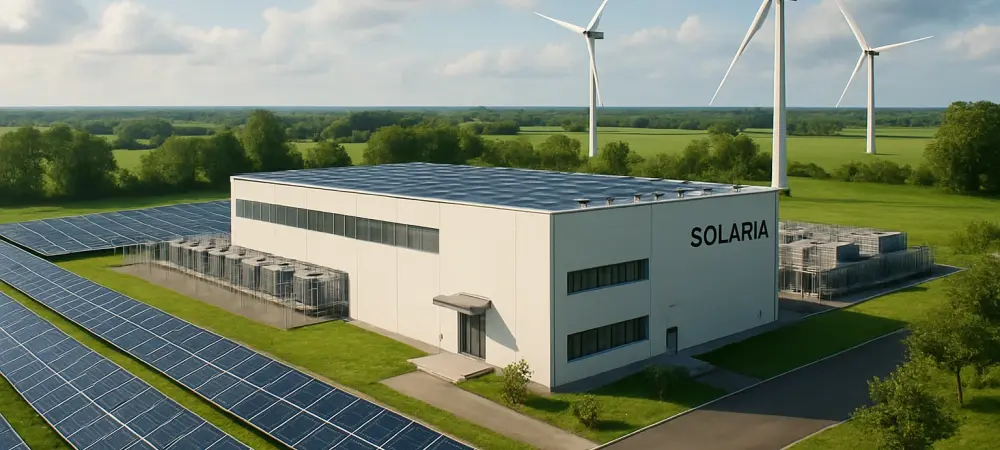
I’m thrilled to sit down with Dominic Jainy, an IT professional whose deep expertise in artificial intelligence, machine learning, and blockchain offers a unique lens on the intersection of technology and renewable energy. With Solaria Energia’s recent strides in sustainable data centers and clean energy across Europe, Dominic provides invaluable insights into how these innovations are reshaping industries. Today, we’ll explore the ambitious rollout of a massive data center platform, groundbreaking partnerships, and the intricate balance of energy and digital infrastructure, while diving into the challenges and visions behind Solaria’s transformative journey.
How did Solaria’s European data center platform with 3.4GW of secured grid power come to life, and what were the toughest obstacles in securing that capacity across multiple countries?
Thanks for asking about this incredible project. The platform, spanning Spain, Italy, Germany, and the UK over 400 hectares, was born from a vision to merge renewable energy with the booming demand for data infrastructure. Coordinating across four countries meant navigating a maze of regulatory frameworks, grid operator negotiations, and land acquisition challenges—each nation had its own set of rules and timelines, which often felt like solving a complex puzzle with moving pieces. One of the toughest hurdles was ensuring grid stability for such a massive 3.4GW capacity; in Germany, for instance, we faced delays due to stringent environmental assessments, which pushed us to innovate with localized microgrid solutions. I remember a particularly tense moment during a meeting in Spain when we realized a key parcel of land was tied up in a legal dispute—our team worked around the clock to find an alternative site nearby, ensuring we didn’t lose momentum. The scale of this effort really hit me when I stood on a site in Italy, gazing at endless rows of potential, knowing this was just one piece of a continent-wide network powering the future.
Can you take us behind the scenes of the 15-year solar Power Purchase Agreement with Merlin for 445MW, and explain what this partnership signifies for Solaria’s broader ambitions?
Absolutely, that 445MW PPA was a landmark moment for us. Negotiating this deal involved months of detailed discussions, balancing Merlin’s need for reliable, long-term energy with our commitment to sustainability—it was about aligning visions as much as numbers. We spent countless late nights poring over grid access guarantees for their 225MW data center, ensuring every technical detail was ironclad, and I recall a pivotal meeting where we hashed out risk-sharing clauses over strong coffee, feeling the weight of crafting a 15-year commitment. This partnership is a cornerstone of Solaria’s goal to become an integrated energy and digital operator; it’s not just about supplying power, but about fueling Europe’s tech independence with clean energy. For me, the real thrill was seeing both teams celebrate the signing—it felt like we weren’t just closing a deal, but opening a door to a greener digital era.
Solaria’s shift to an integrated energy and digital operator, aiming for 18GW by 2030, sounds like a bold leap. How are you managing the balance between data centers, solar, wind, and storage, and what’s the overarching vision here?
That’s a great question, and yes, it’s a bold leap, but one we’re passionate about. Balancing data centers with our renewable portfolio—currently at 1.6GW installed solar capacity and 1.4GW under construction—requires a strategic dance of resource allocation and innovation. We prioritize projects based on grid readiness and market demand, like funneling resources into wind and storage to stabilize power for data center uptime, while simultaneously scaling solar across southern Europe. I remember a planning session where we had to decide between accelerating a wind project in Portugal or a data center conversion in Spain—it was a tough call, but we opted for the data center to meet urgent AI compute needs, showing how dynamic this balance is. Our vision is to create a seamless ecosystem where energy generation and digital infrastructure feed off each other, reducing carbon footprints while powering cutting-edge tech. It’s about building a future where energy isn’t just consumed, but smartly integrated—I get goosebumps thinking about hitting that 18GW mark as a symbol of that synergy.
Could you walk us through the process of converting industrial facilities for data center use, like the 200MW AI project in Puertollano, and share any unique challenges or stories from that transformation?
I’d be happy to dive into the Puertollano project, which is a fascinating case of adaptive reuse. Converting industrial facilities into a 200MW AI data center started with a thorough assessment of the site’s structural integrity and existing electrical systems—older buildings often lack the cooling and power density needed for modern servers, so we had to retrofit extensively. We redesigned the layout for high-efficiency cooling, installed advanced cabling for ultra-low latency, and upgraded transformers to handle the intense load, all while preserving as much of the original structure as possible. One challenge that stands out was discovering outdated underground wiring that couldn’t support our needs—our team spent weeks mapping and replacing it, often in sweltering heat, which tested our patience but also bonded us over shared problem-solving. I’ll never forget standing in the humming server room for the first time, smelling the faint metallic tang of new equipment, and realizing we’d turned a relic of industry into a hub for AI innovation. It’s a testament to how sustainability can mean repurposing the old to power the future.
With approvals for data centers totaling 355MW in the Basque Country and Madrid, how did you navigate the regulatory process, and what’s on the horizon for these sites?
Navigating the approval process for the 225MW in Basque Country and 130MW in Madrid was a meticulous journey of collaboration with the grid operator and local authorities. We had to demonstrate not just technical feasibility—proving grid stability and capacity—but also environmental compliance, submitting detailed impact studies and mitigation plans that took months to compile. There were moments of frustration, like when feedback loops delayed our Basque Country timeline by weeks, but I recall a breakthrough meeting where our team presented a 3D model of the site’s integration with the grid, visually winning over skeptical regulators. These approvals are just the start; next, we’re focusing on breaking ground, with construction slated to begin soon, aiming to operationalize within two years to meet soaring demand for cloud services. Walking through the Madrid site recently, seeing the cleared land ready for transformation, I felt a surge of excitement—these 355MW are more than numbers; they’re a gateway to powering Europe’s digital backbone sustainably.
What’s your forecast for the future of sustainable data centers in Europe, given Solaria’s pioneering efforts?
Looking ahead, I’m incredibly optimistic about sustainable data centers in Europe, especially with trailblazers like Solaria setting the pace. I foresee a rapid shift where renewables aren’t just an add-on but the core of data center energy strategies, driven by both policy pushes for carbon neutrality and the sheer economics of solar and wind becoming cheaper. Within the next decade, I predict we’ll see over half of Europe’s data centers powered by integrated green energy solutions, with capacities like our 3.4GW platform becoming the norm rather than the exception. The challenge will be scaling infrastructure fast enough to match AI and cloud computing’s exponential growth, but with partnerships and innovation, it’s achievable. I can almost hear the hum of future facilities, powered by the sun and wind, as we redefine what tech sustainability looks like.