

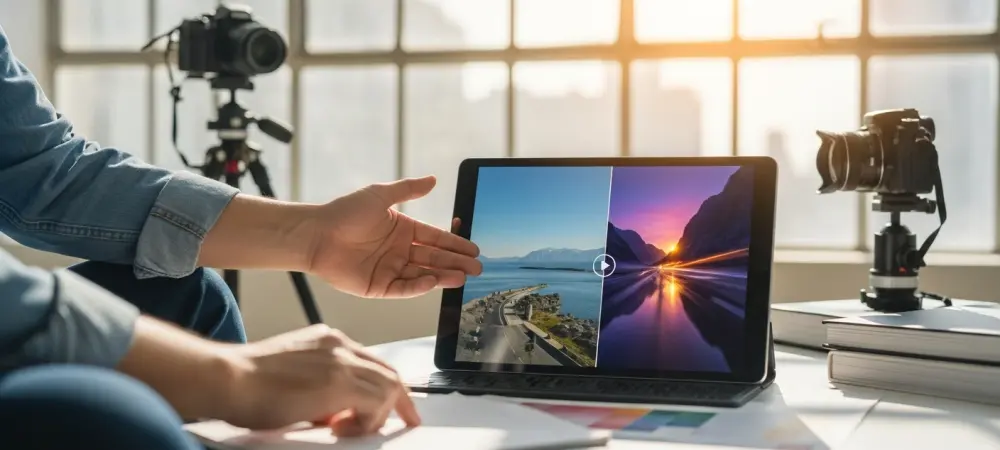
The digital canvas is no longer a static plane of silent pixels; it has evolved into a living, breathing theater where the ability to animate a single moment determines who commands the attention of millions. In a landscape where the average user scrolls through hundreds of feet of content daily, a still image is often treated as a mere ghost of an idea, lacking the kinetic energy required to halt the thumb. Seedance 2.0 emerges at this pivotal juncture, functioning as a sophisticated bridge that allows creators to breathe cinematic life into “frozen” assets without requiring the infrastructure of a professional production studio.
This technological leap is not merely about adding movement to a photo but about fundamentally altering the barrier to entry for high-tier storytelling. For years, the divide between a concept and a professional video was guarded by high costs and steep learning curves. Seedance 2.0 dismantles these gates, offering a streamlined image-to-video workflow that prioritizes quality and accessibility. By transforming static visuals into fluid narratives, the platform ensures that the depth of a creator’s imagination is no longer limited by the traditional constraints of physical equipment or technical expertise.
The End of the Static Image Era
A single still image now struggles to capture more than a fleeting glance in a digital landscape where the average scroll depth is measured in miles. While static content was once the backbone of the internet, the algorithmic preference for movement has turned video from a luxury into a survival requirement for any digital presence. This shift reflects a broader psychological change in how audiences consume information, favoring the immersive and descriptive nature of motion over the silent invitation of a photograph.
Seedance 2.0 enters this space not just as a tool, but as a catalyst for a new standard of visual communication. It allows users to salvage the vast archives of historical or personal photography and reinvent them for a modern audience that demands constant stimulation. By converting these static artifacts into cinematic narratives, the platform provides a way to stay relevant in a fast-paced environment without the need for a Hollywood budget or a dedicated production suite.
The High Cost: Why Traditional Video Barriers Matter
Historically, the gap between a great idea and a professional video was filled with expensive obstacles including high-end hardware, steep learning curves for editing software, and the physical limitations of camera equipment. This technical gatekeeping meant that high-quality storytelling was reserved for those with significant capital or specialized training, effectively silencing diverse voices that lacked the means to produce polished content. The labor-intensive nature of traditional videography created a bottleneck that favored slow, expensive perfection over the rapid iteration required by modern platforms.
As social platforms increasingly reward high-frequency video posting, creators and businesses have faced a burnout-inducing struggle—trying to maintain quality while meeting the demand for constant output. The pressure to produce daily motion-based content often leads to a decline in artistic integrity or a total cessation of production due to sheer exhaustion. Seedance 2.0 addresses this specific pain point by automating the most grueling aspects of production, allowing the human element to focus on creative direction rather than technical troubleshooting.
The Technological Architecture: How Intelligent Motion Works
Seedance 2.0 distinguishes itself through “intelligent motion,” a process that moves beyond simple two-dimensional animation into the realm of three-dimensional spatial awareness. The platform uses advanced AI modeling to perform deep-tissue analysis of static images, ensuring that movement feels organic rather than artificial. By calculating depth perception, the system distinguishes between foreground subjects and background environments, allowing for complex camera pans and object movements that respect the actual physics of the real world.
Furthermore, the integration of lighting synthesis ensures that as objects shift within the frame, shadows and reflections adapt dynamically. This attention to detail maintains the visual integrity of the original shot, preventing the uncanny valley effect that often plagues lower-tier AI generators. The AI does not just move pixels; it understands the light and texture of the scene, creating a final product that looks as though it were captured by a physical lens moving through a tangible space.
Speed and Versatility: Gaining a Strategic Advantage
In the modern content economy, the ability to iterate is often more valuable than the pursuit of a single perfect frame. Seedance 2.0 reduces the time-to-market from days of post-production to mere minutes of AI generation, allowing creators to test multiple creative directions simultaneously. This agility is proving transformative across sectors; marketers are converting product photography into high-converting ads, while educators are breathing life into historical archives to increase student engagement and retention.
Social media influencers are also leveraging these “visual hooks” to stop the scroll and boost engagement rates in an increasingly crowded marketplace. The platform’s versatility allows for a broad range of applications, from subtle atmospheric shifts in a landscape to dramatic character-driven movements. By lowering the cost and time associated with experimentation, the system empowers users to take creative risks that were previously too expensive to justify.
Integrating AI Video: Building a Professional Workflow
To maximize the impact of Seedance 2.0, users should approach the platform as a core component of a modern content pipeline. The process begins with selecting high-resolution source imagery that contains clear depth cues, which provides the AI with the best data for motion synthesis. Once an image is uploaded, creators can apply specific motion logic—ranging from subtle facial expressions to sweeping cinematic landscapes—to match the intended tone of the project and the expectations of the target audience. For a fully automated workflow, these generated clips can be paired with AI-driven voiceovers or music, resulting in a complete multimedia asset that requires minimal manual intervention while maintaining a high-tier professional aesthetic. This integration allows small teams or solo entrepreneurs to compete with much larger agencies by producing a volume of high-quality content that was previously impossible. Moving toward the future, the focus shifted toward refining these workflows to allow for even more granular control over the final cinematic output. The arrival of this technology signified a permanent change in the relationship between creators and their tools, as the focus moved from mastering software to mastering vision. Users began to look toward advanced motion pathing and higher resolution outputs as the next logical steps in their creative journey. The democratization of these capabilities meant that the value of an idea no longer rested on the ability to film it, but on the originality of the concept itself. Ultimately, the transition to AI-driven motion provided a sustainable path for creators to keep pace with an evolving digital world.