

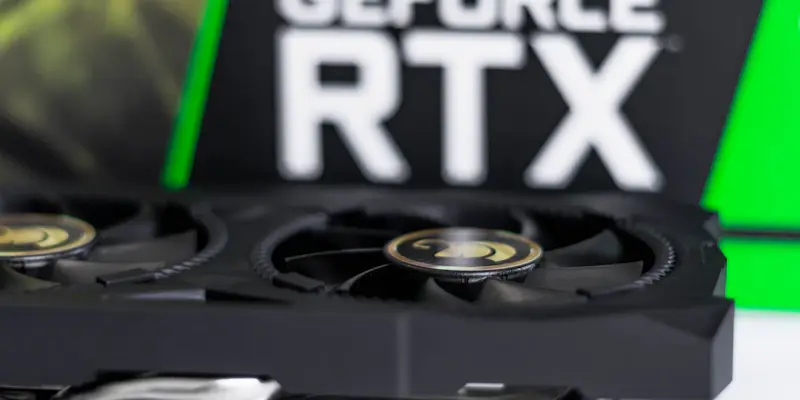
Nvidia has always been at the cutting edge of technological innovation, cementing its position as a leader in the artificial intelligence (AI) revolution. Under the leadership of CEO Jensen Huang, the company has made remarkable strides in GPU technology. These advancements are set to redefine the AI landscape, ensuring Nvidia remains an essential player in the tech industry for years to come.
The Unveiling of Blackwell GPUs
The recent Nvidia GTC Conference in San Jose was a landmark event, marking the introduction of the Nvidia Blackwell GPU. This new product, significantly more advanced than its predecessor, the Hopper GPU, boasts a 40-fold increase in tokens per second for AI inference. This dramatic leap in performance represents a pivotal milestone for AI development, promising to revolutionize computational possibilities.
Jensen Huang’s keynote presentation focused on the rapid progression of Nvidia’s technology, highlighting the annual update roadmap as a strategic advantage. While the aggressive pace may present challenges for customers trying to keep up, this steadfast commitment to advancement cements Nvidia’s position at the forefront of high-performance computing. The keynote underscored the company’s vision of continuous innovation, driving home the importance of staying ahead in the competitive landscape of AI technology.
Strategic Revenue Management
Huang provided valuable insights into Nvidia’s revenue strategy during his keynote, revealing the company’s approach to navigating technological disruption. By urging customers to transition to Blackwell despite recent investments in Hopper technology, Nvidia skillfully manages the delicate balance between innovation and customer adaptation. This decision, though potentially disruptive, reflects the company’s commitment to delivering the latest and most powerful tools available.
The humorous reference to himself as the “Chief Revenue Destruction Officer” underscored the internal tension between pushing cutting-edge technology and managing revenue streams. However, Huang assured stakeholders that Nvidia’s strategic planning ensures smooth transitions, suggesting a deep-seated confidence in their ability to manage these advancements. This balance between rapid innovation and customer support highlights the company’s adeptness in fostering long-term relationships with its clients while driving technological progress forward.
Growing Demand for Computational Power
AI capabilities such as reasoning and agentic AI are fueling an exponential increase in the demand for computational power. Nvidia’s high-performance GPUs are indispensable for meeting these escalating needs, positioning the company at the core of modern data centers and AI infrastructures. The constant evolution of AI applications necessitates GPUs that can handle complex, large-scale computations effectively.
Huang’s keynote emphasized the critical role these advancements play in meeting the needs of the future. As AI continues to evolve and new capabilities emerge, Nvidia’s state-of-the-art GPUs will become even more essential. The introduction of such powerful computing solutions ensures that AI developers have the necessary tools to push the envelope of innovation. By continuously enhancing their hardware, Nvidia demonstrates a clear understanding of the industry’s trajectory and its own pivotal role within it.
Infrastructure and Software Integration
Nvidia’s groundbreaking advancements extend beyond hardware to encompass significant strides in software and network infrastructure. The unveiling of Nvidia Dynamo, an open-source modular inference framework, epitomizes this initiative. Dynamo facilitates the management of distributed inference tasks, enabling more efficient and scalable AI solutions across various applications.
Additionally, the complete overhaul of Triton inference software underscores Nvidia’s dedication to optimizing these processes. Triton’s enhancements are designed to streamline the development and deployment of AI models, improving overall performance and resource efficiency. These developments reflect Nvidia’s holistic approach to performance scaling, emphasizing the integration of advanced hardware with sophisticated software solutions. By doing so, Nvidia ensures a seamless user experience, enabling clients to fully leverage the power of their GPUs.
Photonic Networking Innovations
In an unexpected yet pioneering move, Nvidia has achieved significant advancements in co-packaged optical networking. This innovation facilitates large-scale networking of substantial GPU deployments, signaling a new era of photonic scale-out technology. This breakthrough promises to redefine large-scale data networking, offering significant improvements in efficiency and performance.
The accelerated timeline for the availability of photonic networking technology showcases Nvidia’s capability to surpass market expectations. By integrating photonics into their networking solutions, Nvidia is poised to deliver unprecedented speeds and bandwidth for data-intensive applications. This development reaffirms the company’s commitment to staying ahead of the curve, consistently pushing the boundaries of what is possible within the industry. The implementation of photonic networking is set to transform how data centers operate, ensuring Nvidia’s technology remains at the forefront of innovation.
Future Roadmaps and Product Development
Nvidia’s ambitious roadmap extends through 2028, with a series of groundbreaking innovations on the horizon. Upcoming products such as the Rubin Ultra GPU and Blackwell Ultra promise to double computing power while incorporating advanced networking and innovative cooling solutions. These products are designed to push the limits of technological capability, maintaining Nvidia’s leadership position in AI and high-performance computing.
The company’s focus on infrastructure compatibility ensures smooth transitions between generations, easing the adoption process for customers. This foresight reflects Nvidia’s strategic vision, recognizing the importance of sustainable advancement in technology. By considering the practicalities of integration and transition, Nvidia reassures customers that their investments in new technology will be protected and maximized.
Addressing Stakeholder Implications
Nvidia’s brisk technological pace presents both groundbreaking advancements and challenges. Customers must swiftly adapt to these innovations to stay competitive, often necessitating significant infrastructure investments. The rapid introduction of new technologies requires clients to anticipate and prepare for regular upgrades, ensuring they remain at the cutting edge of AI capabilities.
Competitors are under tremendous pressure to match Nvidia’s performance levels and integrated solutions. The company’s aggressive innovation cycle sets a high bar, pushing rivals to elevate their own offerings. This competitive dynamic propels the entire industry forward, highlighting Nvidia’s role as a catalyst for progress.
For investors, the balance between disruptive potential and sustained growth is critical. While the rapid pace of advancement may introduce short-term uncertainties, the long-term promise of market leadership reassures stakeholders. Nvidia’s clear and detailed roadmap, along with its track record of delivering on ambitious targets, provides a sense of confidence in the company’s strategic direction.
Pioneering the AI Revolution
Nvidia has consistently been at the forefront of technological innovation, solidifying its position as a dominant force in the AI revolution. Under the insightful guidance of CEO Jensen Huang, the company has achieved significant milestones in GPU technology. These advancements in GPUs are revolutionizing the AI landscape, positioning Nvidia as a pivotal player in the tech industry for the foreseeable future.
Nvidia’s relentless pursuit of excellence doesn’t just stop at GPUs; the company is also investing heavily in software and comprehensive AI solutions. This holistic approach ensures that Nvidia not only provides the hardware needed for ambitious AI projects but also the software and platforms necessary to optimize their performance.
In essence, Nvidia’s strategy is to be an all-encompassing enabler of AI innovation, from the foundational hardware to the complex algorithms that drive intelligent applications. This commitment to a full-spectrum AI vision underscores why Nvidia remains essential and continues to shape the future of technology.