

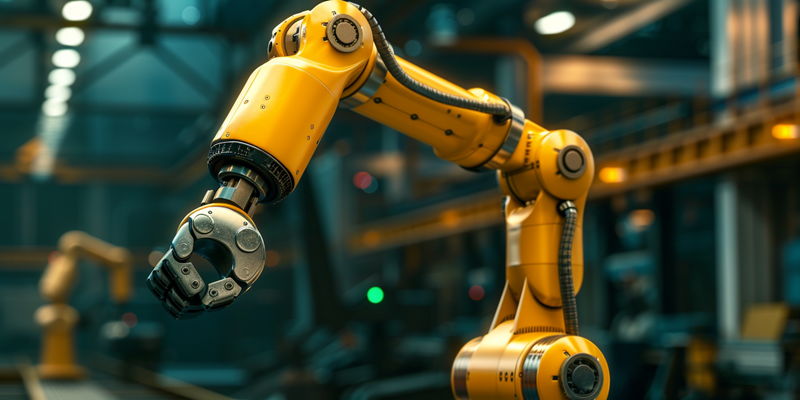
In the swiftly advancing sector of industrial robotics, a key player emerges with innovative solutions that promise to redefine what’s possible in automated precision and adaptability. Micropsi Industries has released MirAI 2, a robust artificial intelligence-driven vision software aimed at tackling some of the most persistent challenges in automation. These include the pesky variations in position, shape, color, lighting, and the background interference that thwart a robot’s ability to perform reliably. The release of MirAI 2 marks a milestone in engineering prowess, offering industrial robots the eyesight to navigate and interact with their environment in unprecedented ways.
Understanding the Core Advancements of MirAI 2
Real-time Data Utilization Over Traditional CAD Models
Shifting away from the conventional reliance on CAD models, MirAI 2 embraces a radically different approach. It utilizes real-time data captured by cameras to provide robots with a dynamic perception of their surroundings. This enables robotic systems to adapt on the fly to the ever-changing conditions within a work cell, a significant leap forward compared to static programming methods. Robots equipped with MirAI 2 can now perform with an impressive level of autonomy, responding to the unpredictability of real-world scenarios, which mirrors the kind of adaptability you would expect in human workers.
Demonstration and Adaptability in Industrial Settings
The practical prowess of MirAI 2 was exhibited at the Automate 2024 show, where it navigated the intricacies of shifting light and varying backgrounds with ease. Tasked with handling brake pads, the robot, guided by MirAI 2, showcased its capacity to maintain precision in the presence of factors that typically disrupt machine vision. This adaptability is particularly vital in industrial settings, where conditions can change rapidly and unpredictably, showcasing the software’s preparedness to take on the robust demands of modern factories.
Simplifying the Robot Learning Process
Teaching Robots through User Interaction
MirAI 2 enhances the teaching process for robots by utilizing simple hand-guidance or control inputs, which instruct the AI to interpret different angles, poses, and backgrounds. This hands-on approach makes it much easier for users to train the system, fostering a seamless human-robot collaboration that accelerates the learning curve. The software thus demolishes barriers between complex programming and end-user interaction, democratizing the use of sophisticated robotic systems across various industries.
Compatibility and Integration with Major Manufacturers
Cementing its versatility in the industrial landscape, MirAI 2 is designed for compatibility with a broad spectrum of robots from major manufacturers like Universal Robots, Fanuc, and KUKA. By embracing cross-platform operation, Micropsi Industries positions its software as a unifying force in robotics, making it easier for businesses to plug MirAI 2 into their existing ecosystems without overhauling their hardware, which streamlines automation on a grand scale.
Additional Features Enhancing Robotic Operations
Streamlining Task Duplication and Data Recording
MirAI 2 isn’t just about cultivating smarter robots; it’s about fostering a smarter workflow too. By integrating features like robot skill-sharing, the software slashes the time and effort needed to duplicate tasks between robots. Complementing this is a semi-automatic data recording function that reinforces the training data’s quality, acting like a diligent apprentice that meticulously captures knowledge for repeated use.
Focus on Safety and Hardware Compatibility
What makes MirAI 2 stand out are not only its operational intelligence but also its unwavering commitment to safety. It comes with abnormal condition detection that preemptively safeguards operations. Robust compatibility with industrial-grade hardware assures that the software isn’t just a fair-weather friend—it’s built to withstand the exacting conditions within the heart of manufacturing giants, assuring continuity and reliability when it matters most.
The Role of MirAI 2 in Future Automation Trends
AI Systems that Prioritize Intuition and User-friendliness
The innovation delivered by MirAI 2 touches upon a growing trend in technological advancements—crafting AI systems that prioritize user-friendly and intuitive designs. This embrace of instinctive learning tools, coupled with AI’s power, signals a broader shift that values the seamless integration of technology into the fabric of industrial operations, envisioning systems that empower rather than intimidate.
The Broader Impact on Industrial Robotics
In the rapidly progressing world of industrial robotics, Micropsi Industries is making waves with its latest innovation, MirAI 2. This cutting-edge AI-driven vision software is engineered to overcome automation’s most stubborn obstacles, such as unpredictable variations in positioning, shape, size, color, lighting, and confusing background signals. These factors have long been the bane of robotic consistency and dependability.
MirAI 2 represents a significant breakthrough, equipping robots with enhanced visual capabilities to perceive and interact with their surroundings like never before. Robots can now address tasks with a level of precision and adaptability that was previously unattainable, paving the way for new possibilities in automated environments.
This advancement signals a leap forward in problem-solving within the field, giving companies an edge as they strive for efficiency and reliability. By introducing MirAI 2 to the market, Micropsi Industries is not just providing a product; they are setting a new standard for what industrial robots can achieve. As the software hits the industry, it’s clear that Micropsi Industries is positioned as a frontrunner in redefining the frontier of robot functionality.