

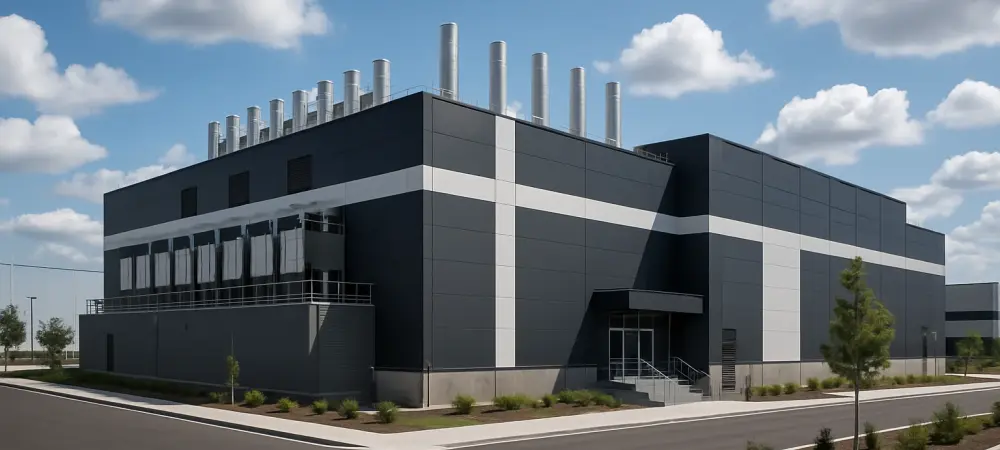
What does it take to keep pace with a world that generates over 2.5 quintillion bytes of data every single day? In the heart of Los Angeles, a city pulsating with digital activity, Goodman Group is constructing more than just a building—they’re crafting a cornerstone of the digital age with their latest project. The recent structural topping out of the Goodman LAX01 Vernon data center signals a pivotal moment, not just for the company, but for the entire data infrastructure landscape. This development promises to anchor the relentless demands of cloud computing, artificial intelligence, and beyond, raising questions about how such projects redefine urban connectivity.
The significance of this milestone cannot be overstated. As digital transformation accelerates, data centers have become the unsung heroes of modern economies, supporting everything from streaming platforms to critical business operations. Goodman Group’s latest project in Vernon, California, stands as a testament to the urgent need for robust, scalable infrastructure in key urban hubs. This feature delves into how the company is positioning itself as a leader in this space, exploring their innovative strategies and the broader implications for businesses and cities navigating an increasingly data-driven world.
A Milestone in Digital Infrastructure: Goodman’s Bold Step Forward
At 3094 E Vernon Avenue in Vernon, a three-story, 263,410-square-foot facility is taking shape, designed to deliver up to 32MW of critical IT power with a gross capacity of 49.5MW. Known as the Goodman LAX01 Vernon data center, this project reached a key phase with its structural topping out, a clear indicator of progress toward becoming power shell-ready by mid-2026. Built in partnership with Whiting Turner, the facility showcases advanced engineering with a 2N substation design and dual 66kV feeds, transformed on-site by Vernon Public Utilities, to support high-density workloads.
This isn’t merely about constructing a data center; it’s about addressing a critical gap in one of the world’s most connected cities. Los Angeles, a hub for tech giants and digital traffic, demands infrastructure that can handle exponential growth in data usage. Goodman’s focus on strategic location and cutting-edge design positions this facility as a linchpin for future digital expansion, setting a benchmark for what modern data centers must achieve in terms of reliability and capacity.
The Surging Need for Data Centers: A Global Imperative
The digital economy is booming, with global data center demand projected to grow at a compound annual rate of over 10% from 2025 to 2030, according to industry analysts. Factors driving this surge include the proliferation of cloud services, the rise of AI applications, and the increasing reliance on real-time data processing. In urban centers like Los Angeles, where businesses and consumers alike depend on seamless connectivity, the pressure on existing infrastructure has reached unprecedented levels.
Goodman Group’s entry into this arena comes at a crucial juncture. The company recognizes that data centers are no longer just support systems but vital components of economic competitiveness. By establishing a presence in key markets, they are not only meeting current needs but also anticipating future challenges, ensuring that cities remain equipped to handle the digital deluge that shapes modern life.
Goodman Group’s Vision for Data Center Innovation
Beyond the Vernon project, Goodman Group is redefining the data center landscape with a global footprint spanning Australia, New Zealand, Asia, Europe, the UK, and the Americas. Their portfolio boasts a staggering 5GW power bank across 13 cities, with 2.7GW secured and 2.3GW in advanced procurement stages. Active developments in regions like Hong Kong, Germany, France, Japan, and the US underscore a commitment to scaling infrastructure on a worldwide scale.
What sets Goodman apart is their integrated approach to development. From site selection to power procurement and construction, every aspect is meticulously controlled to ensure efficiency and scalability. This strategic pivot from traditional industrial real estate to data centers mirrors moves by peers like Prologis and Segro, fueled by plans to raise AU$4 billion (US$2.5 billion) for further expansion, signaling a profound shift in how industrial firms view digital infrastructure as a growth frontier. Their focus on high-capacity facilities like LAX01 Vernon demonstrates an understanding of market needs. Equipped to handle intensive workloads, such centers are built with future-proofing in mind, ensuring they can adapt to evolving technological demands. This blueprint offers a glimpse into how data centers might evolve to support the next wave of digital innovation.
Leadership Insights: Goodman’s Strategy in a Competitive Arena
Anthony Rozic, CEO of Goodman North America, encapsulates the company’s ethos with clarity: controlling every stage of data center development—from land acquisition to power solutions—enables unparalleled precision and reliability. This hands-on approach ensures that projects are not just completed but optimized for long-term performance in high-stakes environments.
Los Angeles, already home to major players like Digital Realty, Equinix, and CoreSite, presents a competitive yet opportunity-rich market. Goodman’s entry into this space is bolstered by industry trends, such as potential investments from Singapore’s sovereign wealth fund, GIC, into their data center assets. Such interest from institutional investors highlights the sector’s allure and validates Goodman’s strategic direction amid a crowded digital infrastructure landscape.
Rozic’s vision extends beyond individual projects to a broader mission of transforming how digital hubs are conceptualized. By prioritizing strategic locations and robust partnerships, Goodman is carving out a niche that could influence how other developers approach urban data center challenges, potentially reshaping industry standards.
Lessons from Goodman’s Model: Strategies for Stakeholders
For businesses, urban planners, and investors eyeing the data center boom, Goodman Group’s methodology offers valuable takeaways. Identifying strategic locations near high-demand digital corridors, as seen with the Vernon site, is critical for ensuring relevance and accessibility. This approach can guide tech firms seeking infrastructure or cities aiming to bolster their digital economies. Scalable power solutions, such as the 2N substation design, provide another lesson in building for resilience. Stakeholders can learn from this emphasis on redundancy and capacity to support high-density workloads, ensuring infrastructure remains viable as demand escalates. Aligning with industry trends, like the shift of industrial real estate firms toward data centers, also presents opportunities for collaboration and investment in emerging markets.
Moreover, Goodman’s global expansion strategy illustrates the importance of thinking beyond local boundaries. For cities and companies, adopting a similarly expansive outlook—partnering across regions and leveraging financial mechanisms like Goodman’s AU$4 billion fundraising plan—can position them at the forefront of the data-driven future, ready to capitalize on the next digital wave.
Reflecting on a Digital Legacy
Looking back, Goodman Group’s journey with the LAX01 Vernon data center marked a defining chapter in the evolution of digital infrastructure. Their ability to integrate development processes, from site selection to power delivery, set a precedent for how data centers could be built to meet the insatiable demands of a connected world. The project in Los Angeles stood as a beacon of what was possible when vision aligned with execution.
The broader industry shift, where industrial real estate giants pivoted toward data centers, also gained clarity through Goodman’s efforts. Their global presence and financial strategies underscored a transformative trend that reshaped urban economies. As stakeholders reflected on this period, the focus turned toward actionable steps—how to replicate such integrated models, secure strategic investments, and prioritize scalability in future projects.
Moving forward, the challenge remained to sustain this momentum. Cities and businesses were tasked with fostering partnerships, investing in innovative power solutions, and anticipating the next surge in digital needs. Goodman’s story offered a roadmap, urging all players to think bigger, build smarter, and prepare for a future where data centers would remain the backbone of progress.