
How Is FANUC’s CRX-10iA/L Changing Paint Automation?

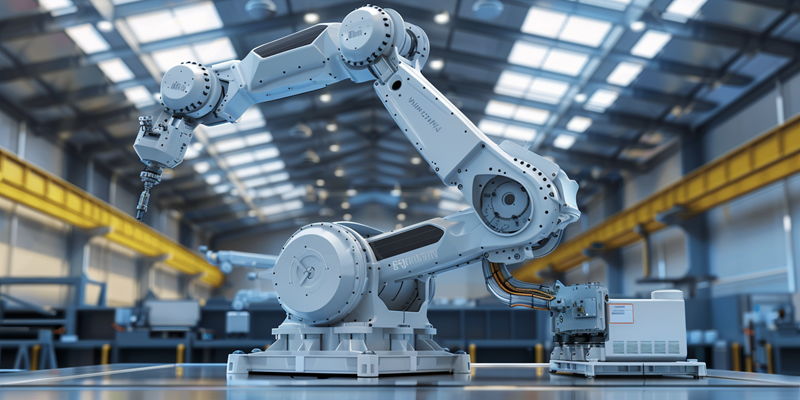
The landscape of industrial automation has seen a significant shift with the advent of collaborative robots, or ‘cobots’. FANUC America’s latest introduction, the CRX-10iA/L Collaborative Paint Robot, unveiled at Automate 2024, heralds a new era in this transformative journey. By blending the agility of cobots with advanced painting technology, the CRX-10iA/L stands out as both a technical marvel and a potential economic boon for businesses of all sizes. Drawing from FANUC’s deep-seated history of excellence in robotic painting systems—traditionally dominated by the automotive and heavy industrial sectors—the new cobot extends these benefits to enhance operational efficiency and elevate safety standards in industrial painting.

User-Friendly Innovation

Distinctively accessible, the CRX-10iA/L enables users, even those without prior robotics experience, to master its operation swiftly thanks to its intuitive programming system. Utilizing a tablet interface replete with graphical icons and the simplicity of lead-through teaching, the barrier to entry for utilizing robotic technology has been dramatically lowered. This cobot comes equipped with explosion-proof capabilities, a generous 10 kg payload capacity, and an extensive 1.418 m reach. The need for constant repositioning of either the robot or the workpiece is eliminated, optimizing the workflow process. The CRX-10iA/L’s lightweight structure, at just 45 kg, and compatibility with the R-30iB Mini Plus controller, allows for painless integration into various work environments, making it a versatile addition to FANUC’s CRX product family.

Safety and Efficiency Redefined

The CRX-10iA/L Collaborative Paint Robot is more than just a technological advancement; it’s a tool that redefines safety and efficiency within the painting process. Facilitating consistent quality and reducing the hazards associated with paint applications, the CRX-10iA/L situates itself at the forefront of workplace innovation. Equipped with features aimed at safeguarding the working environment and bolstered by FANUC’s trusted history in automation, the CRX-10iA/L is poised to transform the dynamics of paint automation and set a new standard for collaborative robotics in the industrial sector.

Explore more

Agentic AI Redefines the Software Development Lifecycle

The quiet hum of servers executing tasks once performed by entire teams of developers now underpins the modern software engineering landscape, signaling a fundamental and irreversible shift in how digital products are conceived and built. The emergence of Agentic AI Workflows represents a significant advancement in the software development sector, moving far beyond the simple code-completion tools of the past.

Is AI Creating a Hidden DevOps Crisis?

The sophisticated artificial intelligence that powers real-time recommendations and autonomous systems is placing an unprecedented strain on the very DevOps foundations built to support it, revealing a silent but escalating crisis. As organizations race to deploy increasingly complex AI and machine learning models, they are discovering that the conventional, component-focused practices that served them well in the past are fundamentally

Agentic AI in Banking – Review

The vast majority of a bank’s operational costs are hidden within complex, multi-step workflows that have long resisted traditional automation efforts, a challenge now being met by a new generation of intelligent systems. Agentic and multiagent Artificial Intelligence represent a significant advancement in the banking sector, poised to fundamentally reshape operations. This review will explore the evolution of this technology,

Cooling Job Market Requires a New Talent Strategy

The once-frenzied rhythm of the American job market has slowed to a quiet, steady hum, signaling a profound and lasting transformation that demands an entirely new approach to organizational leadership and talent management. For human resources leaders accustomed to the high-stakes war for talent, the current landscape presents a different, more subtle challenge. The cooldown is not a momentary pause

What If You Hired for Potential, Not Pedigree?

In an increasingly dynamic business landscape, the long-standing practice of using traditional credentials like university degrees and linear career histories as primary hiring benchmarks is proving to be a fundamentally flawed predictor of job success. A more powerful and predictive model is rapidly gaining momentum, one that shifts the focus from a candidate’s past pedigree to their present capabilities and