

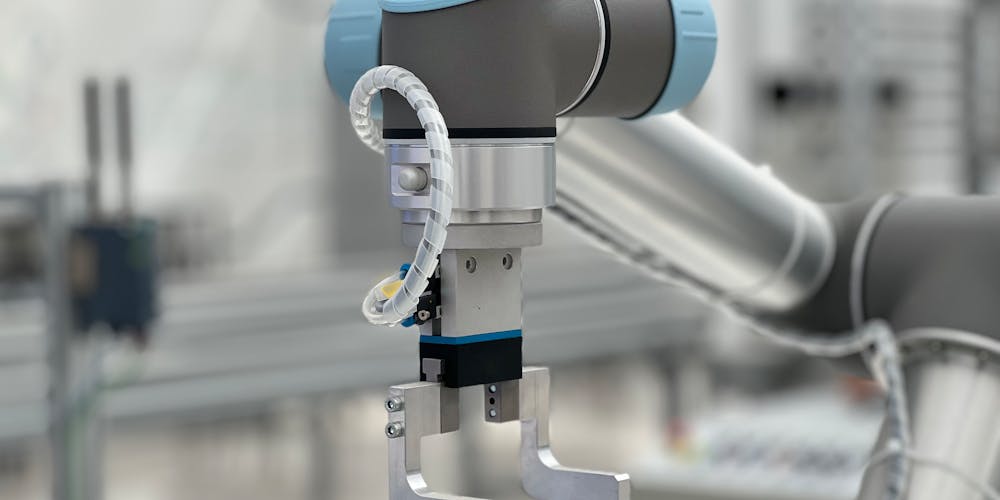
In a landmark collaboration, NVIDIA and Intrinsic are joining forces to revolutionize the field of robotic grasping technologies—a quintessential element of industrial automation. Already formidable in isolation with their AI and simulation prowess, these two industry pioneers aim to unlock new frontiers by integrating NVIDIA’s Isaac Sim platform with Intrinsic’s developmental software. This partnership is poised to bolster robotic dexterity and efficiency, marking a transformative step that promises to redefine how robots interact with their environment in industrial settings.
Robotic grasping has long been a challenge that has restricted the versatility and application of automation technology. With the combined expertise of NVIDIA and Intrinsic, there’s a concerted effort to dismantle these barriers. NVIDIA shoulders this ambition with its Isaac Manipulator, a collection of advanced tools that facilitate robotic learning and task execution. These AI foundational models are the pinnacles of innovation that champion path planning and allow robots to rapidly assimilate new tasks autonomously. According to NVIDIA’s estimations, there’s a potential to slash programming time by a striking 80%.
Accelerating Robot Training Through Simulation
The Isaac Sim platform emerges as a cornerstone in this pursuit, offering a virtual realm where robots can be trained in intricate tasks before they’re deployed in the real world. This simulation-based approach grants a stark advantage—risks are mitigated, costs curtailed, and efficiency maximized. By using virtual environments to refine and test robotic grasping techniques, the requirement for real-world training data diminishes, shortening the developmental timeline and hastening the robot’s readiness for deployment.
Moreover, NVIDIA brings to the table an advanced feature: the generation of synthetic data. This crucial component is instrumental in training AI models, an aspect that Intrinsic diligently leverages within its Flowstate developer environment. The merging of these sophisticated systems enables robots to learn grasp execution with a significantly improved success rate. A robust prototype from the collaboration has already exhibited prowess in performing vacuum grasping tasks—a testament to the potential impact the partnership holds.
The Future of Industrial Automation
In a groundbreaking move, NVIDIA pairs with Intrinsic to advance robotic grasping technology, which is vital for industrial automation. Their melding of NVIDIA’s Isaac Sim with Intrinsic’s software is anticipated to boost robots’ handling skills. They are combining NVIDIA’s AI capabilities with Intrinsic’s innovative software to significantly improve robotic interactions within industrial spaces.
Robotic grasping, hitherto a stumbling block for the spread of automation, stands to benefit greatly from this synergy. NVIDIA’s Isaac Manipulator epitomizes this drive with its AI models that empower robots to learn and perform tasks more efficiently. This could potentially cut programming times by an impressive 80%.
Such progress from NVIDIA and Intrinsic could mark a new era of smart, adaptable robots that reshape industrial processes. As they work together, the promise is not just smarter machines, but leaner, more productive factories as well.