

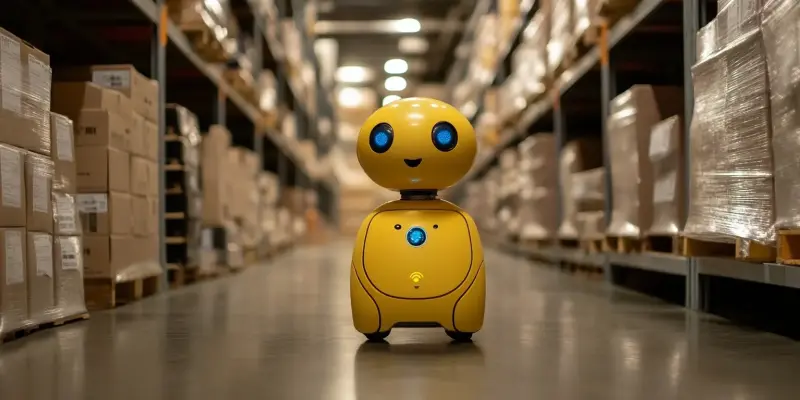
Deus Robotics, a forward-thinking company in the sphere of warehouse robotics automation, has secured a significant milestone by obtaining $3 million in seed funding and increasing its overall valuation to $20 million. Founded by Pavlo Pikulin and headquartered in Kyiv, Ukraine, the firm also maintains offices in the UK and US. Deus Robotics addresses a monumental challenge in warehouse management by integrating robots from various manufacturers using a sophisticated AI platform. This innovative approach enhances operational efficiency by an impressive 300 percent, setting a new standard in the industry. Deus Robotics’ end-to-end solution is not limited only to advanced AI platforms but also includes a fleet of AI-enhanced robots, offering a comprehensive package for warehouse automation needs.
Unified System for Diverse Robotic Integration
One of the key challenges that Deus Robotics effectively tackles is that of robots from different manufacturers often operating in silos. This issue can make warehouse automation less efficient and more expensive, especially for medium-sized operations constrained by tighter budgets. Deus Robotics’ unified system means warehouses can seamlessly add or replace robots without incurring additional integration costs. By offering this flexibility, the company makes sophisticated automation accessible to medium-sized warehouses, not just large enterprises with extensive resources. Deus Robotics has already successfully implemented five projects with leading logistics companies, proving the efficacy of its technology. This success has motivated the company to set its sights on further expanding into the UK market by 2025.
Investors have taken notice of Deus Robotics’ transformative vision and potential for extensive market disruption. The latest funding round saw participation from several prominent investors, including U.Venture, 1991 Ventures, SID Venture Partners, Sigma Software Labs, and SD Capital. Andrew Sorohan of U.Ventures lauded Deus Robotics for its groundbreaking technology, the resilience of its founders, and the substantial market validation achieved thus far. By combining expertise in robotics and computer vision, Deus Robotics can deploy its products at a pace much faster than traditional methods, reducing setup times from months to just weeks.
Practical Impact and Future Prospects
Deus Robotics is revolutionizing logistics automation by concentrating on customer needs and practical applications. Philipp Grushko from SD Capital highlighted the significant influence of the company’s technology on the sector, underscoring the substantial benefits it brings. The recently secured funds are designated for critical areas such as enhancing product offerings and boosting robotic integration in warehouses, especially in the UK. Additionally, these resources will raise awareness and encourage robotics adoption among logistics businesses that have previously been slow to modernize.
In essence, Deus Robotics is transforming warehouse automation with their versatile and scalable solutions. By incorporating various robotic systems, the company not only improves operational efficiency but also makes advanced automation technology more attainable for a wide range of businesses in the global supply chain. This development paves the way for a major shift in the industry, offering a compelling vision for the future of warehouse management and logistics. With its innovative strategies and proven track record, Deus Robotics is well-equipped to lead the charge in altering the landscape of warehouse automation.