

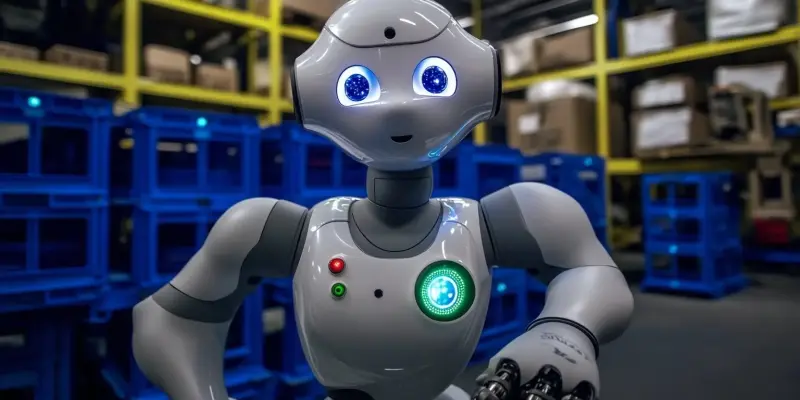
Artificial intelligence (AI) and generative AI (GenAI) are at the forefront of transforming robotics, driving remarkable advancements and expanding applications across a multitude of sectors. The profound impact of these technologies is evident in the way they enhance robotics’ capabilities and operational efficiencies. Insights from Sami Atiya, president of robotics and discrete automation at ABB Ltd., shed light on how ABB’s innovative contributions, particularly within the Indian market, are shaping this evolution. From automotive manufacturing to logistics and construction, AI-driven robotics is setting new benchmarks for efficiency, precision, and versatility in industrial operations.
AI and Robotics in India
The use of robotics in India has seen a rapid expansion, especially in the automotive industry, where AI and GenAI have played pivotal roles in enabling robots to undertake more sophisticated tasks. ABB robots, holding a significant 65% share in painting cars in India, exemplify how AI-driven robotics can significantly enhance efficiency, precision, and overall productivity in automotive manufacturing. This substantial presence highlights the transformative power of AI in automating labor-intensive processes, thereby improving both the speed and quality of production.
The reach of AI-powered robotics extends well beyond the automotive sector, making significant inroads into industries such as logistics, construction, warehouses, pharmaceuticals, and agriculture. The advanced vision and decision-making capabilities enabled by AI allow robots to handle unpredictable tasks, like sorting parcels of varying shapes and sizes. This versatility underscores the growing indispensability of AI-enhanced robots across diverse industries, where they perform complex functions that were previously unmanageable. As a result, businesses across different sectors are increasingly adopting AI-powered robotics to drive efficiency, streamline operations, and maintain competitiveness in a rapidly evolving market.
AI-Driven Advancements in Robotics
AI and vision improvements have markedly enhanced the capabilities of robots, enabling them to undertake tasks that were once considered impossible or exceedingly challenging. For example, ABB has developed systems permitting robots to respond to natural language commands, thereby significantly improving usability and operator convenience. This represents a major advance in human-robot interaction, making it easier for even non-experts to control and program these sophisticated machines. By simplifying the interface between humans and robots, AI enables seamless integration and adoption of robotic solutions across various sectors.
In the logistics domain, AI-powered robots are revolutionizing operations by optimizing route efficiency and fuel savings. ABB’s smart tools employ machine learning to detect anomalies in motor performance, thereby enhancing operational uptime and cost-efficiency. These tools are instrumental in boosting productivity while minimizing downtime and maintenance costs. AI-driven advancements are not only elevating operational efficiency but also delivering substantial economic benefits. Companies are increasingly turning to AI-enhanced robotic solutions to gain a competitive edge, reduce operational expenses, and achieve higher levels of accuracy and precision in their processes.
Industry Examples of AI Integration
ABB Robotics’ technologies have made notable contributions to various industries, underscoring the critical role of AI-powered robots in driving innovation and efficiency. Ola Electric Ltd’s mega-factory is a prime example, relying extensively on ABB’s robotic systems for its assembly lines, which highlights the significant impact of AI in streamlining manufacturing processes and ensuring high-quality production. This integration demonstrates how AI can optimize complex assembly operations, improve throughput, and maintain stringent quality standards in highly competitive manufacturing environments.
Another compelling example is seen in Mahindra and Mahindra Ltd’s adoption of ABB’s PixelPaint technology in their electric vehicle paint facility. This groundbreaking technology has not only enhanced energy efficiency but also significantly reduced emissions, showcasing the environmental benefits of AI-driven robotics. Such industry examples underscore the tangible impact of AI on improving operational efficiency, sustainability, and overall performance. By adopting advanced AI-powered robotics, companies are not only boosting productivity but also contributing to environmental conservation, thereby achieving a dual goal of economic and ecological well-being.
Strategic Partnerships and Acquisitions
ABB has strategically expanded its robotics portfolio through carefully curated partnerships, acquisitions, and investments, aiming to stay at the forefront of innovation in AI and robotics. The acquisition of ASTI Mobile Robotics and Sevensense has significantly bolstered ABB’s capabilities in autonomous mobile robot navigation and mapping. These strategic moves have enhanced ABB’s ability to offer sophisticated robotic solutions capable of navigating and mapping environments in real-time, thereby elevating the operational capabilities and efficiency of their robotic systems.
A notable partnership with Microsoft has further strengthened ABB’s AI capabilities. The launch of ABB Ability Genix Copilot, leveraging Microsoft Azure’s OpenAI Service, facilitates real-time data processing and actionable insights, enabling businesses to make informed decisions promptly. This collaboration underscores the importance of harnessing the strengths of leading technology companies to drive innovation and expand the potential applications of AI in robotics. Through such strategic alliances, ABB continues to lead in delivering advanced AI-powered solutions that redefine industry standards and set new benchmarks for performance, efficiency, and adaptability.
Human-Robot Collaboration and Safety
Artificial intelligence and generative AI are leading a significant transformation in the robotics industry, driving cutting-edge advancements and broadening their applications across numerous sectors. The substantial impact of these technologies is seen in their ability to enhance the capabilities and efficiency of robotics. According to Sami Atiya, president of robotics and discrete automation at ABB Ltd., ABB’s innovative contributions are notably influencing this evolution, especially within the Indian market. Their AI-driven robotics solutions are setting new standards for efficiency, precision, and versatility in industrial operations. These solutions are being applied in various fields, including automotive manufacturing, logistics, and construction, significantly improving operational efficiencies. By incorporating AI, ABB is enabling robots to perform more complex tasks with greater accuracy and adaptability, further cementing the critical role of AI in modern industrial practices. The company’s efforts showcase the transformative potential of AI in reshaping the future of robotics.