

Welcome to an insightful conversation with Dominic Jainy, an IT professional with deep expertise in artificial intelligence, machine learning, and blockchain. Today, Dominic joins us to discuss Deep Green’s innovative approach to data center development and sustainable energy solutions, with a focus on their latest project in Bradford, UK, and their ambitious expansion plans. We’ll explore how Deep Green is redefining the data center industry by repurposing waste heat for community benefit, the unique aspects of their projects, and their vision for a greener future in technology infrastructure.
Can you give us an overview of Deep Green’s mission and how it stands out in the data center industry?
Thanks for having me. Deep Green’s mission is to revolutionize the data center space by combining high-performance computing with sustainability. We’re not just about processing power; we’re focused on capturing the waste heat generated by our servers and using it to benefit local communities. What sets us apart is our commitment to offering this heat for free to facilities like swimming pools or district heating networks. It’s a win-win—our clients get efficient computing solutions, and communities get access to sustainable energy.
How did the concept of reusing waste heat for community benefit first come about at Deep Green?
The idea stemmed from recognizing a massive inefficiency in the industry. Data centers generate an enormous amount of heat, and traditionally, that’s just dissipated into the atmosphere with expensive cooling systems. We asked ourselves, why not turn this byproduct into a resource? Early on, we saw opportunities in places like leisure centers with swimming pools, where consistent heating is a big need. From there, it evolved into broader applications like district heating, and it’s been exciting to see the impact grow.
What inspired Deep Green to choose Bradford, West Yorkshire, for the new 5MW data center project?
Bradford was a strategic choice for several reasons. The city is already investing in sustainable infrastructure, particularly with the Bradford Energy Centre being developed nearby. That alignment with a district heating network made it a perfect fit for our model of heat reuse. Plus, the area has a significant population that can benefit from the heat output—potentially warming around 10,000 homes. It’s about being where we can make the most difference.
Can you explain how the waste heat from the Bradford data center will integrate with the Bradford Energy Network?
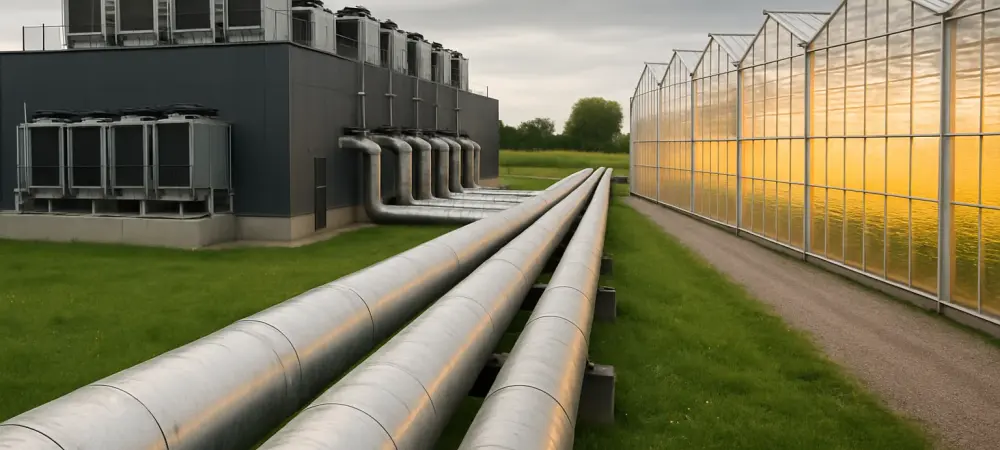
Absolutely. The data center is designed to produce around 5MW of waste heat, which will be channeled into the Bradford Energy Network, a district heating system launching next year. We’re working on a connection through a planned water source heat pump building that will efficiently transfer this heat into the network. It’s a collaborative effort to supplement the energy center’s output and provide a sustainable heating solution for the community.
What kind of impact do you anticipate this project will have on the local Bradford community?
We’re thrilled about the potential here. Heating the equivalent of 10,000 homes is no small feat—it means lower energy costs and a reduced carbon footprint for thousands of families. Beyond that, it’s about fostering a sense of community partnership. We’re not just a tech company plopped into the area; we’re contributing to local infrastructure and sustainability goals. It’s a model we hope inspires other cities.
Can you walk us through some key design elements of the Bradford data center that make it efficient?
Sure. The facility is a two-story build with four data halls, which helps optimize space while handling significant computing loads. We’ve incorporated four diesel generators for backup power to ensure reliability. Additionally, we’re using dry air coolers as a secondary cooling system, which is more energy-efficient than traditional methods when heat reuse isn’t fully operational. Every aspect is designed with both performance and sustainability in mind.
Deep Green has a history of creative heat reuse, like at swimming pools. How does the Bradford project align with that broader vision?
The Bradford project is a natural evolution of what we’ve been doing. Whether it’s heating a pool in Devon or a district network in Bradford, the core idea remains the same—capture and repurpose heat that would otherwise go to waste. This project scales up our impact significantly, moving from individual facilities to entire communities. It’s a cornerstone of our strategy to integrate data centers into local energy ecosystems wherever we operate.
Looking at your expansion plans, can you share some insights into Deep Green’s projects beyond the UK, like in the US?
We’re excited to be growing internationally. In the US, we’re developing a 20MW facility in Lansing, Michigan, built into a repurposed campus space. Similar to Bradford, we’ll supply free heat to the local hot water system. This site, with advanced cooling technologies like immersion systems, is just the start of a larger pipeline of projects across the States. It’s about bringing our sustainable model to new markets and proving it works on a global scale.
What challenges do you foresee in scaling up these innovative projects, especially in new regions like the US?
Scaling always comes with hurdles. Regulatory differences between countries can slow down planning and approvals. There’s also the challenge of finding the right local partners who share our vision for sustainability. Plus, educating communities and stakeholders about the benefits of heat reuse takes time—it’s still a novel concept to many. But we’re committed to navigating these obstacles with transparency and collaboration.
What’s your forecast for the future of sustainable data centers over the next decade?
I believe we’re on the cusp of a major shift. Over the next ten years, sustainability will move from a nice-to-have to a must-have in the data center industry. With energy costs rising and climate goals tightening, companies will have no choice but to adopt models like ours that prioritize efficiency and community benefit. I foresee a future where data centers are integrated into urban planning as energy assets, not just tech hubs. It’s an exciting time to be part of that transformation.