

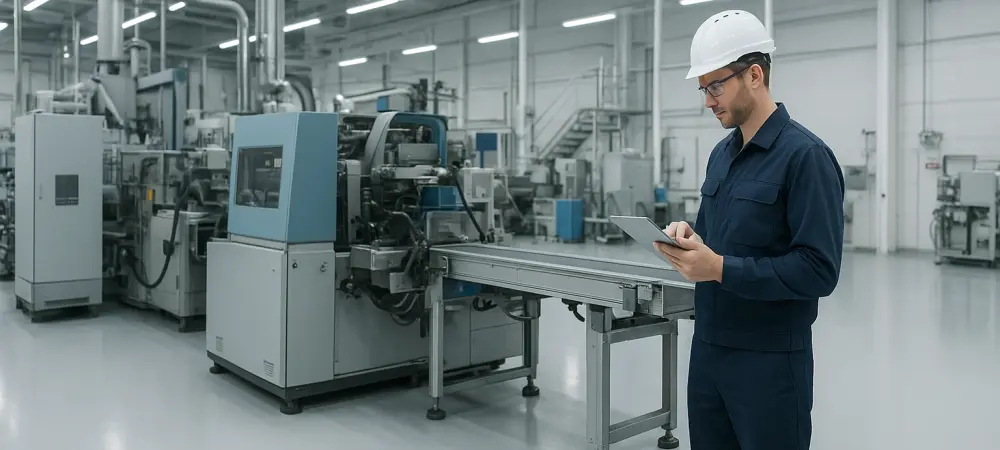
The emergence of vertical AI agents like Epicor Prism allows manufacturers to identify operational risks and reduce manual effort within established logic. This shift represents a departure from legacy systems that historically functioned as static repositories of data. For decades, Enterprise Resource Planning (ERP) served primarily as a system of record, documenting financial and operational history after the fact. However, the current landscape demands a more dynamic approach where software acts as a system of action. By integrating cognitive capabilities, these platforms now anticipate disruptions and automate complex decision-making processes. This evolution is particularly crucial for the make, move, and sell industries, where thin margins and high complexity necessitate precise oversight. Instead of looking in the rearview mirror to understand why a production line stalled, modern systems provide the foresight to prevent downtime before it occurs, ensuring continuous throughput across the entire supply chain and improving bottom-line performance.
Navigating Modern Market Pressures
Addressing Labor and Supply Chain Volatility
Current industrial operations face a dual challenge of tightening labor markets and persistent instability across global supply networks. The chronic shortage of skilled technicians and plant managers has reached a point where traditional hiring strategies are no longer sufficient to bridge the gap. Consequently, manufacturers are leaning on cognitive ERP to augment their existing workforce, allowing smaller teams to manage larger, more complex production schedules. These intelligent systems absorb the institutional knowledge that often leaves when veteran employees retire, embedding it into the software logic itself. This ensures that operational continuity is maintained regardless of staffing fluctuations. By automating the routine monitoring of material availability and labor allocation, the system frees up human talent to focus on specialized troubleshooting and strategic growth initiatives. This transition is not merely about replacing human effort but rather about amplifying the impact of every worker on the factory floor by providing them with advanced digital tools.
Supply chain volatility has similarly necessitated a shift toward more responsive enterprise software. In the current environment, waiting days or weeks to adjust to a material shortage or a logistics delay is no longer an option for competitive businesses. Cognitive ERP systems now provide the capability to pivot operations in near real-time by analyzing disparate data streams from vendors, carriers, and internal inventory monitors. As reshoring efforts continue to bring manufacturing back to American soil from 2026 to 2028, the complexity of local production has increased, requiring tighter integration between the shop floor and the back office. These systems act as a nervous system for the organization, sensing changes in the external environment and automatically suggesting adjustments to production priorities. This level of agility is critical for maintaining high service levels and meeting customer expectations in a market where lead times are increasingly scrutinized. By using these tools, companies can transform potential disruptions into manageable operational adjustments.
Accelerating Time to Value
The traditional model of ERP implementation, which often involved multi-year timelines and massive capital expenditures, has been largely abandoned in favor of rapid modernization strategies. Today, the focus is squarely on time to value, with organizations seeking to unlock the power of their existing data as quickly as possible. By migrating to cloud-based environments, manufacturers can layer advanced analytics and AI components over their established processes without the risk of a complete system overhaul. This modular approach allows for incremental improvements that deliver immediate financial benefits, such as optimized inventory levels or reduced waste in the production cycle. The ability to deploy specific cognitive modules targeting high-pain areas means that companies can see a return on investment within months rather than years. This speed is essential for staying ahead of competitors who are also racing to digitize their operations and capture market share through improved operational efficiency and faster response times in an increasingly demanding global economy.
Furthermore, the democratization of data within the enterprise has fundamentally changed how value is perceived and captured. In the past, data was often siloed within specific departments, making it difficult to generate a holistic view of company performance. Modern cognitive systems break down these barriers by providing a single, intelligent version of the truth that is accessible across the organization. From 2026 and through the coming years, the emphasis will remain on ensuring that every stakeholder, from the CFO to the warehouse supervisor, has access to actionable insights that drive better outcomes. This shift from owning a functional system to leveraging an intelligent platform means that the software is constantly contributing to the bottom line. By focusing on rapid deployment and continuous improvement, manufacturers can navigate macro-economic pressures with greater confidence. The goal is no longer just to have a system that works, but to have one that actively identifies hidden efficiencies and previously untapped revenue streams for the business.
The Role of Embedded Intelligence
Moving Beyond Generic AI
A defining characteristic of the modern cognitive ERP is the move away from generic, horizontal AI models that lack the specific nuances of the manufacturing industry. While general-purpose chatbots can handle basic queries, they often struggle with the complex business rules and specialized data structures found in an industrial setting. To be truly effective, AI must be embedded directly into the ERP workflow, possessing a deep understanding of production schedules, bill of materials, and supply chain constraints. This context-aware intelligence allows the system to make recommendations that are not only statistically sound but also operationally feasible. For instance, an embedded AI agent can identify a potential bottleneck in a specific machining center by correlating maintenance records with the current order backlog. By operating within the established logic of the business, these vertical AI agents provide a level of precision that generic models simply cannot match today. This ensures that the AI output is relevant and ready for immediate implementation.
The integration of these vertical agents also addresses the critical need for data governance and security within the enterprise. Unlike external AI tools that may expose sensitive corporate data to public models, embedded intelligence operates within the secure perimeter of the ERP system. This ensures that all automated actions and insights are governed by the same permissions and audit trails as any other transaction. As manufacturers increasingly rely on these systems to manage mission-critical operations, the importance of data integrity cannot be overstated. The shift toward specialized intelligence means that the software is tailored to the specific challenges of the make, move, and sell sectors. By focusing on industry-unique data sets, cognitive ERP providers can offer more accurate forecasting and more effective risk mitigation strategies. This approach fundamentally transforms the ERP from a passive record-keeper into a proactive partner that understands the heartbeat of the business and works tirelessly to protect it in a complex trade environment.
Enhancing Human-Centric Workflows
Despite the rise of automation, the human element remained central to the success of modern manufacturing. Cognitive ERP systems were designed to augment human workers rather than replace them, specifically by targeting high-friction, repetitive tasks that consumed valuable time. Document-intensive processes, such as the manual entry of purchase orders or the reconciliation of shipping manifests, were handled by intelligent agents that interpreted unstructured data with high accuracy. This automation reduced the likelihood of clerical errors and accelerated the entire order-to-cash cycle. By removing these administrative burdens, employees were free to engage in more meaningful work, such as process optimization or customer relationship management. The software acted as a collaborative partner, providing real-time decision support that helped workers make more informed choices on the shop floor. This created a more engaging work environment where technology served to empower the individual, leading to higher satisfaction and productivity levels.
Streamlining the onboarding process ensured that new workers became productive members of the team much faster than before. As the workforce continued to evolve, the ability of the ERP to provide intuitive, context-specific guidance became a major factor in retaining talent and maintaining operational excellence. These human-centric workflows ensured that technology was accessible to everyone in the organization, fostering a culture of data-driven decision-making. To capitalize on these advancements, successful organizations took decisive action to modernize their data architectures and integrate vertical agents into their core logic. By doing so, they moved beyond the limitations of historical data and embraced a model defined by proactive action and guaranteed outcomes. The shift toward cognitive platforms ensured that businesses were not just keeping up with the competition but were actively leading the way. This proactive stance allowed them to turn the challenges of market volatility into long-term resilience and sustainable growth.