

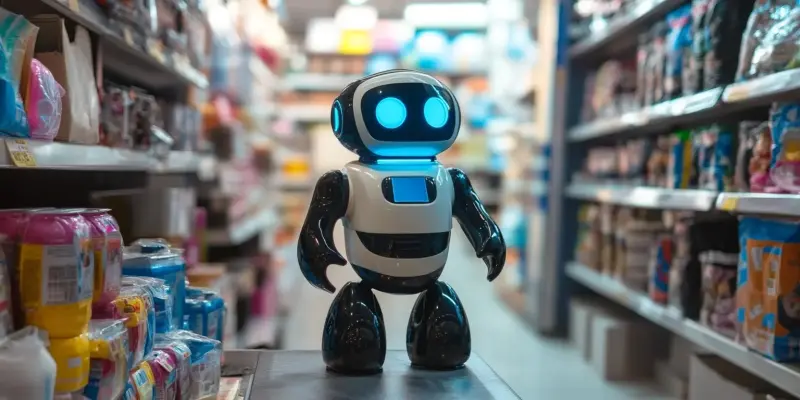
Artificial intelligence (AI) has fundamentally reshaped the retail landscape, seamlessly integrating technology into every facet of shopping and transforming both customer experience and operational efficiency. The impact of AI is monumental, empowering retailers to gain deeper insights into consumer behavior, streamline logistics, and offer personalized experiences that were inconceivable a decade ago. By leveraging AI, retailers can adapt to dynamic market conditions, address the ever-evolving expectations of tech-savvy consumers, and stay competitive in an increasingly digital marketplace.
The Power of Personalization and Dynamic Pricing
AI has remarkably enhanced personalized shopping by deploying machine learning algorithms to analyze vast troves of data, including customer preferences and purchase history. This sophisticated data analysis enables retailers to deliver precise product recommendations, elevating the customer’s shopping experience to an unprecedented level of customization. Personalized experiences not only enhance customer satisfaction but also drive consumer loyalty by anticipating and fulfilling individual preferences.
Dynamic pricing models, powered by deep learning, are another revolutionary application of AI in retail. These models adjust prices in real-time based on demand fluctuations, competitor pricing, and purchasing trends. By aligning prices with consumer expectations and market conditions, retailers can optimize their pricing strategies, thereby maximizing revenue and ensuring competitiveness. This agile approach allows businesses to respond promptly to market changes, fostering a more responsive and profitable pricing strategy.
Revolutionizing Customer Engagement
AI-driven technologies have redefined customer engagement by streamlining support and interaction. AI assistants and chatbots, capable of interpreting and responding to customer inquiries in real-time, provide instant support and resolve issues efficiently. Moreover, these virtual assistants can analyze the sentiments behind customer queries, offering empathetic and tailored responses. This level of engagement not only improves customer satisfaction but also enhances the overall brand experience by creating a more responsive and human-like interaction.
Voice commerce technology is another game-changer, simplifying the shopping process by allowing customers to make purchases using spoken commands. Voice-activated assistants like Amazon’s Alexa and Google Assistant facilitate seamless, hands-free shopping experiences, catering to the convenience of modern consumers. Additionally, sentiment analysis tools help retailers analyze customer feedback more effectively, enabling them to address concerns proactively and improve their services continually.
Enhancing Operational Efficiency
AI has significantly optimized inventory management and logistics, revolutionizing the backend operations of retail businesses. Predictive analytics powered by AI help retailers determine optimal stock levels by analyzing historical sales data, trends, and external factors such as seasonality and market demand. This ensures that stores maintain the right inventory levels, reducing the risk of overstocking or stockouts. Consequently, retailers can enhance their supply chain efficiency, minimize costs, and improve customer satisfaction by ensuring product availability.
Automation is another critical element in enhancing warehouse efficiency. AI systems can track product movements, correct errors in real time, and detect potential supply chain issues before they escalate. By automating these processes, retailers can significantly reduce human errors, streamline operations, and expedite deliveries. These AI-driven improvements not only reduce operational costs but also shorten delivery times, ultimately leading to higher customer satisfaction and loyalty.
Visual Search, AR Technologies, and Fraud Prevention
AI has redefined product discovery through visual search and augmented reality (AR) technologies. Visual search systems utilize AI to allow customers to find products simply by uploading images. This technology has had a profound impact on fashion and home décor industries, where visual appeal is paramount. By enabling customers to search for products based on images rather than keywords, visual search enhances the shopping experience and makes it more intuitive.
Augmented reality (AR) technologies further enhance product discovery by allowing customers to visualize digital items in their real-world surroundings. This immersive experience helps customers make better purchasing decisions, especially in scenarios where seeing the product in context is crucial, such as trying on clothes virtually or previewing furniture in their homes.
AI also plays a critical role in fraud prevention by analyzing transaction data in real time to identify suspicious patterns and behaviors. This proactive approach helps retailers mitigate financial losses and protect sensitive customer information. Advanced identity verification technologies, such as facial recognition and behavioral biometrics, add an extra layer of security, ensuring safe and trustworthy shopping experiences.
Overcoming Challenges and Embracing Innovation
Artificial intelligence (AI) has dramatically transformed the retail industry, integrating advanced technology into nearly every aspect of shopping and revolutionizing customer experience and operational efficiency. The influence of AI is profound, equipping retailers with the tools to understand consumer behavior with unprecedented depth, streamline logistics processes, and deliver personalized experiences that were unimaginable just ten years ago. Utilizing AI enables retailers to not only adapt swiftly to changing market conditions but also meet the evolving needs of increasingly tech-savvy consumers. These technologies help businesses remain competitive in an ever-more digital marketplace. Furthermore, AI aids in inventory management, optimizing stock levels based on predictive analytics, and enhances customer service through chatbots and virtual assistants. Retailers can also benefit from AI-powered marketing strategies that tailor promotions and advertisements to individual preferences, ensuring a more engaging shopping experience. In summary, AI is not just a tool but a strategic imperative that helps retailers thrive in today’s digital world.