

The relentless expansion of generative artificial intelligence has fundamentally broken the traditional blueprint of the digital warehouse, replacing it with a complex ecosystem where every square inch is optimized for thermal efficiency and computational density. Carbon neutrality goals are driving large-scale tech firms to enter into extensive power purchase agreements for solar, wind, and geothermal energy. This push for sustainability is not merely a branding exercise but a structural necessity as the power requirements of individual racks have skyrocketed from five kilowatts to over one hundred kilowatts in just a few short years. Consequently, the industry is witnessing a pivot where the laws of thermodynamics, rather than aesthetic preference, dictate the form and function of modern facilities. Architects are no longer just designing shells; they are crafting high-performance enclosures that must manage unprecedented levels of heat while integrating into a world that demands environmental accountability and operational resilience.
Engineering for Power and Resource Efficiency
Revolutionizing Energy Storage: The Shift from Diesel to Lithium
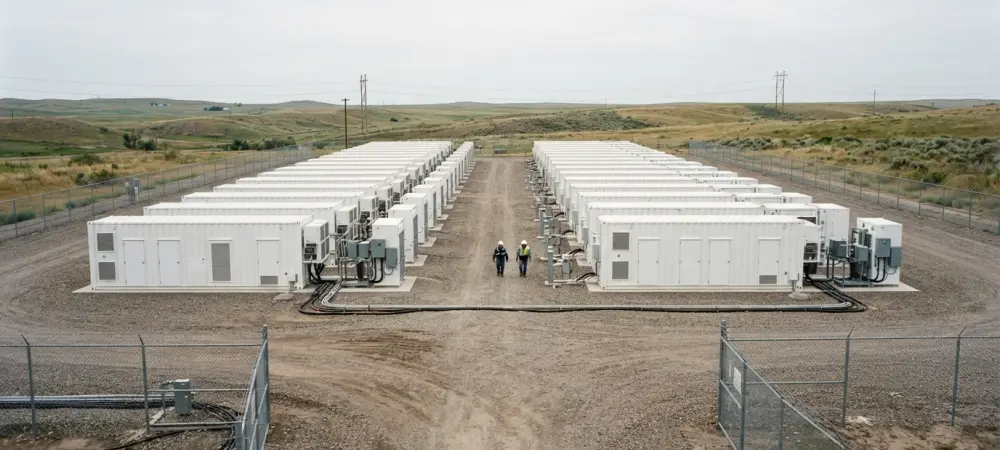
Traditional reliance on diesel generators as the primary safeguard against utility failure is rapidly becoming an obsolete strategy in the face of modern environmental regulations and technological advancements. As AI workloads become more segmented, certain non-critical training processes can now be paused or shifted during peak demand or power fluctuations without the risk of permanent data corruption. This flexibility has allowed for the introduction of utility-scale battery energy storage systems, often housed in modular containers that replace the bulky and loud generator enclosures of the past. These battery arrays provide instantaneous response times to grid instability and can be charged using renewable energy during low-demand periods.
By eliminating the need for vast quantities of onsite fuel storage, developers are significantly reducing the fire risk and environmental hazard profiles of their sites, while also creating a quieter, more reliable backup infrastructure. This transition drastically reduces the reliance on massive volumes of potable water, which has historically been a point of contention with local municipalities and residents. Modern facilities are now being engineered to utilize industrial-grade gray water or treated effluent from local sanitation districts, effectively decoupling the data center’s operations from the local drinking water supply and ensuring that mission-critical cooling remains sustainable and socially responsible.
Grid Modernization: Data Centers as Regional Energy Anchors
The arrival of a hyperscale data center in a region often creates immediate anxiety regarding the stability of the local electrical grid and the potential for rising residential utility costs. However, the sheer scale of investment required by AI-driven infrastructure is frequently acting as a catalyst for overdue grid modernization that benefits all stakeholders. These tech firms are increasingly funding the construction of new high-voltage substations and transmission lines that improve regional power reliability. By acting as an anchor tenant for the grid, data centers provide the economic justification for utilities to upgrade equipment that might otherwise have remained outdated for decades.
Building on this foundational shift, the integration of 24/7 carbon-free energy has become the gold standard for new construction projects across the globe. Beyond simple offsets, architects and energy engineers are designing facilities that can dynamically adjust their power consumption based on the real-time availability of wind and solar resources on the grid. This requires a sophisticated layer of software-defined power management that communicates directly with utility providers to maximize the use of clean electrons. These innovations represent a departure from the passive consumption models of the past, transforming the data center into an active participant in the energy market.
Building for the Future Environment
Mitigating Community Impact: Acoustic Engineering and Public Transparency
As the demand for low-latency processing brings data centers closer to residential and mixed-use urban centers, the aesthetic and acoustic impact of these buildings has become a primary design challenge. The signature hum of cooling fans is no longer acceptable in high-density areas, forcing architects to rethink the building envelope entirely. Modern designs now incorporate advanced acoustic louvers and noise-dampening materials that allow for necessary ventilation while trapping sound waves within the structure. Strategic site planning involves placing the most intensive equipment deep within the interior or behind secondary shells to provide multiple layers of sound insulation.
Moreover, the industry is addressing a long-standing communication gap by embracing radical transparency with local governments and the public. In the past, the secretive nature of big tech led to suspicion and resistance, but contemporary projects often launch with dedicated community portals that provide real-time data on energy use, water recycling, and tax contributions. This proactive engagement allows developers to address concerns about traffic and resource consumption before they become points of conflict. By creating public green spaces on the perimeter of the campus, firms are demonstrating that they can be productive neighbors, proving that the digital economy can thrive without alienating physical communities.
Sustainable Materials: Addressing the Challenge of Embodied Carbon
The focus of sustainable design has expanded significantly to include embodied carbon, which accounts for the emissions generated during the extraction, manufacturing, and transport of building materials. For decades, the industry relied almost exclusively on steel and concrete, two of the most carbon-intensive materials in existence, but the current trend is shifting toward mass timber and cross-laminated timber for structural components. Using wood not only sequesters carbon within the building itself but also drastically reduces the weight of the structure, which in turn minimizes the depth and volume of concrete required for foundations, significantly lowering the overall environmental footprint.
Beyond structural timber, the selection of internal finishes and insulation materials is undergoing a similar revolution as architects seek to eliminate synthetic products that off-gas harmful chemicals. There is a growing movement toward using recycled aluminum for server racks and biodegradable insulation materials that offer high thermal resistance without the environmental cost of traditional foam boards. These choices require a deeper level of technical knowledge from the design team, as they must balance the fire safety requirements of high-voltage environments with the desire for ecological purity. The architect’s mandate has thus evolved into a role that requires a mastery of material science.
Strategic Recommendations for Future Infrastructure
The transformation of data center architecture successfully navigated the complex intersection of high-performance computing and environmental stewardship by prioritizing physics over tradition. It became clear that the integration of liquid cooling and advanced battery storage was not just an option but a requirement for the continued growth of artificial intelligence. Moving forward, developers and architects should prioritize the development of local supply chains for sustainable materials to mitigate the risks associated with global logistics. It was also determined that early and transparent community engagement consistently reduced project timelines and fostered long-term goodwill between technology giants and local municipalities. By treating these facilities as active participants in the regional energy and water cycles, the industry established a new standard for mission-critical design. Future projects must continue to leverage sophisticated digital twins to model thermal efficiency before breaking ground, ensuring that every kilowatt of power is utilized with the utmost precision. Consistent monitoring of liquid cooling loops and battery health will be essential to maintaining the resilience and longevity of these modern architectural marvels.