

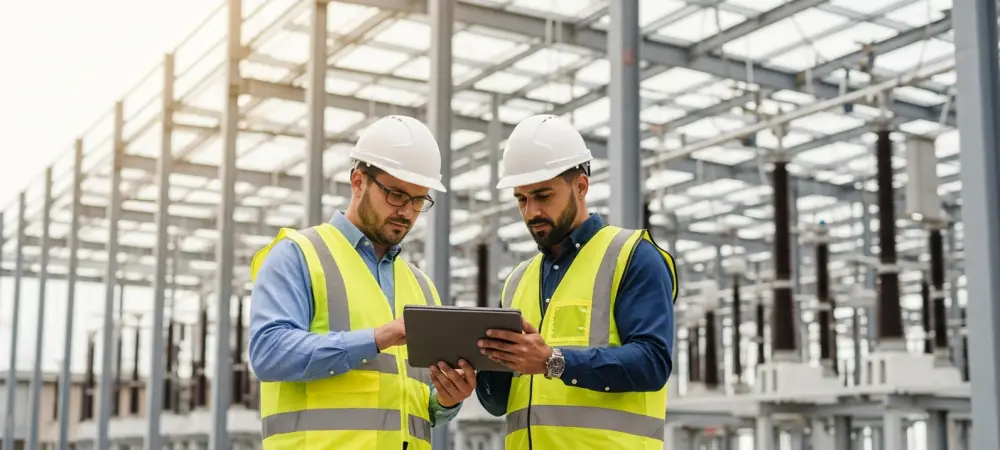
Hidden behind the glass screens of every smartphone and tablet lies a vast, humming landscape of concrete and silicon that consumes more power than entire nations to keep the digital age alive. While the average consumer experiences the internet as a weightless, invisible force, the physical reality is a sprawling network of windowless industrial facilities that form the backbone of modern civilization. These structures have transitioned from overlooked storage lockers in remote industrial parks to the most critical infrastructure on the planet. The sleek, wireless experience enjoyed on the surface is entirely dependent on this industrial skeleton, which is currently undergoing a massive expansion to accommodate the insatiable demands of artificial intelligence.
The disconnect between the digital user experience and the physical infrastructure that powers it is becoming impossible to ignore. For years, data centers operated in the shadows, hidden by boring facades and neutral colors. Today, the scale of these buildings rivals that of professional sports stadiums or international airports. This growth reflects a fundamental shift in the public perception of computing. No longer just a secondary support system, high-performance infrastructure has reclaimed its place in the public eye as the primary engine of global innovation. The massive buildings rising on the outskirts of major cities are the physical manifestations of a world that is moving its most vital operations to the cloud and beyond.
The Industrial Skeleton: Behind the Seamless Wireless World
The seamless transition of data from a remote server to a handheld device creates a deceptive sense of simplicity. In reality, every click or search query triggers a cascade of activity within massive, windowless facilities designed for one purpose: keeping the digital world alive. These buildings are the modern cathedrals of information, housing thousands of server racks that process the world’s financial transactions, social interactions, and scientific breakthroughs. As global demand for connectivity increases, the data center has evolved from a simple storage facility into a high-intensity processing hub that requires more sophisticated engineering than most traditional factories.
The transition of data centers into the critical backbone of innovation has been accelerated by the widespread adoption of high-performance computing. Historically, these facilities were used for archiving old emails or hosting static websites. However, the current era requires infrastructure that can support the real-time needs of a hyper-connected society. This shift has necessitated a move toward massive, specialized campuses that can handle the sheer volume of data being generated every second. The physical footprint of these facilities is growing at an unprecedented rate, reflecting the reality that digital progress is firmly rooted in physical hardware and industrial-grade construction.
As the physical reality of computing becomes more prominent, it is forcing a new conversation about urban planning and infrastructure development. The massive growth of these sites is no longer just a trend within the tech sector; it is a transformative force for local economies and energy markets. These facilities represent the most significant industrial expansion of the current decade, reclaiming land and resources to build the foundation of the AI-driven economy. The humble data center has finally emerged from the shadows to become the most important piece of real estate in the 21st century.
Why the Shift: Digital Archiving to Real-Time Intelligence Matters
The fundamental purpose of the data center is shifting from passive cloud storage to high-intensity, real-world processing. In the previous era of computing, the primary goal was to preserve data for later retrieval, much like a digital library. Today, the demand is for “intelligence on demand,” where data centers must perform complex calculations and generate content in milliseconds. This move toward real-time processing is driven by the convergence of digital transformation and the rapid rise of generative AI. This shift has ignited a “compute” arms race among the world’s largest technology firms, each vying for the hardware necessary to stay ahead.
This evolution is not merely a matter of convenience; it is a necessity for maintaining the pillars of modern society. High-capacity infrastructure is now essential for financial security, as global markets rely on instant data processing to detect fraud and manage risk. Similarly, global communication systems and AI training models require a level of throughput that older facilities simply cannot provide. The move toward intelligence-driven data centers ensures that these vital systems remain resilient in the face of increasing complexity. The infrastructure being built today is designed to do more than store information; it is designed to think, reason, and respond at a scale that was previously unimaginable.
Furthermore, the shift toward real-time intelligence is changing the way companies approach their digital strategies. Businesses are no longer content with slow, batch-processed data; they require instantaneous insights to remain competitive. This has led to a massive influx of investment into specialized hardware that can handle the specific mathematical requirements of AI and machine learning. As a result, the modern data center has become a dynamic environment where the flow of information is constant and the processing power is concentrated in ways that challenge traditional architectural and engineering standards.
Rethinking Design: Cooling Solutions and Specialized Hardware for the AI Era
The architectural blueprints of the modern data center are being torn up and rewritten to accommodate the unique needs of the AI era. Categorizing these facilities has become more complex, as different needs lead to the rise of specialized site types. Hyperscale data centers, operated by tech giants, are built for massive scale and efficiency, while colocation facilities provide shared space for various tenants. Meanwhile, edge data centers are being deployed closer to end-users to reduce latency for time-sensitive applications. Each of these facility types is evolving to support the high-density requirements of AI chips, which generate far more heat than traditional processors. Managing the heat generated by these high-performance systems has led to a technological shift from traditional air cooling to high-efficiency liquid cooling. In the past, massive fans and air conditioning units were sufficient to keep servers from overheating. However, the power density of modern AI racks has reached a point where air cooling is no longer physically viable. Liquid cooling systems, which pipe coolant directly to the hardware or immerse servers in non-conductive fluids, are becoming the new industry standard. These solutions allow data centers to pack thousands of specialized servers into a compact footprint without risking hardware failure or wasting excessive amounts of energy on climate control.
Beyond cooling, the surge in power density is forcing engineers to rethink the entire electrical layout of these facilities. A typical server rack that once required 10 kilowatts of power might now demand 100 kilowatts or more to support AI workloads. Delivering this much electricity to a single point in the building requires specialized transformers and high-capacity distribution systems. This increased intensity is driving the industry toward a new model of efficiency, where every watt of power and every gallon of water must be meticulously managed to maintain the delicate balance between high-performance computing and environmental sustainability.
Quantifying the Impact: Investment Surges and the Resource Squeeze
The scale of investment currently pouring into the data center sector is almost difficult to comprehend. Projections indicate that major technology firms will spend upwards of $700 billion from 2026 to 2028 to secure dominance in the AI landscape. This capital is being used to acquire the world’s most advanced silicon chips and to build the massive facilities required to house them. This unprecedented surge in spending is driving a global construction boom, but it is also creating a significant resource squeeze. The competition for land, specialized labor, and high-voltage electrical equipment has reached a fever pitch, making it more expensive and time-consuming to bring new capacity online.
This rapid expansion has sparked a complex negotiation between tech companies and the communities where they operate. On one hand, data centers provide massive tax revenue that can revitalize local budgets and fund public services. On the other hand, the strain on local resources is a growing concern. Large facilities consume millions of gallons of water for cooling and place immense pressure on the local electricity supply. In many regions, the demand from a single data center campus can equal the usage of an entire city, leading to difficult conversations about how to share the finite resources of the physical world with the infinite hunger of the digital one.
Research findings suggest that the doubling of power demand driven by AI is already putting pressure on residential utility grids. In some tech hubs, the wait time for a new grid connection has stretched to several years, as utility companies struggle to upgrade their infrastructure fast enough to keep pace with the boom. This situation has led to concerns about rising electricity costs for residents and the potential for grid instability during peak demand periods. As the industry continues to grow, balancing the economic benefits of data center development with the necessity of maintaining reliable and affordable services for the general public has become a primary challenge for policymakers.
Navigating the Grid Crisis: Strategies for Infrastructure and Energy Resilience
The industry has reached a critical turning point where the primary bottleneck is no longer a shortage of silicon chips, but a shortage of available power. To overcome this grid crisis, data center operators are increasingly pursuing strategies for energy independence. The transition from relying solely on public utilities to developing on-site generation has become a necessity for ensuring long-term resilience. This include partnerships with natural gas providers and the exploration of on-site nuclear energy, such as small modular reactors. By generating their own power, these facilities can bypass the delays of the traditional grid and ensure a constant supply of the “firm” energy required for AI training.
A new framework for balancing processing power with finite resources was established to address the environmental and social challenges of this growth. Stakeholders realized that the old model of consumption was unsustainable and moved toward more integrated energy strategies. This included the use of advanced battery storage to help stabilize the local grid and the implementation of water recycling systems that minimized the impact on local aquifers. These steps represented a proactive approach to infrastructure management, ensuring that the march toward AI dominance did not come at the expense of the communities that host the physical hardware.
The industry successfully recognized that the path forward required a radical decoupling from traditional utility models. Significant investments were made into renewable energy credits and direct power purchase agreements to offset the carbon footprint of these massive facilities. These efforts proved that large-scale computing and environmental responsibility were not mutually exclusive, provided that the necessary infrastructure was planned with foresight. By prioritizing resilience and self-sufficiency, data center developers laid the groundwork for a future where digital innovation could thrive within the constraints of the physical world. These solutions offered a blueprint for how global industries could navigate the complex intersection of technology, energy, and community needs in an increasingly resource-constrained era.