

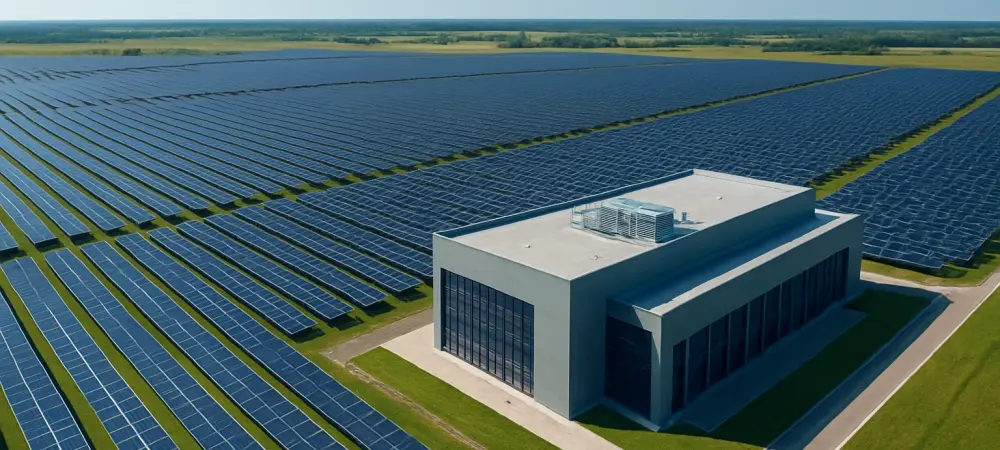
Unlike historical industrial sectors that ignored environmental consequences for decades, the data center industry is attempting to build accountability into its earliest growth phases. This proactive stance is largely personified by leaders like Aaron Binkley, the Vice President of Sustainability at Digital Realty, who has navigated the transition from architectural theory to large-scale industrial reality. Binkley’s background is rooted in a practical respect for land management, an ethic he carries from a childhood spent near an Amish community in rural Pennsylvania. By integrating this foundational stewardship with rigorous financial training from MIT, he has successfully repositioned sustainability from a niche corporate social responsibility initiative to a core operational strategy. Today, as the digital economy expands at an unprecedented rate, his work serves as a vital bridge between the physical requirements of massive server halls and the global imperative to reduce carbon footprints, ensuring that the infrastructure of the future is built with environmental integrity at its center.
From Architectural Theory to Industrial Reality
Bridging the Gap: Design Meets Business
During the formative years of his career as a licensed architect, Binkley observed a recurring disconnect between the conceptual appeal of green buildings and the hard financial realities of real estate development. Clients frequently expressed interest in the aesthetics of sustainable design but hesitated when confronted with the long-term capital investments or the complexities of formal certifications. This realization prompted him to pursue graduate research at the MIT Center for Real Estate, where he focused on the monetization of carbon credits. He recognized that for environmental stewardship to gain traction in a corporate environment, it had to be articulated as a value proposition rather than a purely ethical obligation. By learning to translate energy efficiency metrics into the language of financial returns and risk mitigation, he gained a unique professional edge. This ability to speak the languages of both design and finance allowed him to move beyond mere advocacy, creating practical frameworks that prioritized efficiency without compromising the economic viability of large-scale industrial projects.
The shift toward making sustainability profitable became the hallmark of his early professional trajectory. Before moving into the tech sector, Binkley established a comprehensive sustainability program at a global warehousing firm, proving that even traditional industrial sectors could benefit from high-efficiency retrofits and resource management. This experience solidified his belief that sustainability should not be an afterthought or a “bolt-on” feature but must be integrated into the initial phases of building design and investment strategy. By focusing on measurable outcomes, such as reduced utility expenses and improved tenant retention, he demonstrated that green initiatives could drive asset value. This pragmatic approach laid the groundwork for his future role in the data center industry, where energy consumption is the primary operational cost and environmental efficiency directly correlates with competitive advantage. His work during this period emphasized that the most effective way to drive large-scale change is to align ecological goals with the fundamental incentives of the modern business world.
Transitioning Sectors: The Tech Infrastructure Pivot
Binkley’s transition to Digital Realty in 2014 occurred at a critical juncture for the technology industry, as the demand for cloud services and digital storage began to skyrocket. He recognized that data centers represented the ultimate intersection of his architectural background and the burgeoning digital economy. These facilities are essentially high-performance industrial buildings that operate twenty-four hours a day, making them some of the most energy-intensive structures in the world. When he joined the company, Digital Realty already possessed a decentralized collection of energy-efficiency projects, but it lacked a unified global strategy. Binkley saw an opportunity to scale his previous successes in the warehousing sector to a global platform that could influence the entire tech ecosystem. His hire signaled a strategic shift for the organization, moving away from localized experiments toward a centralized commitment to environmental stewardship. This move was not just about compliance but about securing the long-term resilience of the infrastructure that supports the global internet.
By the start of 2026, the strategic importance of this pivot became even more apparent as data centers reached a level of industrial scale that few could have predicted a decade prior. Binkley’s role evolved from managing specific building certifications to overseeing a massive global portfolio that spans dozens of countries and hundreds of facilities. This transition required a deep understanding of how global energy markets function and how digital infrastructure can act as a catalyst for renewable energy development. He helped the company move beyond a defensive posture regarding power consumption, instead positioning it as a leader in the green energy transition. By focusing on the “bridge” between traditional industrial real estate and the fast-paced world of technology, he provided the leadership necessary to navigate the complex regulatory and environmental landscape of the mid-2020s. His work ensured that as the company expanded its physical footprint to meet the needs of artificial intelligence and cloud computing, it did so with a clear, data-driven roadmap for reducing its impact on the planet.
Responding to Industry Pressure: Scaling Solutions
External Accountability: The Role of Global Pressure
The data center industry’s aggressive pursuit of sustainability was not entirely internal; it was significantly accelerated by external scrutiny from environmental advocacy groups. In the early 2010s, reports from organizations like Greenpeace highlighted a jarring contradiction: the digital world, often perceived as clean and weightless, was actually powered by an aging grid dependent on coal and natural gas. These reports functioned as a definitive wake-up call, giving many major tech players and data center providers low marks for their energy choices. Binkley acknowledges that this period of public accountability was a catalyst for change, forcing the industry to be more transparent about its carbon footprint. It became clear that the social license to operate—the public’s acceptance of these massive facilities in their communities—depended on a demonstrable commitment to decarbonization. This pressure transformed sustainability from a peripheral public relations concern into a central strategic priority for executive boards and investors alike.
Responding to this pressure required more than just surface-level changes; it demanded a fundamental overhaul of how energy is procured and how facilities are operated. Binkley spearheaded the move toward absolute transparency, ensuring that Digital Realty did not just set vague goals but reported on its progress with the same rigor used for financial disclosures. This shift toward accountability helped rebuild trust with stakeholders and positioned the company to take a leadership role in industry-wide initiatives. By 2026, the focus has expanded from simply avoiding “dirty” energy to actively participating in the creation of new renewable resources. This proactive engagement with external critics allowed the industry to move past the defensive rhetoric of the past, replacing it with a narrative of partnership and innovation. The influence of external watchdogs remains a vital check on the industry, ensuring that as digital demand continues to grow, the commitment to environmental stewardship remains a non-negotiable component of corporate identity and global operational standards.
Quantifiable Metrics: Green Success at Scale
Under Binkley’s direction, the focus on quantifiable metrics has yielded significant results that serve as benchmarks for the entire sector. By the current year of 2026, the company has achieved a 93% renewable electricity rate across its global operations, a feat accomplished through the strategic use of Power Purchase Agreements. These agreements do more than just offset carbon; they provide the financial certainty needed to build new wind and solar farms, directly contributing to the decarbonization of the global electrical grid. Furthermore, the operational efficiency of the portfolio has seen steady improvement, with the average Power Usage Effectiveness maintained at a highly competitive 1.38. These metrics are not just numbers in a report; they represent a fundamental shift in how the company manages its vast resources. The integration of high-efficiency cooling systems and the adoption of water recycling technologies, which now account for 45% of total water use, demonstrate a holistic approach to resource management that goes far beyond simple carbon reduction.
The scale of these achievements is particularly noteworthy given the geographic diversity of the company’s operations. Implementing sustainability standards across more than 300 facilities in 30 countries requires a sophisticated understanding of local regulations, climate conditions, and energy availability. Binkley has overseen the certification of 1.5 gigawatts of data center capacity under various green building standards, proving that sustainability is compatible with massive industrial scale. This data-driven approach allows the company to identify high-performing sites and replicate their success across the globe, creating a virtuous cycle of continuous improvement. By focusing on Scope 1 and Scope 2 emissions, the company managed a 68% reduction in its carbon intensity compared to previous years, far exceeding initial internal targets. These successes provide the empirical evidence needed to convince investors and customers that a green data center is not just an environmental ideal but a more efficient, resilient, and profitable asset that is better equipped to handle the demands of the modern digital economy.
Navigating Internal Culture: Future Challenges
Internal Alignment: Practical Proof as a Strategy
One of the most significant hurdles in any corporate sustainability journey is overcoming internal resistance and inertia. Binkley found that the most effective way to win the support of facility managers and local operators was to provide practical, undeniable proof of value. A classic example involves the transition to high-efficiency LED lighting in data centers. While the energy savings were clear on paper, many local teams were hesitant to disrupt operations or take on the costs of a retrofit. To solve this, Binkley identified a vacant facility where a previous tenant had forfeited a security deposit. He used those funds to finance a complete LED upgrade, transforming a dim, unattractive space into a bright, modern environment that real estate brokers could lease much more easily. This success story served as a powerful internal case study, shifting the perception of green retrofits from a burdensome chore to a tool for enhancing the marketability and value of the company’s physical assets.
This strategy of “speaking the right language” to different stakeholders has been instrumental in embedding sustainability into the company’s culture. For a real estate broker, the value of a sustainability initiative might be a faster leasing cycle; for a facility manager, it might be reduced maintenance costs or improved system reliability. By tailoring the message to the specific goals of each department, Binkley ensured that global environmental policies were not just top-down mandates but were actively embraced by the people responsible for day-to-day operations. This cultural alignment is essential for the long-term success of any green program, as it moves the responsibility for sustainability away from a single department and into the hands of every employee. By 2026, these practices have become standardized across the organization, creating a culture where energy efficiency is viewed as a hallmark of operational excellence. This internal cohesion allows the company to move quickly and decisively when new environmental challenges or opportunities arise in the global market.
Modern Hurdles: Scope 3 and Public Narrative
Despite the successes in reducing direct emissions, the data center industry faces a significant challenge in managing Scope 3 emissions—those that occur throughout the supply chain and during the construction of new facilities. As Digital Realty continues to expand to meet the global demand for digital services, the carbon footprint associated with concrete, steel, and server hardware remains a difficult metric to bring down. Binkley has been transparent about this tension, noting that while operational emissions are falling, the embodied carbon of rapid growth is a persistent hurdle. Addressing this requires deep collaboration with suppliers and the adoption of innovative construction materials, such as low-carbon concrete and recycled steel. By 2026, the company has set aggressive targets to reduce these indirect emissions by 25% by 2030, but the path forward requires a systemic shift in how the entire industrial supply chain operates. This transparency is vital for maintaining credibility with investors who are increasingly focused on the full lifecycle impact of their holdings.
Simultaneously, the industry must navigate a complex public narrative that often casts data centers as environmental villains. Binkley frequently points out the historical irony of this perception, noting that unlike the coal or steel industries of the nineteenth century, the data center sector is the first to build environmental accountability into its foundation from the start. He describes the negative public discourse as a “gut punch” to the professionals working tirelessly to decarbonize the grid, yet he uses this as motivation to further improve communication. By highlighting the industry’s role as the primary driver of the global renewable energy market, he aims to shift the conversation from power consumption to power transformation. The challenge for the coming years is to ensure the public understands that the digital services they rely on every day are being powered by a sector that is leading the way in environmental innovation. This involves not just reporting data, but telling a compelling story about how digital progress and ecological responsibility are being woven together to create a more resilient global economy.
Strategic Resilience and the Path Forward
The efforts led by Aaron Binkley established a comprehensive framework for how high-growth industrial sectors successfully integrated environmental stewardship into their core operations. By moving beyond symbolic gestures and focusing on the rigorous alignment of financial incentives with ecological goals, he demonstrated that sustainability served as a driver of long-term asset value. The transition to a nearly 93% renewable energy profile and the significant reduction in operational emissions provided a clear roadmap for other global infrastructure players to follow. This work proved that the rapid expansion of digital services did not have to come at the expense of the planet, provided that leadership remained committed to transparency and proactive innovation. The practical successes in facility management and the strategic procurement of clean energy became the foundation for a more resilient digital economy that prioritized resource efficiency.
Looking ahead from 2026, the focus must now shift toward deeper supply chain engagement and the aggressive reduction of embodied carbon in new construction. The industry successfully mastered operational efficiency, yet the challenge of Scope 3 emissions remained a critical frontier that required ongoing collaboration across the global manufacturing and construction sectors. Binkley’s legacy was defined by the belief that a “green” data center was not an end state but a continuous process of refinement and adaptation to new technological possibilities. As the digital backbone of society continues to evolve, the principles of accountability and data-driven management he championed will remain essential. The path forward involves a commitment to total lifecycle sustainability, ensuring that every kilowatt of power and every ton of steel used in the digital age contributes to a future that is as environmentally sound as it is technologically advanced.