

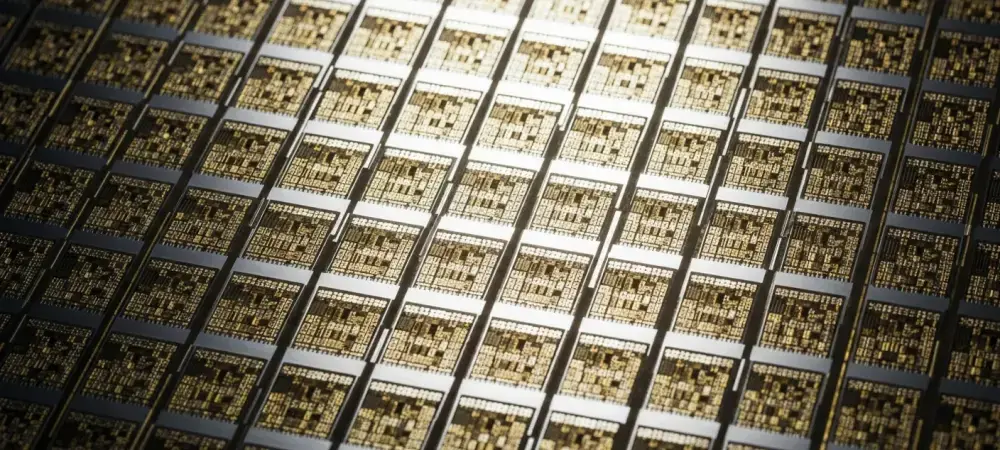
The transition from theoretical blueprints to tangible hardware prototypes marks a pivotal moment in the development of 6G technology as global researchers move beyond conceptual white papers into practical testing. This phase is defined by a rigorous effort to validate terabit-per-second speeds while significantly lowering latency across complex, multi-user environments. Instead of relying solely on computer simulations, engineers are now deploying specialized hardware that leverages sub-terahertz frequencies to demonstrate how massive data volumes can be handled in real-world urban settings. The integration of artificial intelligence directly into the network fabric acts as a primary catalyst, enabling systems to self-optimize and repair without manual intervention. From 2026 to 2028, the primary focus is proving that these complex signals can overcome physical challenges such as atmospheric absorption and signal blockage. This ongoing validation is critical for transforming ubiquitous intelligence into a reliable utility for society.
Advancing Spectral Efficiency: Physical Layer Innovation
Frequency Management: Harnessing Sub-Terahertz Bands
Exploring the spectrum above 100 GHz represents one of the most significant technical hurdles in the current development cycle due to the unique way high-frequency waves behave in the open air. Unlike the lower frequency bands utilized in previous generations, sub-terahertz signals are extremely sensitive to environmental conditions, where even high humidity or light rain can cause significant signal attenuation. To address these inherent physical limitations, engineers have developed sophisticated beamforming techniques that focus energy with extreme precision, ensuring signals reach their intended targets despite these obstacles. This requires the deployment of massive multiple-input multiple-output antenna arrays that are much denser than current equipment, pushing the boundaries of traditional semiconductor design. By testing these arrays in controlled outdoor settings, researchers are identifying the power levels required to maintain stable links over hundreds of meters. The move to ultra-high frequencies also requires a complete overhaul of radio frequency front-end components to prevent excessive energy loss during the signal processing phase. Conventional materials often fail at these high oscillations, leading to the adoption of advanced semiconductors like gallium nitride which provide the electron mobility necessary for sub-terahertz operations. These new materials allow for much higher power density and improved thermal efficiency, which are vital for keeping hardware compact enough to be installed on existing urban infrastructure like streetlights. Furthermore, the use of these bands allows for extremely wide bandwidths, often exceeding several gigahertz, which is the key requirement for the real-time synchronization of complex digital twins. Validating these components in diverse climates provides the necessary empirical data to refine the link budget models that will define the standards for the next decade of wireless networks.
Dynamic Optimization: Implementing AI-Native Interfaces
Replacing traditional fixed-rule signal processing with deep learning models represents a fundamental change in how cellular networks have been designed for the past several decades. In an AI-native 6G environment, the air interface is not a static mathematical formula but a dynamic system that learns to optimize data transmission based on the specific interference patterns of a location. This shift allows the network to adjust its modulation and coding schemes in real-time, greatly increasing efficiency in spectrum blocks that would otherwise be too congested for reliable use. Recent field trials have shown that these neural networks can predict changes in the radio environment milliseconds before they occur, allowing the system to make proactive adjustments to prevent packet loss. This predictive capability is essential for mission-critical tasks where any delay could disrupt robotic automation. The goal is to transition from a reactive management style to a fully autonomous network.
Deploying machine learning at the physical layer also helps reduce the computational burden that is usually associated with complex multi-user detection and error correction. By training these models on massive datasets collected from actual city traffic, developers are creating efficient versions of AI that can run on base station hardware without consuming an excessive amount of power. This efficiency is a core requirement for maintaining a sustainable energy footprint as the number of network nodes increases to support the billions of new devices expected by the end of the decade. These developments also support semantic communication, where the network learns to prioritize the meaning of data rather than every bit, which further optimizes the available bandwidth. Stress testing these models against unexpected traffic surges ensures that the learned behaviors remain reliable under pressure. This validation phase ensures that the network is resilient enough for everyday use.
Bridging Lab Simulations: Real-World Field Implementation
Situational Awareness: Integrating Communication and Sensing
A major advancement in the 6G validation process is the successful merging of communication systems with high-resolution sensing capabilities that function like advanced radar. By using high-frequency signals for both data transfer and environmental mapping, the network can perceive its surroundings without needing separate cameras or specialized sensors. This allows a base station to track the location and speed of objects such as vehicles or pedestrians with centimeter-level precision in real-time. In a modern urban environment, this could allow the network to detect a potential collision and send an immediate warning to autonomous vehicles to prevent an accident. Current field tests are focused on how to combine these sensing pulses with data packets so they do not interfere with each other or slow down the connection. This dual use of the spectrum increases the utility of the hardware and adds a layer of situational awareness that was never possible in previous generations. The integration of sensing also creates a feedback loop that improves the performance of the communication network itself by providing a clear map of the physical environment. When the system understands the location of buildings and other obstacles, it can calculate the best path for signal reflection to reach a user who is not in a direct line of sight. This environment-aware beamforming reduces the need for the constant background signaling that usually drains battery life and bandwidth. Researchers are currently studying the privacy aspects of this technology to ensure that sensing data is handled securely and remains anonymous to protect the public. The results of these trials will determine how 6G evolves into a distributed sensing network that can monitor everything from city traffic flow to the structural health of bridges. This represents a significant shift toward a more unified digital and physical infrastructure that benefits the entire urban ecosystem.
Global Interoperability: Establishing Unified Standards
Ensuring that equipment from different global manufacturers can work together remains a primary goal of the validation phase as the industry moves toward a final set of standards. This process involves creating unified protocols that dictate how AI-driven interfaces and sensing functions operate across different regions and hardware types. Collaborative testbeds are currently being used where multiple vendors install their equipment in the same area to find any technical glitches before the technology is released to the public. These experiments are essential for avoiding a fragmented market, which would lead to much higher costs for mobile operators and poor service for people traveling between countries. Engineers are paying special attention to how terrestrial towers coordinate with low-earth orbit satellites to provide continuous coverage in remote areas. This cooperation requires a high level of transparency and data sharing among companies that are usually competitors in the market. The standardization process also places a heavy emphasis on energy efficiency as a mandatory requirement for all future hardware and software protocols. Unlike older generations that focused almost entirely on increasing speed, the current framework requires that any gain in performance is met with a reduction in power usage. This has encouraged the development of specialized devices that can harvest their energy from the environment, which are currently being tested in low-power sensor networks. By setting these strict benchmarks now, the industry is ensuring that the eventual rollout is both profitable and environmentally sustainable for the long term. The information gathered from these multi-vendor trials provides the evidence that government regulators need to set safety rules and provide the necessary spectrum for the new network. As these standards are finalized, the industry will focus on scaling up manufacturing and preparing the supply chain for the first large deployments.
Strategic Implementation: Future Industry Readiness
The successful transition from theoretical 6G models to validated field prototypes demonstrated that the integration of artificial intelligence and sensing was essential for the next generation of connectivity. Stakeholders moved away from isolated lab experiments and focused on building an interoperable ecosystem that prioritized both high-speed data and environmental awareness. To leverage these advancements, telecommunications providers must now prioritize the modernization of their fiber backhaul networks to handle the massive traffic increase. Governments should facilitate this transition by simplifying the regulatory process for the installation of dense micro-cells in urban areas while ensuring fair spectrum access. Significant investment in advanced semiconductor manufacturing also became a priority to ensure a steady supply of high-frequency components. By taking these practical steps, the industry established a solid foundation for a truly intelligent network.