

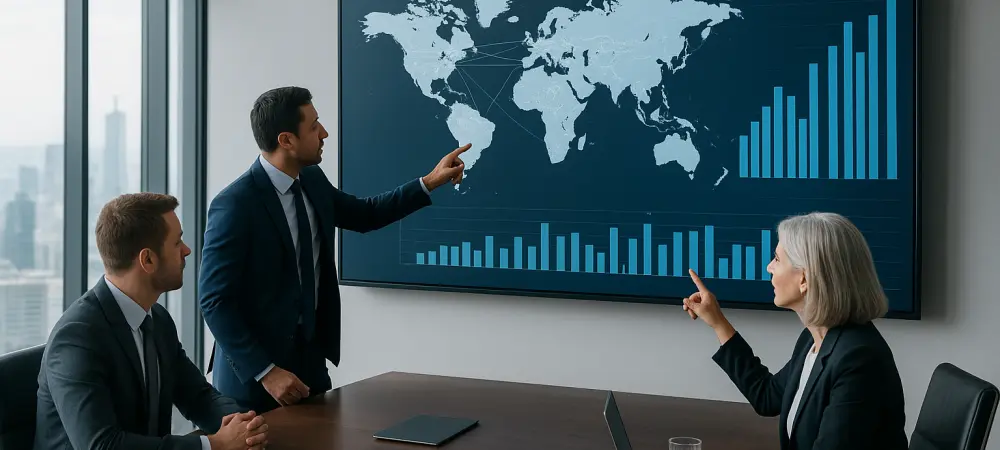
When a high-level executive sits at the head of a boardroom table, the most influential guest determining the organization’s fate is often the invisible data stream pulsing through the corporate servers. Success in 2026 depends less on the sheer volume of information and more on the velocity at which that information transforms into an actionable strategy. A delay of forty-eight hours in identifying a supply chain disruption or a shift in consumer demand can mean the difference between a profitable quarter and a significant loss. Consequently, the performance of an Enterprise Resource Planning (ERP) system is no longer a technical concern relegated to the basement IT department; it has become the primary pulse of corporate health.
Modern business leaders recognize that a system does not need to crash to be considered a failure. In fact, the most dangerous technical threats are not the catastrophic outages that make headlines, but the subtle inefficiencies that drain productivity day by day. This “slow leak” of corporate intelligence occurs when the software infrastructure functions just enough to stay online but fails to provide the clarity needed for high-stakes decisions. When the digital foundation of a company becomes a source of friction rather than a catalyst for action, the strategic vision of the entire enterprise begins to blur.
The High Cost: Why Subtle Friction Trumps Total Collapse
The most pervasive threat to modern corporate efficiency is not the blue screen of death, but the creeping inertia of a system that barely keeps up with the pace of business. While a total technical collapse triggers an immediate emergency response, subtle system friction often goes unnoticed by IT teams while it quietly sabotages the executive suite. This friction manifests as a three-day hunt for a single data point, forcing leadership to make decisions based on what happened last week rather than what is occurring in the present moment. Making a billion-dollar choice based on “ancient history” is a risk no competitive firm can afford to take in the current economic landscape.
Measuring the true return on investment for enterprise software requires looking beyond initial implementation costs or maintenance fees. The ultimate metric for ERP success is the distance between a strategic question and a verified answer. If a CEO asks about the impact of a rising tariff and the answer requires hours of manual data extraction and reconciliation, the software ROI is effectively negative. A high-performing system should act as a frictionless conduit, allowing intelligence to flow toward decision-makers as naturally as air, ensuring that the organization remains proactive rather than perpetually reactive.
Why Technical Agility: The New Competitive Floor
The role of the ERP has undergone a fundamental transformation, shifting from a mere “system of record” to a “system of intelligence.” In the early days of enterprise computing, it was enough for software to accurately record transactions and store historical data for tax purposes. However, market volatility has drastically shortened the shelf-life of actionable data, making historical accuracy secondary to real-time insight. Companies that treat their software as a static ledger find themselves unable to respond when the market shifts, while those with agile systems utilize their data as a predictive asset to anticipate changes before they arrive.
This connection between software performance and organizational agility becomes most apparent during times of unexpected disruption. Whether facing a localized labor shortage or a global logistics bottleneck, the ability of a company to pivot hinges entirely on the transparency of its internal processes. An inflexible system traps a company in its current operational mode, while a performance-optimized ERP allows for the rapid reconfiguration of resources. In 2026, technical agility is no longer a luxury for the elite; it is the minimum requirement for entering the competitive arena and maintaining a viable market position.
Identifying the Seven Indicators: The Strategic Bottlenecks
Strategic paralysis often begins with the “dependency trap,” where routine business intelligence becomes a “custom project” for specialized departments. When managers cannot pull their own reports, a bottleneck forms at the desks of IT and finance professionals, slowing the entire organization. This frustration frequently leads to the “rise of shadow ERP,” a phenomenon where departments abandon the central system in favor of external spreadsheets. While Excel is a powerful tool, its use as a primary operational layer destroys the “single source of truth,” leading to a fragmented landscape where different teams present conflicting data sets in the same meeting.
This == “fact fragmentation” creates a environment where time is wasted debating the validity of data rather than discussing its implications.== Furthermore, the “rear-view mirror effect” limits the leadership’s perspective to historical reporting, which is insufficient for the “windshield view” required to navigate modern market shifts. This is compounded by the “swivel-chair burden,” where employees must manually reconcile data across disconnected software silos, increasing the risk of human error. As stale data inputs lead to “forecast decay,” production plans and budgets become dangerously disconnected from reality. Finally, == “technical rigidity” ensures that legacy customizations prevent the adoption of new business models, effectively locking the company in a state of operational obsolescence.==
Expert Perspectives: Data Trust and Operational Speed
Reliable data has a profound psychological impact on the confidence of a leadership team. When an ERP fails to inspire trust, executives hesitate at the very moments that require bold action. Experts at LevelShift have observed that when a system feels cumbersome, employees naturally develop “workarounds” to bypass the software’s limitations. Over time, these unauthorized processes distance the formal system from the actual business operations, creating a massive gap between what the software shows and what is actually happening on the factory floor or in the retail outlet. This lack of visibility breeds a culture of uncertainty where intuition replaces evidence.
The CEO’s dilemma is most acute when a promising strategic move is vetoed because the existing software infrastructure simply cannot adapt. If the cost of modifying the ERP to support a new subscription model or a regional expansion is too high, the technology has effectively taken the reins from the executive board. A system that cannot scale or change alongside the business is not just a tool; it is a constraint that dictates the limits of corporate growth. When the infrastructure becomes the ceiling for ambition, a fundamental reassessment of the digital strategy becomes the only viable path forward for the organization’s survival.
Framework: Restoring Decision-Making Velocity
Restoring the speed of an organization required a systematic approach to identifying and eliminating data friction. The most successful firms began with a friction audit, a process that mapped the exact points where the flow of information stopped and manual intervention began. By identifying these “clogs” in the corporate arteries, leadership could prioritize technical upgrades that offered the highest impact on decision-making speed. Transitioning toward self-service environments, such as Dynamics 365, proved essential in empowering non-technical stakeholders to access the insights they needed without waiting for an intermediary.
Unifying fragmented data sources into a single, real-time operational dashboard was the next critical step in the modernization journey. Organizations prioritized integration over isolation, ensuring that Customer Relationship Management (CRM) and Warehouse Management Systems (WMS) spoke the same digital language as the core ERP. This holistic approach eliminated the manual “swivel-chair” tasks and replaced them with automated, reliable data flows. The result of these efforts was a rejuvenated enterprise where the distance between a question and its answer was virtually non-existent, allowing the leadership to focus entirely on the future.
The strategic overhaul of enterprise systems transformed the way leadership teams interacted with their operational data. By moving away from rigid, legacy structures, companies successfully minimized the delay between market signals and corporate responses. The adoption of unified cloud platforms provided the necessary scalability to explore new business models without the fear of technical constraints. This shift toward a more intelligent infrastructure ensured that every stakeholder had access to a single, undisputed source of truth. Ultimately, the focus on decision-making velocity enabled organizations to navigate the complexities of the current year with a level of precision that was previously unattainable. These improvements in system performance redefined the boundaries of what was possible, turning technical infrastructure into a genuine engine for growth. Organizations that embraced this change found themselves better equipped to handle the rapid fluctuations of the global economy. By the time the transition was complete, the digital environment functioned as a seamless extension of the executive’s vision. This evolution marked the end of the era of data silos and the beginning of a truly integrated corporate intelligence strategy.