

The Cost of the “Logistics Mystery”
A single unreadable barcode on a pallet might seem like a minor inconvenience, yet it has the potential to trigger a cascade of operational delays that paralyze a high-velocity distribution center. When a scanner fails to register an item, the momentum of the entire team halts. This friction often results in a “logistics mystery,” where goods exist physically but remain invisible to the digital system, creating a bottleneck that ripples through every department.
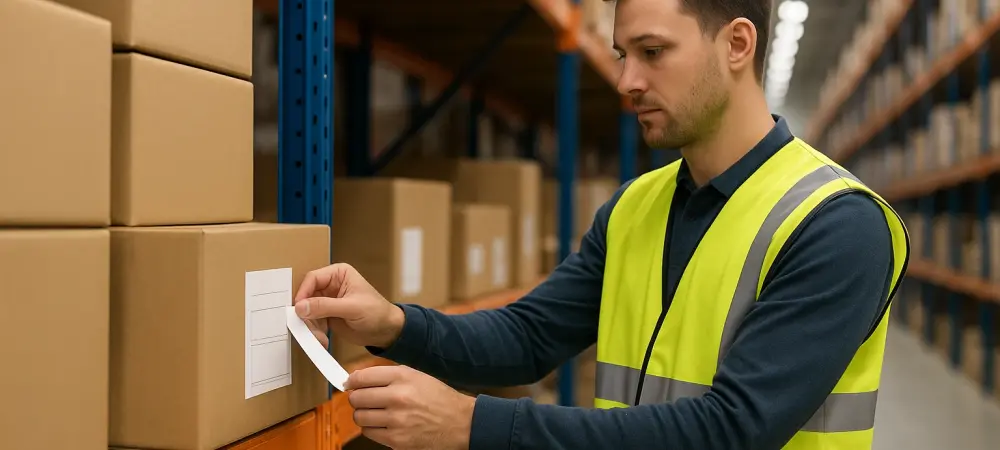
Forcing a worker to abandon their current task to walk across a sprawling warehouse to a central workstation is a hidden profit killer. These “dead miles” accumulate over a shift, draining productivity and lowering employee morale. Decentralized printing addresses this by placing the solution directly in the hands of the operator, ensuring that the rhythm of the warehouse remains steady and focused on throughput rather than troubleshooting.
Bridging the Gap Between Physical Stock and Digital Records
Data integrity serves as the backbone of a modern Warehouse Management System, but that integrity is only as strong as the labels on the floor. When identification is missing or damaged, a dangerous disconnect forms between physical stock and digital records. This gap leads to “ghost inventory” where items occupy shelf space but do not exist in the ERP system, causing missed sales and replenishment errors.
Real-time identification is crucial in the complex supply chain environments of 2026. Maintaining a synchronized link between the physical item and the digital twin requires immediate action. By empowering staff to rectify labeling discrepancies the moment they are spotted, organizations ensure that their ERP data remains an accurate reflection of reality, which is essential for advanced forecasting and automated logistics.
The Strategy of Printing Where the Work Happens
Efficiency in modern logistics relies on the elimination of non-value-added movements, particularly the walk time associated with fixed printing hubs. Integrating mobile printing into core functions like receiving, picking, and inventory counting allows for a truly agile operation. When tools are mobile, the warehouse floor becomes a dynamic workspace where every station is capable of full document generation. Hardware versatility plays a vital role in this strategic shift. A robust solution must support a range of equipment, from belt-worn portable printers for individual pickers to industrial stationary units for high-volume packing areas. This flexibility enables the generation of license plates and delivery documents on the fly, ensuring that items are correctly identified and documented before they move to the next stage.
Operational Insights: Solving Errors at the Point of Discovery
Industry experts emphasize that resolving labeling issues at the point of discovery is the only way to prevent systemic downstream failures. If a damaged label is ignored at the receiving dock, it will inevitably cause a failure during the picking process or result in a shipping error. Addressing the problem immediately preserves the flow and prevents the exponential growth of labor costs associated with fixing errors later.
Cloud-based and on-premises environments both benefit from ready-to-use label designs that integrate seamlessly with existing software. Case studies have shown that labeling at the source significantly reduces shipment delays and the frequency of returns. By making the process of printing a new label as simple as a few taps on a handheld device, the barrier to maintaining perfect inventory visibility is virtually removed.
A Framework for Integrating Mobile Printing Into Your Workflow
Assessing warehouse zones helped determine the ideal balance between stationary and mobile hardware. Effective communication between handheld devices and the ERP was secured through robust solutions like Tasklet Mobile WMS. This setup allowed for a fluid environment where damaged goods encountered during the receiving process were relabeled instantly, granting the inventory immediate visibility for the rest of the supply chain.
Staff members were trained to utilize mobile print commands as a standard part of their daily routine. This transition shifted the organizational culture toward proactive maintenance of data accuracy. Leaders prioritized a workflow that valued uninterrupted movement, ultimately ensuring that the logistics operations were prepared for the high-demand cycles expected from 2026 to 2028.