

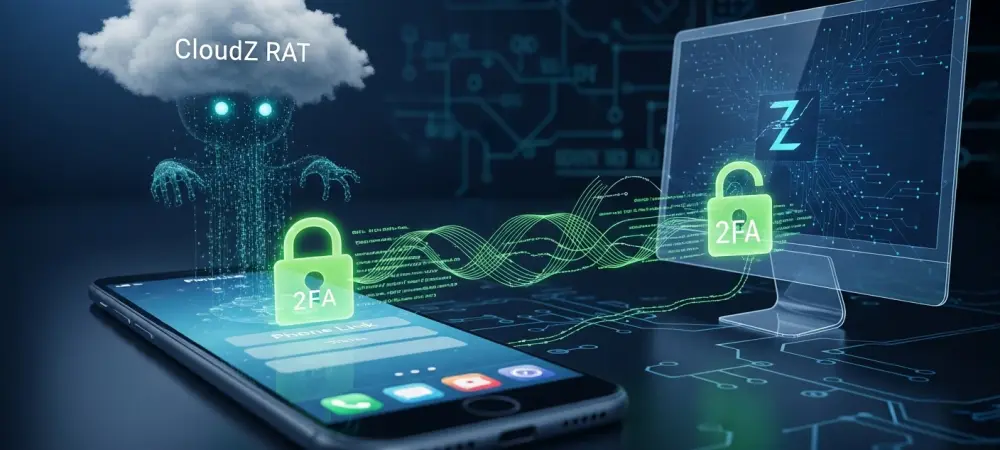
The modern security paradigm, which heavily relies on the assumption that mobile devices act as unassailable second factors, is currently facing a significant challenge from a sophisticated threat known as the CloudZ Remote Access Trojan. This malware does not follow the traditional route of trying to compromise a smartphone directly, which is often a difficult and resource-intensive task due to the sandboxed nature of mobile operating systems. Instead, it targets the synchronization software that bridges the gap between a user’s phone and their Windows-based workstation. By compromising the desktop environment, attackers can silently watch the stream of data flowing from the mobile device to the PC. This approach highlights a critical architectural weakness where the convenience of cross-device integration creates a new, less-protected surface for data exfiltration. As users increasingly rely on tools like Microsoft Phone Link for productivity, they inadvertently centralize their sensitive mobile notifications on a platform that remains a primary target for sophisticated cyber-espionage.
Hijacking the Digital Bridge: Vulnerabilities in Connectivity
The exploitation revolves specifically around the Microsoft Phone Link application, a built-in Windows feature that has become nearly ubiquitous for users who need to manage mobile notifications while working at a computer. This tool is designed to allow the mirroring of messages, call logs, and application alerts directly onto the desktop interface, providing a seamless user experience. However, this synchronization process requires the local storage of mobile data on the Windows machine, typically within a structured database. The CloudZ malware, through its specialized Pheno plugin, is engineered to find these local repositories and monitor them for incoming communications. This means that an attacker does not need to bypass the biometric or passcode protections of a physical smartphone to see its contents. As long as the phone remains paired with the infected workstation, the malware maintains a persistent window into the private life of the victim, effectively turning a productivity feature into a surveillance tool.
Beyond just passive monitoring, the strategic placement of the Pheno plugin within the system allows it to recognize when a live connection between the phone and the PC is active. The malware scans the environment for specific processes like PhoneExperienceHost or Link to Windows, looking for markers that indicate data is currently being routed through a local proxy. This reconnaissance phase is vital because it tells the attacker exactly when the target is using their devices in tandem, which is the prime time for intercepting time-sensitive information. Once a connection is confirmed, the malware focuses its attention on the SQLite databases that the application uses to cache information. This transition from broad system infection to specific application exploitation represents a more surgical approach to data theft. By focusing on the “connective tissue” of the digital ecosystem rather than the individual endpoints, the actors behind CloudZ have identified a path of least resistance that bypasses many traditional perimeter defenses.
Anatomy of the Infection Chain: Multi-Stage Deployment
The delivery of this threat follows a deceptive path that leverages the trust users place in professional remote management software like ScreenConnect. Potential victims are often lured through social engineering into downloading what appears to be a critical software update or a necessary patch for their remote support tools. This initial file acts as a dropper written in the Rust programming language, which is increasingly favored by developers for its ability to produce highly efficient and difficult-to-analyze binaries. Once the dropper is executed, it begins a multi-stage deployment process that starts by dropping a secondary .NET loader onto the system. This loader is responsible for conducting environmental checks to ensure that no security researchers or automated sandboxes are monitoring the execution. It often disguises itself as a mundane system file or a text update to blend into the standard file system noise. This modular approach ensures that the final, most detectable components of the malware are only revealed once the coast is clear.
After the preliminary environment checks are completed and the initial loader has verified the absence of defensive tools, the main CloudZ payload is injected into the system’s memory. This primary Remote Access Trojan acts as the nerve center for the entire operation, providing the attackers with full control over the file system and browser credentials. However, its most dangerous capability is the deployment of the Pheno plugin into temporary system directories like the Windows Temp folder. This plugin is the specialized instrument used for the actual exploitation of the Phone Link synchronization protocols. By separating the general-purpose RAT functionality from the specific exploitation of mobile-to-PC bridges, the attackers maintain a highly flexible architecture. This allows them to update or replace individual components without needing to re-infect the entire system. Each stage of the infection is carefully choreographed to maximize persistence while minimizing the footprint left behind on the disk, making it a formidable challenge for signature-based antivirus solutions.
Bypassing Authentication Protocols: The Impact on MFA
The most alarming aspect of this campaign is its ability to render standard two-factor authentication methods obsolete through the interception of SMS-based codes. Many financial institutions and corporate security systems still rely on sending one-time passwords via short-message services to verify the identity of a user. Because Phone Link synchronizes these incoming messages to the PC in real-time, the Pheno plugin can read the codes as soon as they arrive in the local SQLite database. This creates a scenario where an attacker, having already stolen the user’s primary login credentials from a browser, can wait for the 2FA prompt and then pull the required verification code directly from the infected computer. This bypasses the need for the physical phone to ever leave the victim’s pocket. The speed at which this data can be exfiltrated ensures that even short-lived security tokens are harvested and used before they expire. This method effectively turns the victim’s own convenience-oriented software against their most critical security measures.
To maintain this level of access without raising suspicion, the developers of CloudZ have integrated sophisticated evasion and persistence mechanisms. The malware utilizes a scheduled task named SystemWindowsApis, which is configured to run with the highest possible privileges at every system startup. It also leverages “Living-off-the-Land” techniques, specifically employing the legitimate Windows utility regasm.exe to execute its malicious payloads. By using built-in system tools for execution, the malware avoids triggering many behavioral alarms that would otherwise flag unrecognized executable files. Furthermore, the malware dynamically generates its sensitive functions within the system’s memory rather than storing them in static files, which severely limits the effectiveness of traditional file scanning. The communication with the command-and-control infrastructure is similarly hidden through the rotation of browser user-agent strings and the use of public platforms like Pastebin to host configuration data. These layers of obfuscation ensure that the attacker can maintain a long-term presence.
Strategic Defense: Future Security Considerations
Mitigating the threat posed by CloudZ and its Pheno plugin required a transition away from reactive security measures toward a more proactive and architectural approach to endpoint protection. Organizations began by implementing stricter monitoring for the misuse of native Windows utilities like regasm.exe and the creation of unusual scheduled tasks that run under high-privilege accounts. In addition to monitoring, security teams deployed advanced network signatures to detect the specific traffic patterns associated with the malware’s command-and-control communications, even when those requests were disguised as standard web browsing. For high-risk environments where the integrity of multi-factor authentication was paramount, administrators took the step of disabling the Phone Link feature through group policies. This effectively removed the bridge that the attackers were exploiting, preventing the local caching of sensitive SMS data on the workstation. These steps demonstrated that visibility into system-level changes remained a viable path for detection.
Looking beyond immediate defensive tactics, the focus shifted toward the fundamental vulnerabilities inherent in the synchronization of sensitive mobile data to less secure desktop environments. Security professionals recommended that users move away from SMS-based authentication in favor of more secure alternatives, such as hardware security keys or application-based authenticators that do not mirror their contents to external devices. These methods provided a more resilient barrier because they kept the “something you have” factor isolated from the workstation being used for primary tasks. Additionally, the industry saw an increased emphasis on the adoption of Zero Trust principles, where the health and security posture of the device itself were continuously verified before access to sensitive services was granted. By treating every connection as potentially compromised and reducing the reliance on easily intercepted communication channels, organizations were able to build a more robust defense-in-depth strategy. This shift addressed the root cause of the exploitation.