

The sudden interruption of a high-stakes professional video conference due to a pixelated screen or a frozen audio feed remains one of the most pervasive frustrations in the modern digital household. As the reliance on high-speed internet transitions from a casual convenience to a fundamental infrastructure requirement for work, education, and entertainment, the complexity of home networking has grown exponentially. Achieving a seamless experience requires more than just connecting a router to a wall outlet; it demands a comprehensive understanding of the invisible radio waves and digital handshakes that facilitate every data packet sent across the airwaves. By looking beyond the basic setup and diving into the technical mechanics of frequency allocation and network architecture, users can move past the limitations of standard hardware configurations. This involves a strategic evaluation of environmental obstacles and the underlying software protocols that dictate how devices communicate to ensure consistent performance.
Navigating Frequency Bands: A Strategic Trade-Off
Determining the optimal frequency band for specific devices constitutes the first step in mitigating common interference issues that plague residential environments. The 2.4 GHz band has long been the workhorse of wireless networking due to its remarkable ability to penetrate solid walls and travel long distances, making it ideal for low-bandwidth smart home devices or reaching the far corners of a property. However, this frequency is notoriously crowded, sharing space with everything from microwave ovens to Bluetooth peripherals, which leads to signal degradation and packet loss in densely populated neighborhoods. In contrast, the 5 GHz band offers significantly higher data transmission speeds and more non-overlapping channels, which reduces the likelihood of clashing with a neighbor’s signal. While the shorter wavelengths of 5 GHz mean it struggles to penetrate physical barriers, it remains the preferred choice for activities requiring low latency and high throughput, such as online gaming or streaming. Advancements in wireless technology have introduced the 6 GHz spectrum through the Wi-Fi 6E and Wi-Fi 7 standards, effectively doubling the available bandwidth for modern households. This expansion is critical because it operates on a dedicated highway that older, legacy devices cannot access, thereby eliminating the traffic jams caused by older technology. Modern routers utilizing these standards employ Orthogonal Frequency-Division Multiple Access, which allows a single channel to communicate with multiple devices simultaneously rather than making each device wait its turn in a queue. This shift in logic transforms the router from a simple broadcaster into a sophisticated traffic controller that can manage dozens of active connections without sacrificing the stability of any individual stream. Transitioning to hardware that supports the 6 GHz band represents a significant upgrade for any environment where multiple users are simultaneously consuming high-definition content or participating in virtual simulations.
Administrative Control: Implementation of Security Protocols
Managing a network efficiently requires a deeper engagement with the router’s administrative gateway, where the internal logic of device connectivity is defined and maintained. The use of Dynamic Host Configuration Protocol serves as the foundational mechanism for this process, as it automatically assigns and manages the IP addresses for every device that joins the local network. Without this automated coordination, manual IP conflicts could lead to persistent connectivity drops and internal routing errors that are difficult to diagnose for the average user. Professional-grade network optimization often involves setting static IP addresses for critical infrastructure, such as network-attached storage units or central smart home hubs, to ensure they are always reachable at a consistent digital location. Furthermore, regularly auditing the list of connected clients through the administrative interface allows for the identification and removal of unauthorized devices that may be consuming bandwidth or posing a security risk.
Security protocols play a dual role in network performance, acting both as a shield against external threats and as a framework for efficient data encryption between the router and clients. Moving away from the aging WPA2 standard and adopting WPA3 is a non-negotiable step for maintaining digital integrity in a landscape where cyber threats are becoming increasingly sophisticated. The introduction of Simultaneous Authentication of Equals within the WPA3 framework provides a much more robust defense against brute-force password-guessing attacks, even if a user selects a relatively simple password. This protocol ensures that even if data is intercepted, it remains unreadable to unauthorized parties, preserving the privacy of sensitive financial and personal information. Additionally, modern routers often feature protected management frames by default under WPA3, which prevents attackers from forcibly disconnecting devices from the network to capture handshake data. This ensures the environment remains private.
Strategic Hardware Integration: Systems and QoS Management
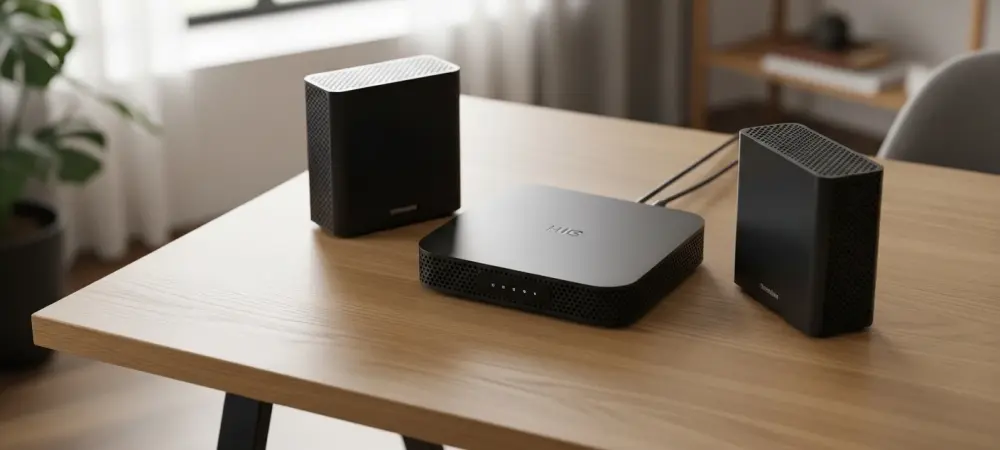
Physical architecture and the method of signal distribution are often the most overlooked factors in achieving peak wireless performance across a large residence or multi-story building. Traditional range extenders were once the standard solution for dead zones, but they frequently introduced significant latency and cut the available bandwidth in half by creating a separate network bridge. In contrast, modern mesh networking systems utilize a series of interconnected nodes that communicate via a dedicated backhaul frequency to create a single, unified wireless fabric. This intelligent design allows for seamless roaming, where a device transitions from one node to another without dropping the connection or requiring manual intervention as the user moves throughout the home. Because mesh nodes work together as a single system, they can dynamically reroute data traffic based on the current load and physical obstructions, ensuring that every room receives a strong and stable signal. This structural approach effectively eliminates bottlenecks.
The process of refining the home network reached its conclusion when the physical placement of hardware and the digital configuration of internal protocols were harmonized to support high-density traffic. It became clear that the most effective optimizations resulted from a systematic audit of the local environment, including the identification of signal-blocking materials like mirrors and dense masonry. Rather than relying on default factory settings, the implementation of manual channel selection proved to be a decisive factor in avoiding the overlapping signals of neighboring routers in urban settings. This proactive approach included the regular scheduling of firmware updates, which provided the latest stability patches and performance improvements necessary to handle new generations of mobile hardware. Ultimately, the transition to a more resilient network required a shift in perspective, viewing the router as a dynamic gateway that demanded periodic maintenance and strategic adjustments to remain efficient in a landscape of evolving digital demands.