

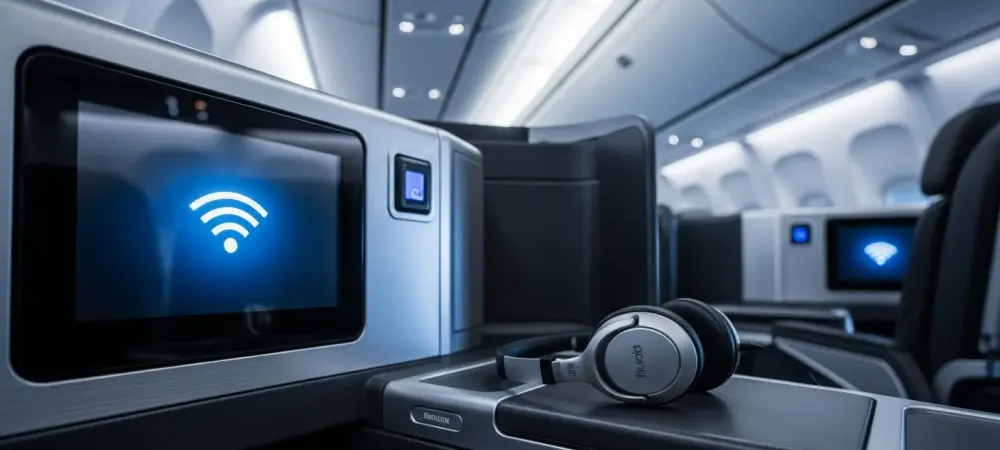
The modern aviation industry is currently navigating a period of unprecedented transformation where the quality of digital entertainment has reached heights previously reserved for luxury home theater systems while the available legroom for the average passenger continues to reach historic lows. This “Perk Paradox” defines the current state of transpacific travel, particularly on routes connecting the United States mainland with the Hawaiian Islands. While airlines are aggressively promoting high-speed internet and high-definition seatback screens, the physical environment of the cabin is becoming increasingly optimized for density rather than movement. This creates a psychological disconnect for the traveler; one can easily stream a 4K movie or participate in a high-stakes gaming session over the open ocean, yet standing up to stretch or reaching for an overhead bin feels like an invasive maneuver in a crowded elevator. As carriers compete to offer the most sophisticated “soft products,” the fundamental ergonomic experience of sitting in a pressurized tube for six hours remains an area of growing friction for the millions of tourists and residents who rely on these vital aerial lifelines every year.
The Digital Frontier in the Clouds
High-Speed Satellite Connectivity: The New Standard
Hawaiian Airlines has established a definitive industry benchmark by completing the full deployment of Starlink’s satellite-based Wi-Fi across its entire long-haul fleet, including the Airbus A330 and Boeing 787-9 aircraft. This technological leap provides passengers with bandwidth that rivals ground-based fiber-optic connections, facilitating low-latency gaming and uninterrupted high-definition streaming even while traversing the vast “dead zones” of the North Pacific. By making this service free and frictionless, the carrier has successfully removed the traditional barriers to mid-flight connectivity, such as cumbersome login portals and tiered payment structures. The result is a digital environment where the transition from the airport terminal to the aircraft cabin is virtually seamless, allowing the professional to remain productive and the leisure traveler to stay entertained without the frustration of lagging speeds or dropped connections.
This move has ignited a fierce technological arms race among other major carriers servicing the Hawaii market, with Delta Air Lines and American Airlines accelerating their own connectivity upgrades to maintain market share. Delta has expanded its free Wi-Fi initiative to include nearly all domestic and short-haul international flights, while American is integrating advanced satellite arrays to ensure that their customers do not feel technologically isolated. These investments are not merely about convenience; they represent a fundamental shift in how airlines define the “product” they are selling. In a competitive landscape where ticket prices are often similar, the promise of a superior digital experience becomes a critical differentiator. However, the reliance on these high-tech amenities also underscores a strategic pivot toward digital immersion as a way to manage the expectations of a passenger base that is increasingly sensitive to the limitations of the physical cabin environment.
The Distraction Strategy: Balancing Screens and Space
The proliferation of world-class digital services is frequently marketed as a primary reason to select a specific airline, serving as a high-tech “polish” that can momentarily obscure the reality of shrinking personal space. Critics within the aviation industry argue that these sophisticated digital perks act as a strategic distraction designed to keep passengers occupied and stationary throughout the duration of the flight. By providing a constant stream of high-quality content, airlines hope to minimize the frequency with which passengers need to stand, stretch, or move about the cabin. Keeping the population of the aircraft focused on their individual screens reduces the demand for aisle access and limits the potential for congestion in shared spaces. While this approach succeeds in maintaining a semblance of order during a six-hour journey, it does little to address the physiological reality of spending extended periods in a seat designed for maximum density.
Furthermore, the emphasis on digital soft products allows airlines to maintain high load factors while appearing to prioritize the customer experience. A passenger who is deeply engaged in a cinematic experience or a collaborative online workspace is less likely to focus on the narrow seat pitch or the lack of lateral shoulder room. This digital-first strategy effectively shifts the value proposition from the physical seat to the virtual portal in front of it. However, as the novelty of high-speed Wi-Fi becomes the baseline expectation rather than a luxury, the underlying issues of cabin density and physical discomfort are likely to resurface as primary concerns. The challenge for the industry moving forward is whether a world-class internet connection is sufficient to compensate for an environment where human movement is increasingly restricted by the pursuit of economic efficiency and aircraft weight reduction.
The Architectural Limits of the Modern Cabin
Narrowbody Integration: The Efficiency of the Single Aisle
A significant evolution in the Hawaii travel sector is the widespread transition from traditional widebody, twin-aisle aircraft to highly efficient narrowbody, single-aisle planes such as the Airbus A321neo and the Boeing 737 MAX. These aircraft are exceptionally fuel-efficient and possess the range necessary to connect smaller West Coast cities directly to Hawaiian destinations like Lihue or Kona, which were previously served primarily through Honolulu hubs. From an operational standpoint, these planes are a triumph of engineering, allowing airlines to tailor their capacity more precisely to market demand. However, the architectural reality of a single-aisle configuration on a five-to-six-hour overwater flight significantly alters the passenger experience. Without the second aisle to facilitate the flow of traffic, the cabin can quickly begin to feel claustrophobic, essentially transforming the aircraft into a long, narrow corridor where every movement is visible and potentially disruptive.
This architectural shift has given rise to a persistent “aisle problem” where human movement becomes a complex logistical challenge once the plane reaches full capacity. In a narrowbody jet, the single aisle must accommodate the movement of passengers, the service carts of the flight crew, and those waiting for the lavatories simultaneously. Unlike widebody jets, which often have cross-aisles or larger galley areas where passengers can stand without blocking traffic, the narrowbody layout offers no such sanctuary. The lack of dedicated standing areas means that any attempt to escape the confines of a seat results in a direct conflict with the primary artery of the plane. This creates a high-pressure environment where travelers often feel “trapped” in their seats, choosing to endure physical stiffness rather than navigate the social and physical obstacles of the crowded aisle.
Human Movement: The Social Negotiation of the Aisle
The shrinking dimensions of modern narrowbody aisles have reached a point where it is often impossible for two adults to pass one another without one individual stepping into a row or performing a complex maneuver. This physical constraint leads to the phenomenon of “stalled lines,” particularly near the forward and aft lavatories during peak times of the flight. When a flight attendant is performing a beverage service with a standard-sized cart, the aisle is effectively decommissioned for passenger use, creating a temporary gridlock. For passengers on the Hawaii route, where the flight duration is long enough to necessitate multiple trips to the restroom, these bottlenecks become a recurring source of stress. The constant negotiation of space requires a high degree of social awareness and patience, which can wear thin as the hours pass and the cumulative effects of a cramped environment take hold of the travelers.
Moreover, the density of the seating arrangement itself exacerbates the difficulty of accessing the aisle from a middle or window seat. As airlines move toward thinner, “slimline” seats to save weight and space, the physical buffers between passengers have diminished, making every movement a shared experience with one’s neighbors. For Hawaii residents who use these flights as a bridge for essential services, the cabin design can feel less like a modern marvel and more like a functional endurance test. The lack of ergonomic freedom is not just a matter of comfort; it has tangible impacts on circulation and overall well-being. When the cabin architecture prioritizes the number of seats over the ability of the human body to move naturally, the resulting environment becomes one where the digital perks must work increasingly hard to maintain a positive atmosphere among a physically fatigued population.
Safety, Economics, and Staffing Tensions
Safety Considerations: Evaluating Modern Density Standards
The economic imperative to maximize seat count is a fundamental driver of modern airline profitability, but it has led to intensified scrutiny regarding aircraft safety and emergency evacuation procedures. Current Federal Aviation Administration standards for cabin evacuation are often criticized for failing to reflect the diverse and aging demographic of actual travelers, who may not possess the agility of the test subjects used in manufacturer trials. In a high-density cabin, the path to an emergency exit is narrower and more obstructed by the sheer volume of passengers and their carry-on belongings. This concern is particularly relevant for the Hawaii market, which sees a high volume of families with young children and elderly tourists seeking a tropical getaway. As seat pitch and aisle width continue to reach their functional limits, the margin for error during a rapid egress scenario becomes uncomfortably slim, prompting calls for more realistic and transparent testing protocols.
In addition to safety concerns, the high-density environment places a significant psychological and physical burden on the flight attendants tasked with maintaining order and providing service. These professionals must navigate the congested aisles while managing heavy equipment and addressing the needs of hundreds of passengers who are often irritable due to their own physical confinement. The introduction of more complex onboard amenities, such as specialty food programs or multi-stage beverage services, requires more time in the aisle, further complicating the flow of the cabin. When flight attendants are forced to work in an environment that is constantly contracting, the potential for friction between crew and passengers increases. This tension is rarely the result of poor service or bad behavior; rather, it is a direct consequence of a physical design that has been optimized for financial returns at the expense of human operational space.
Policy and Design: Prioritizing the Passenger Experience
Airlines eventually recognized that digital distractions, while valuable, were insufficient to address the fundamental human need for physical space and movement. Regulatory bodies began to implement more stringent guidelines regarding minimum seat width and pitch, acknowledging that the trend toward extreme density had reached a point of diminishing returns for passenger health. Carriers responded by redesigning their cabin layouts to include small “flex zones” where passengers could stand or stretch without blocking the main thoroughfares. These design changes were complemented by the introduction of tiered seating options that prioritized ergonomic support and movement over just more legroom. This shift represented a departure from the “all or nothing” approach to cabin density, allowing for a more balanced environment that accommodated both the economic needs of the airline and the physical requirements of the traveler.
Furthermore, the industry moved toward a more integrated approach to wellness, where the digital and physical environments worked in tandem rather than in opposition. Advanced seatback systems were updated to include guided stretching exercises and hydration reminders that were timed to the specific phases of the flight. Airlines also invested in better lighting and air filtration systems to mitigate the effects of jet lag and fatigue, recognizing that a holistic approach to comfort was essential for long-haul routes like those to Hawaii. By prioritizing the human element in the cabin design process, the aviation sector was able to move past the Perk Paradox and create a more sustainable model for transpacific travel. These changes ensured that the journey to the islands remained a positive part of the overall experience, rather than an obstacle to be endured through digital distraction alone.