

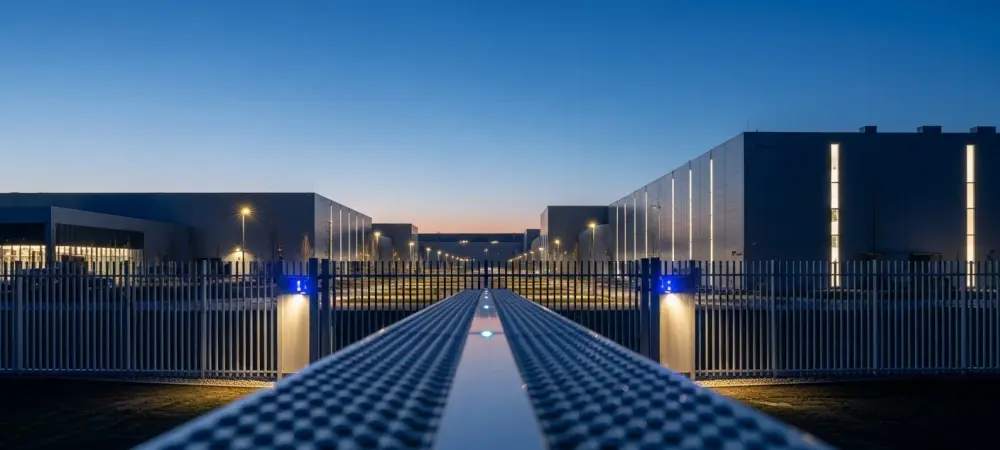
The rapid expansion of hyperscale data centers into massive, campus-scale environments covering hundreds of acres creates a security challenge that traditional methods can no longer adequately address without significant evolution. As these facilities balloon in complexity to support intensive AI-driven workloads, the associated risk profile expands exponentially to include sophisticated external actors, insider threats, and the ever-present danger of human error. To mitigate these multifaceted vulnerabilities, industry experts increasingly advocate for a layered security strategy, a methodology deeply rooted in the military concept of defense-in-depth combined with the principles of Crime Prevention Through Environmental Design. This approach relies on the logic of redundancy; by establishing multiple lines of defense, a single failure in one security measure does not result in a total system compromise. This strategy ensures that high-value assets remain protected even if one layer is bypassed or fails during a breach.
Establishing Robust Structural Safeguards
Perimeter Control: Managing the External Boundary
Securing the outer perimeter represents the first and most expansive line of defense for a modern data center campus, often spanning distances that are impossible to monitor through human patrols alone. Effective boundary control now utilizes a sophisticated combination of high-strength physical fencing and advanced intrusion detection systems that provide immediate feedback to a central command center. These perimeters are no longer just passive barriers; they are integrated with IoT-enabled sensors that detect vibrations, climbing attempts, or cutting activities in real time. Because these sites often exceed 400 acres in the current landscape of 2026, maintaining a continuous visual on every foot of the boundary is essential for preventing unauthorized ingress. By using clear zones and strategically placed lighting, security teams can eliminate hiding spots and ensure that any approach to the facility is visible long before a suspect reaches the actual building walls.
Transitioning from the outer edge to the specific points of access requires a rigorous management of the flow of personnel, vehicles, and deliveries. The second layer of defense focuses on building entry points, where the objective shifts from broad detection to precise identification and authorization. Modern facilities employ hardened portals and revolving doors that prevent tailgating, ensuring that only one person enters per valid credential scan. This layer serves as a critical filter, separating the general campus environment from the highly sensitive interior zones where the primary data processing occurs. By implementing automated visitor management systems and biometric verification at these junctions, operators can maintain an airtight record of everyone on-site. This level of control is necessary to prevent social engineering attacks or unauthorized access by former employees, providing a clear audit trail that is indispensable for both security and regulatory compliance.
Critical Interior Zones: Securing the Core Assets
The third protective layer moves into the heart of the facility, focusing on the gray spaces that house mechanical, electrical, and cooling infrastructure. While the IT equipment often receives the most attention, the support systems are equally vital; a compromise in the cooling or power supply can take down the entire operation just as effectively as a direct cyberattack. Security in these areas involves restricted access permissions that are strictly limited to specialized maintenance personnel who have undergone extensive background checks. Monitoring these zones requires specialized sensors that can detect environmental changes, such as unusual heat signatures or water leaks, which might indicate either a hardware failure or a deliberate act of sabotage. By isolating these mechanical spaces from the general office areas, data centers create a buffer zone that protects the life-support systems of the server environment.
Deep within the facility lies the white space, which contains the critical IT load and represents the most valuable physical asset of the entire organization. At this fourth and final layer, the focus becomes extremely granular, often extending down to the individual data cabinet or server rack level. Even after a person has cleared the perimeter, the building entry, and the internal hallways, they must still provide additional authentication to open a specific cabinet. These cabinets are increasingly equipped with electronic locks and integrated biometric readers that ensure only the assigned technician can interact with a specific set of servers. This level of asset-level security is crucial in multi-tenant environments or large-scale AI clusters where the density of hardware is immense. By securing the individual racks, operators can mitigate the risk of accidental hardware swaps or intentional data theft by internal actors with high-level access.
Integrating Advanced Technologies and Unified Operations
Intelligent Monitoring: The Role of AI and Robotics
Innovation is currently transforming how these security layers function, moving away from static monitoring toward proactive, automated threat detection. Advanced tools such as drone-detection systems and autonomous ground vehicles are now essential for patrolling the vast distances of a campus-scale site without increasing headcount. These robotic systems provide a continuous, 360-degree view of the environment, capable of detecting thermal anomalies or unauthorized movement in areas that are difficult for human guards to reach. Furthermore, the integration of Artificial Intelligence and video analytics has become indispensable for managing the sheer volume of data generated by hundreds of cameras. Rather than relying on human operators to catch every detail across a wall of screens, AI algorithms autonomously identify suspicious behaviors, such as a person loitering near a fence or an unauthorized vehicle in a restricted zone.
The power of AI-driven security lies in its ability to reduce the noise and focus human attention on genuine threats, thereby decreasing response times significantly. Modern video analytics can track individuals across multiple camera feeds, creating a seamless narrative of movement throughout the campus. This technology is particularly effective at recognizing patterns that might elude a human observer, such as a badge being used at two distant locations simultaneously or a door being held open for a few seconds too long. At the most granular level, these systems work in tandem with biometric access control to ensure that the person presenting a credential is the actual owner of that identity. By synthesizing these technological advancements, data center operators can achieve a level of situational awareness that was previously impossible, allowing them to stay ahead of increasingly sophisticated threats in a rapidly changing environment.
Lifecycle Management: Security from Design through Operation
A cohesive security strategy for a campus-scale data center requires breaking down traditional organizational silos to ensure that protection is integrated into every phase of the facility. Effective security is a collaborative effort that must include IT, facilities management, and security operations, as well as external architectural and construction partners. This integration must begin during the initial design phase, long before the first server is installed on the floor. By involving security experts in the early planning stages, organizations can implement physical layouts that naturally direct traffic and enhance visibility. This foresight prevents the need for costly retrofits later and ensures that the security infrastructure can scale alongside the physical footprint of the campus. A unified approach ensures that all departments are aligned on risk tolerance and response protocols, creating a resilient operational environment.
It is particularly important that physical security is prioritized throughout the entire lifecycle of the facility, including the high-risk construction and fit-out phases. Because high-value assets, such as high-end GPUs and specialized power equipment, arrive on-site during the buildout, implementing security measures early is essential to prevent theft or tampering. This involves securing the supply chain and managing the hundreds of contractors who may have access to the site during its development. Establishing a security presence during construction sets a precedent for the operational phase and ensures that the transition to a fully functional data center is seamless. By synthesizing traditional defensive principles with cutting-edge technology and cross-departmental integration, operators ensured their infrastructure remained resilient against the evolving threats that characterized the mid-decade landscape of 2026.
Future Considerations for Data Center Resilience
The evolution of security for campus-scale data centers demanded a shift from reactive monitoring to a holistic, technology-driven defense architecture. Organizations successfully addressed these challenges by adopting a rigorous four-layer model that integrated physical barriers with sophisticated digital surveillance. The implementation of AI-driven analytics and autonomous patrolling proved essential for managing the sheer scale of modern facilities, allowing security teams to identify anomalies with unprecedented speed. Furthermore, the integration of security protocols into the earliest stages of construction and design established a foundation of resilience that protected assets throughout their lifecycle. Moving forward, the focus shifted toward the continuous refinement of these automated systems and the deepening of cross-functional collaboration. Decision-makers prioritized the adoption of biometric standards and zero-trust physical access models to eliminate the vulnerabilities inherent in traditional credentialing. These actions ensured that the physical environment remained as secure and sophisticated as the high-performance computing workloads housed within the facility walls.