

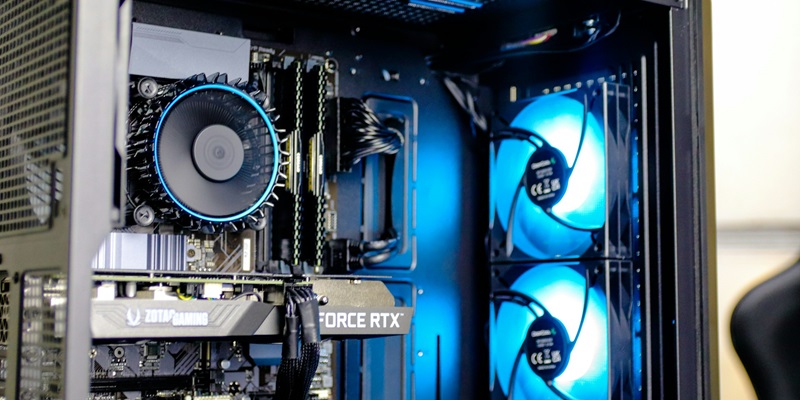
Silverstone has expanded their cooling arsenal with the introduction of the Hydrogon D140 ARGB and the Argon V140 ARGB CPU air coolers. Each with its distinct features and price points, they cater to a diverse audience ranging from the mid-range to the budget-minded system builder. In the quest for the ideal blend of cooling efficiency, low noise levels, and ease of installation, these new contenders are vying for a spot in the competitive CPU cooler market. This article will examine the facets of Silverstone’s latest products to better understand their position amidst the myriad of choices available to consumers.
Introducing Silverstone’s Latest Innovations
A Peek at the Hydrogon D140 ARGB
The Hydrogon D140 ARGB steps into the mid-range cooler segment with an installation process that sets it apart from others. This cooler’s tool-less design significantly reduces the complexity that typically accompanies CPU cooler installation. Its dual-tower heatsink is bolstered by six copper heatpipes and two pre-attached fans, one 140mm and another 120mm, targeting efficient heat dissipation. This could be a boon for both novice and seasoned builders appreciating a more streamlined build process, without the need to handle cumbersome mounting hardware.
Despite its allure of convenience, the Hydrogon D140 doesn’t necessarily eclipse the competition in terms of raw performance when ranked against similarly priced options. Yet, its particular advantages may well appeal to a certain sector of the market that values time and ease of assembly as part of the overall building experience.
Understanding the Argon V140 ARGB
The Argon V140 ARGB, by contrast, has been crafted with the budget-conscious in mind, making it the more economical pick. It trades off the dual-tower design for a single-tower heatsink and finds its strength in four direct touch heatpipes that strive for effective thermal transfer. The inclusion of a single 140mm fan underscores its simplicity, but don’t let that fool you — it is designed to offer dependable cooling for those who may not need the firepower provided by larger, more elaborate setups.
For system builders looking to balance cost with reliable performance, the Argon V140 ARGB might strike that sweet spot. The pairing of a single-tower heatsink with quality heatpipes presents a cooling solution that can cater to standard computing needs without breaking the bank.
Performance Metrics: Cooling Efficiency and Noise
Cooling Performance Under Test
When put to the test with an Intel i7-13700K processor, the Hydrogon D140 showed that it’s capable of handling a maximum thermal design power (TDP) typical of mid-range coolers, coping with up to 221W. This demonstrates that it’s a competent option for users with mid-level cooling needs. By dialing down the noise to a more comfortable level, the D140 still impressively handles 212 watts, endorsing its capability in day-to-day use scenarios, which is where it closely follows the performance of top market air coolers.
On the other side, the Argon V140, fitting to its simpler design and reduced cost, charts just beyond the performance of basic models. In typical usage, with less demanding thermal requirements, it presents acceptable performance. However, in workload scenarios that push closer to the 175W mark, the V140 can’t keep pace with the more advanced air coolers of its class.
The Noise Factor
In the realm of coolers, performance isn’t the only consideration — noise output is equally crucial. The D140 maintains a moderate noise level of 42.4 dBA under full load, which can be adjusted down to 38.2 dBA for a more comfortable acoustic environment without severely compromising cooling performance. This middle-ground approach makes it a compelling choice for builders who need a powerful yet quiet cooler.
The V140, emitting 44.9 dBA at its peak, is slightly louder, yet for those with less stringent noise requirements or who are less concerned with decibel levels, it remains a contender. At the end of the day, both coolers stay within reasonable noise ranges that should satisfy the majority of users, particularly during more common, less demanding operations.
Installation Ease and Compatibility
Ease of Assembly with the Hydrogon D140
The Hydrogon D140 sets itself apart with its user-friendly, tool-less installation process. By including the fans pre-attached to the heatsink, it eliminates one of the potential hurdles in cooler installation. This is particularly advantageous for those less experienced with PC building or anyone who favors a quick and straightforward assembly process. The hassle-free installation is not just a small perk; for some, it could be the deciding factor, especially in a market flooded with options that require more time and effort to set up.
RAM Compatibility Considerations
No matter how performant a cooler is, it won’t be a viable option if it doesn’t play well with the rest of the system components. Both the Hydrogon D140 and the Argon V140 boast non-intrusive designs that ensure compatibility with most RAM modules. This careful consideration in design means fewer headaches for builders who no longer have to worry about potential clearance issues when choosing their memory sticks.
Aesthetics and User Customization
ARGB Lighting: The Visual Appeal
Customization extends beyond mere performance metrics with these air coolers. Both models feature addressable RGB lighting that adds a layer of aesthetic customization to systems. The ARGB lighting isn’t just for performance prowess; it’s about personal expression and enhancing the visual aspect of the build. Users can choose to sync the lighting with their motherboard’s control scheme or opt for a standalone lighting setup, according to their preferences.
Non-intrusiveness of the Coolers’ Design
The sleek, non-intrusive design of the D140 and V140 coolers enables them to blend into the overall build with ease, keeping the visual focus on other prominently showcased components. This is particularly beneficial for those with windowed cases that want to maintain an uncluttered and harmonious aesthetic within their system.
Price to Performance Ratio
Evaluating the D140’s Worth
Taking into account the user-friendly installation, adequate cooling performance for the majority of typical use scenarios, and the inclusion of ARGB lighting for visual flair, the D140 positions itself as a cooler with added value. Its price point of around $60 may be justifiable for those looking for these specific advantages, particularly ease of installation which, in the fast-paced world of PC building, is not a feature to be underestimated.
The V140: A Budget-Friendly Alternative
Silverstone has broadened its cooling product line with two notable additions: the Hydrogon D140 ARGB and the Argon V140 ARGB CPU air coolers. Offering unique features and cost-effective options, these units are designed to appeal to an array of consumers, from the mid-tier enthusiast to the budget-conscious builder. Aiming to hit the sweet spot between effective temperature regulation, quiet operation, and straightforward installation, these fresh entries stake their claim in the bustling CPU cooler sector. Our exploration of Silverstone’s newest offerings delves into their particularities, to discern their standing in a market replete with options for discerning customers. With each cooler differentiated by its own merits, Silverstone aims to provide choices that resonate with various preferences and requirements in the realm of PC cooling solutions.