

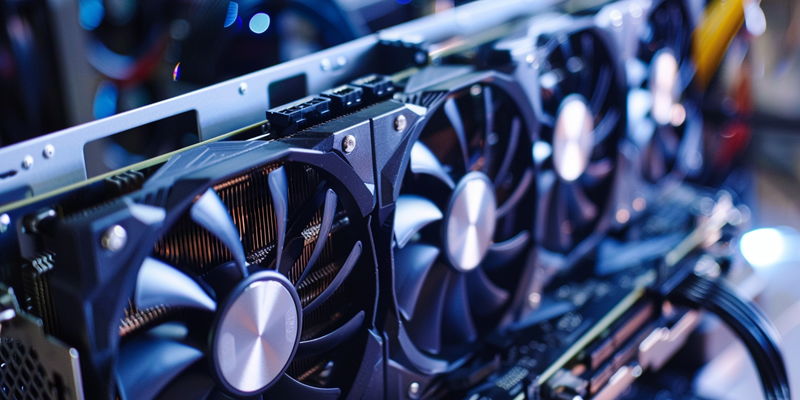
The graphics card arena is abuzz with whispers of a trailblazing newcomer: Nvidia’s RTX 5090 Founders Edition. As rumors swirl, tech enthusiasts are keenly piecing together a picture of what could be the next leap in graphics processing. Spurred by insider insights from prominent leakers like Panzerlied and Kopite7kimi, we find ourselves pondering an array of innovations that might redefine our expectations of gaming and productivity performance. Here’s an explorative look into the speculated advancements and the transformative potential they hold for Nvidia’s much-awaited graphics marvel.
Design Evolution and Technological Leap
Memory Enhancement and Efficiency
Gamers and tech professionals alike might soon revel in the significant video memory upgrades purportedly accompanying the RTX 5090. Early leaks suggest the employment of high-density GDDR7 memory could permit an impressive placement of up to 16 memory chips over a 512-bit bus architecture, a notable bump up from the RTX 4090’s 12. This move could potentially outfit the RTX 5090 with an enormous 32GB of VRAM if fully exploited, a threshold seemingly set to cater to the most demanding rendering tasks and futuristic gaming experiences. This suggestively makes the rumored RTX 5090 not just an incremental update but a titan ready to redefine peak graphical prowess.
Continuing Nvidia’s track record, the speculated memory enhancements for the RTX 5090 are expected to parallel the card’s purported physical and performance boosts. The talk of densely packed GDDR7 memory chips points to a broader ambition: delivering unmatched data throughput rates that keep pace with the increasing complexity of digital environments. If the rumors bear truth, this could translate to smoother frame rates, quicker loading times, and a transformative leap in high-resolution gaming and computation-intensive tasks, shaping an attractive proposal for those seeking the frontier of visual performance.
Balancing Power Consumption with Performance
Speculative discussions around Nvidia’s RTX 5090 point to a paradoxical design objective: a slimmer, yet more powerful GPU. Leaks allude to the possibility of a reconstructed PCB with three individual sections, a revolutionary step that could deliver a dual-slot cooling system and ensure compatibility with compact PC cases. This innovative layout hasn’t just sparked intrigue for its potential space efficiency but also for how it could redefine the interplay between form factor and cooling efficiency, two pivotal aspects of high-end GPU design.
Amidst the excitement, there are legitimate concerns over the RTX 5090’s projected power draw, an inevitable topic when considering high-caliber technological enhancements. The use of top-tier video memory coupled with anticipated performance gains naturally provokes questions about the GPU’s electrical appetite. For consumers, this brings the conversation full circle: balancing the pursuit of cutting-edge visualization against the practical constraints of power and the financial premium demanded by the forefront of technology. How Nvidia plans to navigate these waters remains to be seen, but keen observers are already pondering the trade-offs.
Anticipating the Impact
The Monolithic Chip Conundrum
The RTX 5090’s proposed monolithic chip design, uniting two formidable GPU clusters, is another focal point of the current rumor mill. Yet, many details about this architectural choice remain under wraps. The primary cluster’s fusing intrigues onlookers, as it could signal a noteworthy advancement in parallel processing capabilities. Should these rumors translate into reality, we might witness a significant uptick in the RTX 5090’s adeptness at handling the colossal computational demands of modern-day gaming and professional graphics applications.
The blending of dual GPU clusters encapsulates Nvidia’s bold steps in refining graphical output without compromising on efficiency. Players in realms such as gaming, video editing, and 3D rendering could stand to benefit immensely from such an approach, which underscores the manufacturer’s bid to push the boundaries of present-day hardware. However, whether this will cement the RTX 5090’s status as a groundbreaking innovation remains to be seen. Much like a masterful stroke in a high-stakes game, the confluence of performance and design anticipates a gallant leap, primed to capture the essence of future graphical computation.
A Community Engrossed in Speculation
The tech world is abuzz with anticipation over Nvidia’s rumored RTX 5090 Founders Edition, a graphics card that could redefine the industry standards. Speculation is running wild, driven by insider tips from recognized leakers such as Panzerlied and Kopite7kimi. This potential innovation in graphics processing is captivating the imaginations of gaming and productivity gurus alike, as they eagerly cobble together clues about its capabilities. If whispers are to be believed, we’re on the cusp of a revolutionary step forward for Nvidia’s graphics technology. This piece ventures into the realm of rumored features and the significant impact they could have, as we await the unveiling of what might be a game-changing graphics powerhouse. With each leaked detail, we get closer to understanding the transformation that the RTX 5090 could bring to the digital landscape.