

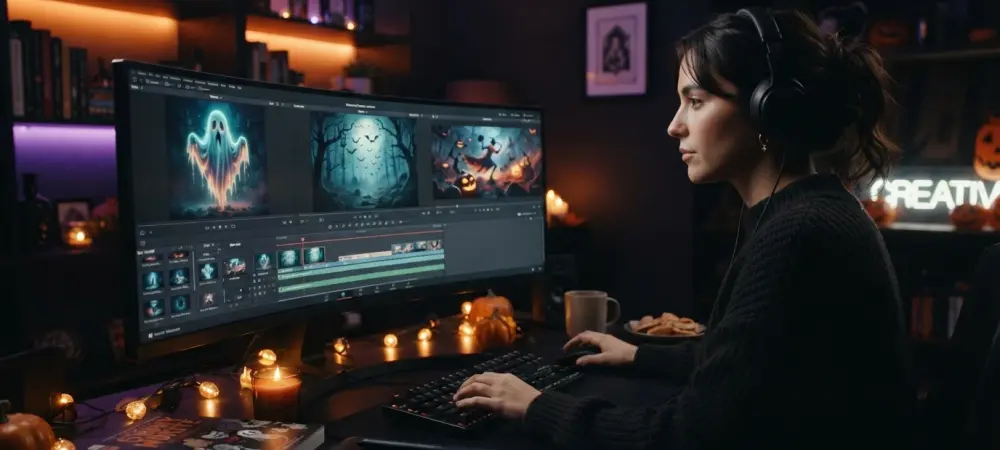
Stitching together multiple short AI-generated clips is currently the most reliable way to create a longer narrative while maintaining visual consistency. As social media platforms continue to evolve in 2026, the demand for high-quality, seasonal content like Halloween-themed videos has shifted the focus toward accessible generative tools. Producers no longer require traditional film crews or complex editing suites to generate viral-ready footage for TikTok or Instagram Reels. Instead, the ability to synthesize spooky atmospheres depends largely on the effective use of reference images and structured text prompts. The primary objective is often speed and visual impact, where a five-to-ten second clip can achieve higher engagement than a long-form production. By leveraging current video generation models, creators can bypass the logistical hurdles of physical production. This technological shift allows for a more democratic approach to content creation during the season.
1. Conceptualization and Foundation Image Selection
Developing a focused concept is the first essential step in avoiding the common pitfall of overcomplicating a short-form video. When a prompt is cluttered with too many disparate elements—such as witches, ghosts, and thunderstorms all occurring at once—the AI model often struggles to maintain a coherent visual style, resulting in a disorganized output. A more effective strategy involves selecting one singular, impactful scene that can be rendered with precision. For instance, a simple portrait that undergoes a supernatural transition or a pumpkin on a porch that begins to glow with an eerie light provides a clear subject for the viewer. This focus ensures that the motion remains fluid and the transformation appears deliberate rather than accidental. Narrowing the narrative scope allows the generator to dedicate its computational resources to the textures and lighting that define the aesthetic. Simplicity in conceptualization leads to higher quality. Once the concept is solidified, utilizing an existing photograph as a foundation significantly improves the consistency of the final video. There are two primary avenues for this process, with the image-to-video method being particularly effective for personal content. By uploading a high-resolution photo of a person, a pet, or a specific location, the creator provides the AI with a stable reference for anatomy and environmental details. This method is ideal for costume reveals, as the tool animates the movement while keeping the facial features and surroundings recognizable. Alternatively, text-to-video generation serves creators who wish to build entirely fictional environments from scratch, such as a mist-shrouded Victorian ballroom or a haunted forest. While this second route offers total creative freedom, it requires a more robust descriptive framework to guide the model. Regardless of the chosen path, the starting point dictates the visual integrity of the entire sequence.
2. Drafting Effective Prompts for Dynamic Motion
Creating a successful video depends heavily on how the prompt is structured to guide the artificial intelligence through the scene. A professional prompt should follow a logical hierarchy, starting with the subject and immediately following with the specific transformation or action required. Detailed descriptions of the environment are necessary to set the mood, such as specifying ‘dense ground fog’ or ‘flickering candlelight’ to enhance the spooky atmosphere. It is also beneficial to describe the lighting in cinematic terms, which helps the model understand the intended contrast and shadow depth. By organizing the information in this manner, the creator provides a clear roadmap for the generator, reducing the likelihood of unexpected visual artifacts. High-quality output is rarely the result of a single word; it is the product of a carefully layered description that accounts for every element in the frame. This systematic approach ensures that the video aligns with the vision. Beyond the subject matter, the prompt must explicitly define the motion and camera behavior to achieve a truly cinematic effect. Specifying the pace of the movement, such as a ‘slow, menacing push-in’ or a ‘gradual transition from shadow to light,’ gives the clip a professional rhythm. It is also important to include instructions regarding what should remain stationary to prevent the common issue of background warping. For example, a prompt might specify that the background architecture should remain stable while only the subject moves. Focusing on a single primary action per clip—like a character turning their head or a door slowly creaking open—is far more effective than requesting multiple complex movements. This precision prevents the AI from becoming overwhelmed by competing instructions, which can lead to jittery or unnatural animations. Mastering this balance between action and stability is what separates professional-grade AI video from amateur experiments in this space.
3. Technical Configuration and Refinement Strategies
Before initiating the generation process, the technical parameters must be aligned with the intended social media platform. For vertical formats like Reels or TikTok, selecting a 9:16 aspect ratio is crucial to ensure the content occupies the entire screen. Creators should also be mindful of clip length, as short segments of two to fifteen seconds are generally more stable and easier to control than longer durations. When working with credit-based systems, a savvy strategy involves using faster, lower-cost models to test the basic movement and framing of a concept. Once the general motion is confirmed, the creator can then switch to a higher-fidelity model for the final rendering pass. This tiered approach prevents the waste of premium resources on experimental drafts that may not meet the desired aesthetic. By optimizing these settings in advance, the user streamlines the production workflow and ensures that each generation is a step closer to the final professional product.
It is rare for the initial generation to be flawless, so understanding how to perform minor corrections is a vital part of the creative process. Instead of completely restarting a project when a face appears distorted, creators can often fix the issue by using a clearer starting image or simplifying the motion instructions. If the movement appears too choppy or unnatural, the solution frequently lies in reducing the complexity of the action described in the prompt. Visual dullness can be addressed by adding specific lighting keywords such as ‘neon orange glow’ or ‘silvery moonlight’ to enhance the tonal range of the scene. Furthermore, many small timing errors or awkward endings can be easily corrected by using a basic external editor to trim the footage for better pacing. These incremental improvements are often more efficient than attempting to generate the perfect clip in a single attempt. Focus on refining the core elements until the visual narrative feels seamless and engaging for the audience.
4. Strategic Implementations for Future Production
The successful adoption of these AI-driven techniques represented a major milestone in the evolution of digital storytelling during the 2026 season. Creators who mastered the art of modular video generation discovered that they could produce high volumes of top-tier content without the traditional overhead of a production studio. This era saw a significant shift toward iterative design, where the ability to quickly pivot between concepts became a competitive advantage on social media. Many organizations integrated these workflows into their marketing departments, recognizing that the speed of AI allowed them to react to cultural trends in real-time. The use of image-to-video technology provided a reliable bridge between static branding and dynamic engagement, ensuring that visual identities remained intact across all media types. This period also demonstrated that the most effective digital narratives were those that prioritized clarity and atmospheric depth over complex, multi-layered plots.
Reflecting on the progress made throughout this production cycle, it became evident that the combination of structured prompts and tiered model testing was the most sustainable approach. Creators who documented their successful prompt structures were able to replicate their results across different themes, effectively building a library of reusable visual assets. The industry shifted toward a model of constant refinement, where the focus transitioned from simply generating content to perfecting the nuances of light and motion. This experience provided valuable lessons for the next wave of developments in generative media, emphasizing the importance of human-led creative direction in the age of automated production. Ultimately, the integration of these tools did not replace the need for a creative vision but instead amplified the potential for individual expression. By treating the AI as a digital collaborator, users unlocked new possibilities for immersive seasonal content that once seemed impossible to achieve.