

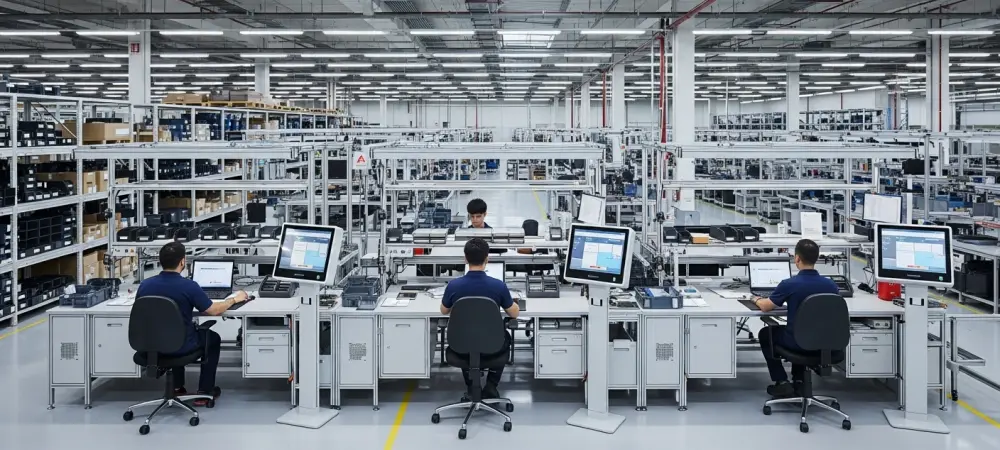
The pulse of a modern manufacturing facility is no longer measured by the rhythmic thud of a hydraulic press alone, but by the silent, rapid flow of data that connects every workstation to the central nervous system of the enterprise. When a production floor operates in a vacuum, separated from the strategic planning of the front office, the resulting friction manifests as wasted material, missed deadlines, and a profound lack of clarity regarding actual labor costs. This disconnect often stems from a reliance on legacy systems that treat the factory floor as a black box, where raw materials enter and finished goods eventually emerge, leaving the intricate details of what occurred in between to guesswork and anecdotal evidence. Navigating this complexity requires a shift toward an integrated Manufacturing Execution System that transforms Microsoft Dynamics 365 Business Central from a static ledger into a dynamic, real-time engine of operational excellence.
Moving Beyond Paper Travelers and Manual Data Entry
In the current manufacturing landscape, the reliance on physical paper travelers—those often-smudged documents that follow a part from station to station—represents a significant bottleneck in data integrity. These documents frequently become repositories for approximate times and rounded numbers, recorded by operators who are more focused on meeting their production quotas than on administrative precision. When a worker is asked to recall the exact moment a machine went down for maintenance three hours after the fact, the data entered into the ERP becomes more of a subjective narrative than a factual record. This lag between physical action and digital documentation creates a distorted view of the production environment, leading to inventory discrepancies and unreliable lead time projections that ripple through the entire supply chain. Transitioning to a digital, barcode-driven system like Shop Floor Insight eliminates the ambiguity inherent in manual record-keeping by capturing events at the exact moment they occur. Instead of filling out a time sheet at the end of a long shift, an operator simply scans a badge and a job traveler to begin a task, ensuring that every second of labor is accounted for with pinpoint accuracy. This real-time visibility allows leadership to move away from reactive troubleshooting and toward proactive management, as the “truth” of the shop floor is no longer buried in a stack of papers on a supervisor’s desk. By digitizing these touchpoints, organizations create a high-fidelity data stream that informs every level of the business, from procurement to customer service, fostering an environment where decisions are based on empirical evidence rather than gut feelings.
The digital transformation of the shop floor also serves to empower the workforce by removing the administrative burden that often plagues skilled laborers. When operators are equipped with intuitive touchscreens and scanners, they spend less time wrestling with clipboards and more time focusing on the quality of the product. This shift not only improves morale by streamlining repetitive tasks but also reduces the likelihood of clerical errors that can lead to costly rework or shipping delays. As the factory floor becomes a transparent environment, the wealth of data collected provides a foundation for continuous improvement, allowing teams to identify subtle inefficiencies that were previously hidden by the opacity of paper-based workflows.
The Critical Gap Between Planning and the Factory Floor
Many businesses discover that while their ERP system is exceptional at handling financial transactions and high-level resource planning, a massive functional gap exists when it comes to the granular execution of daily tasks. Once a production order is released in a standard Dynamics 365 environment, it often enters a zone of limited visibility where managers struggle to see the progress of specific operations in real-time. Without a dedicated execution layer, the system remains unaware of machine breakdowns, material shortages, or labor shortages until the end of the day or week. This lack of transparency means that bottlenecks can persist for hours before they are noticed, leading to a cascade of delays that jeopardize delivery schedules and inflate operational costs. Bridging this gap requires an architecture that treats shop floor execution as an extension of the planning process rather than a separate, siloed activity. An integrated MES acts as the connective tissue that translates office-level strategy into actionable floor-level tasks, ensuring that everyone is working from the same set of priorities. When a production manager makes a change to a schedule in the ERP, that update should be immediately visible to the operator at their workstation. Conversely, if a machine fails on the floor, the system should instantly alert the planning team so they can adjust downstream schedules and manage customer expectations. This two-way communication loop is essential for maintaining agility in a market where demand can shift with little warning.
Furthermore, the elimination of “gap time”—those periods where labor is unrecorded or machines sit idle without explanation—is one of the most immediate benefits of closing the divide between planning and execution. By establishing a single source of truth, companies can accurately measure the utilization of their most expensive assets and identify the root causes of downtime. Whether the issue is a recurring mechanical fault or a pattern of inefficient setup procedures, having the data to pinpoint the problem is the first step toward resolution. This level of insight transforms the ERP from a mere historical record into a forward-looking tool that helps leadership optimize every facet of the manufacturing ecosystem.
Building a Unified Manufacturing Ecosystem
Achieving peak efficiency requires more than just a single piece of software; it necessitates a cohesive ecosystem where every tool is designed to support the product lifecycle from inception to delivery. This journey begins long before the first machine is turned on, starting with advanced planning and forecasting tools that establish a realistic roadmap for production. By utilizing an enhanced planning logic that goes beyond standard ERP settings, manufacturers can better manage inventory levels and ensure that the necessary components are available when needed. This foundational layer prevents the common pitfall of starting a production order only to have it stalled by a missing five-cent part, which effectively halts the entire production line and wastes valuable labor hours.
Once the plan is in place, the transition to execution must be seamless, utilizing tools that translate abstract orders into a visual, manageable workflow. A graphical scheduler or an advanced planning and scheduling engine allows managers to see the interplay between machine capacity and labor availability, providing a clear picture of how work will move through the facility. These tools enable “what-if” modeling, allowing teams to understand the impact of a rush order or a sudden equipment failure before it disrupts the entire floor. In this integrated model, the schedule is not a static document but a living entity that evolves based on the real-time data being fed back from the execution layer, ensuring that the facility is always operating at its true capacity.
The ecosystem is further strengthened by the integration of documentation and quality control directly into the production workflow. In an era where technical specifications and regulatory requirements are increasingly complex, providing operators with immediate access to the latest drawings and safety protocols is vital. By surfacing this information through the same terminal used for time tracking, the system ensures that quality is built into the process rather than inspected at the end. Integrated quality modules allow for measurements and pass/fail results to be recorded at critical milestones, creating a comprehensive genealogy of each finished product. This holistic approach ensures that every department—from engineering to shipping—is aligned, reducing friction and maximizing the output of the entire organization.
Expert Insights on Deployment and Architecture
Implementing a sophisticated Manufacturing Execution System requires a strategic approach to architecture that prioritizes both security and performance. Industry experts often highlight the importance of a communication hub, which acts as a secure intermediary between the shop floor terminals and the central ERP database. This configuration is particularly beneficial for businesses operating in a cloud environment, as it prevents high-frequency traffic from hundreds of scanning events from overwhelming the ERP’s web services. By centralizing the data flow through a local hub, the system remains responsive and stable, providing operators with the instantaneous feedback they need to maintain a steady production pace.
Security is another critical consideration that dictates the underlying structure of a modern MES deployment. Experts recommend an architecture where individual shop floor terminals do not require direct access to the internet or individual user logins for the ERP system. Instead, these devices communicate exclusively with the secure hub, which manages the authentication and data transmission to the cloud or on-premises server. This setup significantly reduces the attack surface of the network, protecting sensitive production data while still allowing for the seamless exchange of information. It also simplifies the management of the hardware, as IT teams can deploy and update terminals without the need for complex individual configurations.
When it comes to hardware, practical experience in rugged manufacturing environments suggests that durability and cost-effectiveness should lead the decision-making process. While mobile devices like tablets offer flexibility, they are often prone to being dropped, lost, or left uncharged. Many successful organizations opt for “Fixed Kiosks” using affordable Chromebooks or repurposed laptops equipped with industrial-grade USB barcode scanners. These stations provide a stable, reliable interface that stands up to the dust and vibrations of the factory floor. By choosing hardware that is easily replaceable and simple to use, companies can scale their digital presence across the shop floor without incurring excessive costs or creating a logistical nightmare for the maintenance staff.
Strategies for Maximizing Operational Efficiency
To derive the maximum value from an MES, manufacturers should implement specific operational strategies that leverage the data being captured in real-time. A primary focus should be the automation of labor and material consumption tracking through a comprehensive barcoding strategy. By requiring operators to scan their IDs and specific production orders, the system creates a granular record of how every minute of the day is spent. This level of detail is essential for identifying non-productive time, such as excessive cleaning or waiting for materials, which can then be addressed through process improvements. For materials, scanning lot or serial numbers at the point of use ensures total traceability, which is increasingly mandatory in highly regulated industries.
Another powerful strategy involves the rigorous tracking and analysis of rework costs, which are often the silent killers of profitability. By requiring operators to enter a specific root cause code whenever a part needs to be fixed, management can begin to see patterns that were previously invisible. If a particular machine is consistently producing parts that require rework, it may be time for a specialized maintenance overhaul. If errors are linked to a specific material batch, the procurement team can hold the supplier accountable. This data-driven approach to quality management allows companies to move beyond simply fixing mistakes and toward a culture of prevention, where the underlying causes of waste are systematically eliminated.
Finally, streamlining the administrative tasks that follow production—such as supervisor approvals and payroll processing—can lead to significant overhead savings. Digitizing the time card approval process allows supervisors to review their team’s performance daily, flagging discrepancies or output errors as they occur rather than days later. This immediate feedback loop ensures that the data being sent to payroll is accurate and verified, reducing the time HR spends on corrections and manual entry. By integrating this verified labor data directly with payroll providers, organizations can ensure that employees are compensated accurately for overtime and shift differentials, while simultaneously reducing the administrative cost of maintaining a large workforce.
The decision to implement a robust Manufacturing Execution System was a turning point for many organizations looking to modernize their operations within the Dynamics 365 framework. By prioritizing real-time data capture and architectural security, these businesses moved away from the inefficiencies of paper-based tracking and toward a transparent, data-driven culture. The integration of planning, scheduling, and execution tools created a unified ecosystem that allowed for the rapid identification of bottlenecks and a significant reduction in waste. Experts observed that the most successful deployments were those that focused on the operator experience, making data entry so simple that it became an effortless part of the daily routine. As the system matured, the wealth of information gathered from the shop floor provided the foundation for more accurate costing and improved capacity planning. Ultimately, the shift toward a digital MES allowed leadership to focus on long-term growth and innovation, secure in the knowledge that their production data was both accurate and actionable. Moving forward, the focus shifted toward leveraging this data for predictive maintenance and even more granular efficiency gains across the global supply chain. This technological evolution proved that when the gap between the office and the factory was finally closed, the entire business operated with a newfound sense of clarity and purpose. Companies that embraced these digital strategies found themselves better positioned to handle the complexities of a changing market, turning their manufacturing capabilities into a true competitive advantage. The journey from manual entry to integrated execution was characterized by a commitment to transparency and a relentless pursuit of operational excellence. Through the careful application of these tools and strategies, the manufacturing floor became a source of strength, driving the organization toward a more profitable and sustainable future.