

Introduction
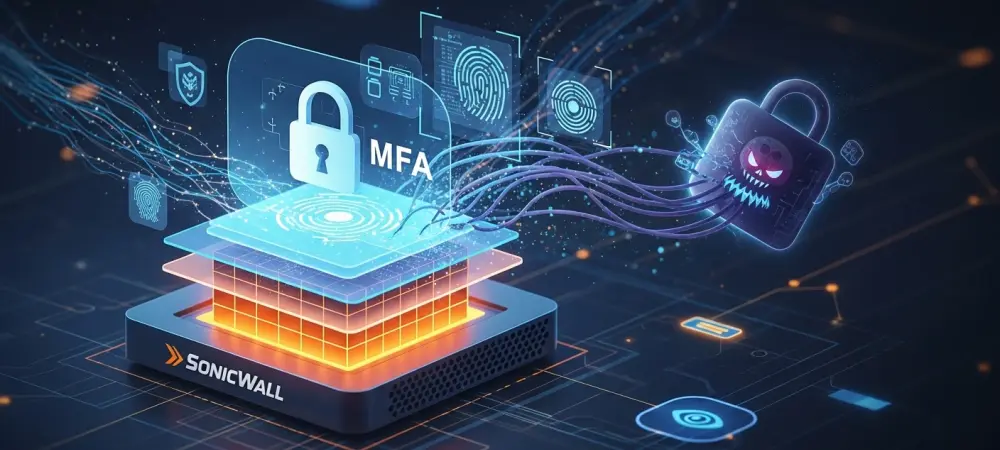
The persistent illusion that multifactor authentication serves as a final, unbreakable line of defense has been systematically dismantled by sophisticated actors targeting network appliances. Security administrators often operate under the assumption that requiring a second form of verification creates an impenetrable barrier against unauthorized entry. However, recent discoveries involving SonicWall SSL-VPN appliances prove that structural flaws in how identity is verified can render these extra layers entirely irrelevant.
This article examines the technical mechanics of a critical authentication bypass and explores why standard updating procedures often fail to provide complete protection. It focuses on the discrepancy between vendor ratings and real-world risk, while providing clarity on the steps necessary to secure legacy systems. Readers will gain an understanding of how automated tools exploit specific firmware inconsistencies to grant attackers total access to corporate resources.
Key Questions or Key Topics Section
Why Is CVE-2024-12802 Considered a Silent Threat to MFA?
Modern security relies heavily on the handshake between a user and an authentication server, yet this vulnerability exploits a logic gap that occurs before a challenge is even issued. The flaw resides in how the appliance handles specific account name formats when integrated with Microsoft Active Directory. By utilizing automated brute-force tools, attackers can manipulate the communication between the VPN and the directory service to confirm a valid session without ever needing to provide an MFA token.
This bypass is particularly dangerous because it does not typically trigger the standard security alerts associated with failed login attempts. Since the exploit bypasses the secondary verification stage entirely, the system treats the intrusion as a legitimate, authenticated connection. Consequently, organizations may remain unaware of a breach until a ransomware payload is deployed, as the initial entry point leaves behind almost no evidence of a traditional credential attack.
How Does Hardware Lifecycle Impact Vulnerability Remediation?
The divergence in security posture between newer and older hardware generations has created a significant gap that ransomware groups are eager to exploit. On newer Gen7 hardware, the manufacturer has provided a streamlined update process that effectively closes the vulnerability upon installation. However, the situation for legacy Gen6 appliances is far more precarious. These older devices reached their end-of-life status in April 2026, which naturally complicates the delivery and implementation of critical security fixes for many organizations.
A major complication for users of these legacy systems is that the firmware update alone does not provide full remediation. Protecting a Gen6 device requires an additional six manual configuration steps involving the removal and re-integration of LDAP settings to ensure the bypass is truly neutralized. Because many administrators assume that a successful firmware flash is sufficient, they inadvertently leave a functional backdoor open for attackers who are familiar with the specific technical requirements of the patch.
Why Was the Initial Risk Assessment of This Flaw So Misleading?
Confusion often arises when there is a significant discrepancy between how a manufacturer and a government agency perceive a threat. SonicWall initially assigned this vulnerability a medium severity score of 6.5, a rating that often suggests a lower priority for immediate patching in busy IT environments. In contrast, CISA assessed the flaw at a critical 9.1 rating. This massive gap in assessment led many organizations to deprioritize the fix, allowing attackers to continue their operations against unpatched systems for months. The consequences of this undervaluation were severe, as the Akira ransomware group began targeting these specific vulnerabilities shortly after they were identified. This misalignment in risk perception highlights the danger of relying solely on a single source for security intelligence. When manufacturers underestimate the severity of a flaw, it creates a window of opportunity for threat actors to establish a foothold in networks that administrators believe are relatively safe from critical exploits.
Summary or Recap
The exploitation of SonicWall appliances serves as a stark reminder that multifactor authentication is only as strong as the underlying code that manages the session. The reliance on manual patching for legacy equipment creates an environment where human error can lead to catastrophic security failures. Furthermore, the sunsetting of older hardware models leaves many businesses in a vulnerable position where they must manage critical risks on equipment that no longer receives full support. These factors combined create a perfect environment for ransomware groups to move laterally through corporate networks with minimal resistance.
Conclusion or Final Thoughts
It became evident that the traditional approach to vulnerability management was insufficient for addressing flaws that required manual configuration. Security teams realized that simply following a vendor-provided checklist did not guarantee safety, especially when government assessments contradicted manufacturer data. Moving forward, the industry understood that migrating away from end-of-life hardware was a security necessity rather than a mere upgrade. Organizations that successfully defended their perimeters did so by verifying every layer of their authentication logic and maintaining a proactive stance toward hardware replacement.