

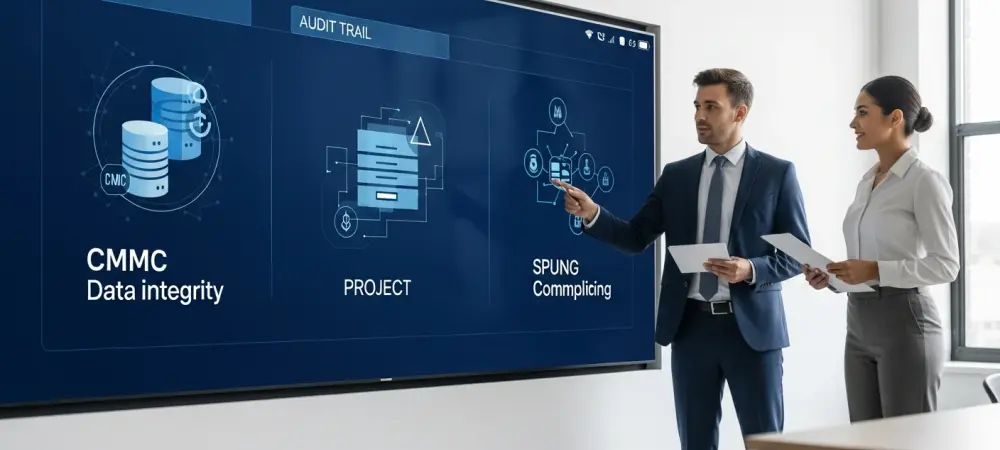
The federal procurement landscape has undergone a seismic shift where the ability to secure sensitive data is now just as critical as the ability to deliver a high-quality product or service on time. For government contractors, the days of viewing cybersecurity as a peripheral IT concern have vanished, replaced by a rigorous regulatory environment where compliance with NIST 800-171 and the Cybersecurity Maturity Model Certification (CMMC) dictates the very survival of a business. As the Department of Defense increasingly ties eligibility for major contracts to these standards, the protection of Controlled Unclassified Information (CUI) has become the central focus of operational strategy. This shift requires a fundamental reimagining of how data flows through an organization, moving away from fragmented, manual tracking systems toward integrated environments where security is baked into the foundation of every financial and project-related transaction.
Establishing a Secure Infrastructure Foundation
Leveraging Government-Specific Cloud Ecosystems
Modern defense contracting requires a departure from commercial-grade hosting environments that often lack the specialized controls necessary for federal compliance. By anchoring an Enterprise Resource Planning (ERP) system like XTIVIA GovCon365 within a dedicated cloud architecture such as Azure Government or Office 365 GCC High, contractors gain access to a platform designed specifically to meet Department of Defense security requirements. These specialized environments provide physical and logical isolation from standard commercial traffic, ensuring that CUI is handled within a sovereign cloud that adheres to the strictest data residency and access laws. Such a setup allows organizations to inherit a significant portion of their security controls from the cloud provider, reducing the internal burden of maintaining high-level infrastructure compliance while ensuring that the underlying hardware and network layers are already vetted by federal auditors.
Building upon this hardened cloud foundation involves more than just selecting the right host; it requires a systematic alignment of the ERP software with the specific security protocols of the government cloud. When a system is deployed in a GCC High environment, it utilizes dedicated data centers that are staffed by screened personnel and protected by advanced threat detection systems that monitor for state-sponsored intrusions. This proactive defense posture is essential for meeting CMMC Level 2 and Level 3 requirements, which demand higher degrees of resilience against sophisticated cyber threats. By integrating the ERP directly into this ecosystem, contractors ensure that their financial data, project schedules, and supply chain communications are shielded from unauthorized visibility. This structural integration serves as the first line of defense, creating a robust perimeter that simplifies the complex task of securing the vast amounts of sensitive information required for modern defense projects.
Implementing Identity and Access Management
A robust infrastructure is only effective if the identities of those accessing it are strictly controlled and verified at every step of the digital journey. Integration with Active Directory serves as a cornerstone for this strategy, enabling the enforcement of Multi-Factor Authentication (MFA) and Single Sign-On (SSO) across all enterprise applications. This approach ensures that every user is exactly who they claim to be, utilizing various verification factors to mitigate the risks associated with compromised credentials. Furthermore, centralized identity management allows for the immediate revocation of access rights when a contractor or employee is no longer associated with a specific project or the organization itself. This level of individual accountability is a non-negotiable requirement for CMMC compliance, as it creates a clear trail of who accessed what data and when, effectively eliminating the anonymity that cybercriminals often exploit within less sophisticated systems.
The transition from broad access to granular control continues with the application of identity policies that adapt to the context of the user’s request. By utilizing conditional access policies, an organization can restrict system entry based on factors such as geographic location, device health, and network security status. This ensures that even a valid set of credentials cannot be used from an unmanaged device or an insecure public connection to access sensitive CUI stored within the ERP. Such a dynamic security posture aligns with modern zero-trust principles, where trust is never assumed and must be continuously verified. By embedding these identity controls into the daily workflow of project managers and accountants, the system creates a seamless user experience that does not sacrifice security for convenience. This integrated identity layer acts as a critical gateway, ensuring that the internal digital environment remains exclusive to authorized personnel who meet the highest security standards.
Granular Data Protection and Compliance Integrity
Applying the Principle of Least Privilege
Effective data protection within an ERP system depends on the ability to restrict visibility so that employees only interact with the specific information required for their immediate tasks. Through specialized Work Breakdown Structure (WBS) logic, a well-configured system can silo data at a granular level, ensuring that sensitive project codes and task details are hidden from those without a direct “need to know.” This application of the principle of least privilege significantly reduces the “blast radius” of a potential internal mistake or an external breach, as a compromised account would only provide access to a tiny fraction of the overall data set. For a government contractor, this means that an entry-level accountant might see billing codes but not the technical specifications of a defense project, while a project lead sees the schedule but not the unrelated financial overhead of another department, maintaining strict operational security across the board.
This methodology of restricted visibility naturally leads to a more organized and compliant reporting structure that satisfies the most demanding federal auditors. When data is siloed based on role and project requirements, the risk of accidental exposure of CUI is minimized, and the complexity of managing large datasets is greatly reduced. The ERP acts as a digital barrier, programmatically enforcing these restrictions so that security is not dependent on human memory or manual folder permissions. This automated enforcement is a key differentiator during a CMMC assessment, as it demonstrates a proactive and systematic approach to data safeguarding. By embedding these logical constraints into the core of the project management workflow, organizations can provide their workforce with exactly the tools they need to be productive while ensuring that the broader corporate and federal information assets remain strictly protected from unauthorized internal or external eyes.
Maintaining Immutable Audit Trails and Data Integrity
In the high-stakes world of government contracting, the integrity of financial and project data is paramount, as any hint of manipulation can lead to severe legal and financial consequences. Modern ERP systems address this by eliminating the ability to simply delete records, a practice that is often flagged as a major risk during federal audits. Instead of deletions, the system utilizes immutable audit trails and formal reversal processes for all labor and financial adjustments. This ensures that every change, whether it is a correction to a timesheet or an adjustment to a project budget, is documented with a permanent record of the original entry, the person who made the change, and a justification for the update. This transparency provides a comprehensive history of the data’s lifecycle, which is essential for proving the accuracy of billings and the proper handling of government funds during rigorous oversight reviews.
The move toward automated time-stamping and non-repudiation further solidifies the contractor’s compliance posture by providing undeniable proof of when actions were taken. Every transaction within the ERP is captured in a system-generated log that cannot be altered by users or administrators, creating a “single version of truth” that serves as the bedrock for all reporting. This level of detail is particularly valuable when defending against allegations of fraud or mismanagement, as it allows the organization to reconstruct events with precision. Beyond mere compliance, this culture of accountability fosters a sense of professional responsibility throughout the workforce, as employees understand that their actions are tracked and recorded. By moving away from fragmented spreadsheets and legacy databases that lack these controls, contractors can build a resilient digital environment where data integrity is an inherent feature of the software, significantly easing the path toward a successful CMMC certification and long-term federal trust.
Sustaining a Competitive Edge Through Security
The evolution of cybersecurity from a technical checkbox to a strategic business asset has redefined what it means to be a successful government contractor. Organizations that have successfully integrated CMMC requirements into their ERP workflows find that they no longer view audits with trepidation, but rather as an opportunity to demonstrate their operational excellence. This transition toward a security-first culture provides a tangible competitive advantage, as federal agencies are increasingly prioritizing partners who can prove their resilience against modern cyber threats. By adopting a unified platform that manages both financial performance and data protection, contractors can focus their energy on delivering mission-critical results rather than managing a disjointed collection of security tools. The resulting efficiency not only reduces the cost of compliance but also accelerates the pace of innovation, allowing firms to pivot quickly to meet new government requirements.
Moving forward, the primary goal for any defense contractor should be the continuous refinement of these automated security processes to stay ahead of an ever-shifting threat landscape. This involves conducting regular gap analyses between current ERP configurations and emerging CMMC updates, ensuring that security controls evolve alongside the software. Organizations should also prioritize the training of their staff, transforming every employee into an informed guardian of sensitive information who understands their role within the broader security ecosystem. By maintaining a proactive stance and leveraging the power of integrated cloud environments, contractors can ensure that their security infrastructure remains a robust shield against intrusions. Ultimately, the successful fusion of accounting, project management, and cybersecurity into a single, cohesive ERP strategy will remain the defining characteristic of the firms that lead the federal marketplace into the future.