

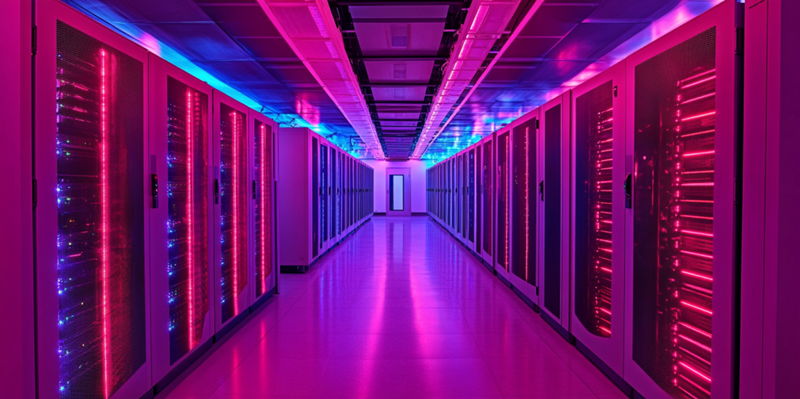
As the rise of artificial intelligence (AI) continues to gain momentum, data centers are finding themselves at the forefront of a technological dilemma. On one hand, these facilities must meet the ever-growing demand for AI-driven data processing. On the other, they are under tremendous pressure to adopt sustainable practices to mitigate environmental impacts. Balancing these dual imperatives is no small feat. This article delves into how data centers can reconcile the demands of AI with their sustainability goals.
The Redundancy Challenge in Data Centers
Data centers are designed to be highly redundant, ensuring uninterrupted service through multiple backup systems. This redundancy, while necessary, requires significant energy consumption. The constant need for available power and cooling to support these systems puts a considerable strain on energy resources. Redundant systems, such as uninterruptible power supplies (UPS) and backup generators, are critical for uninterrupted data flow. However, these systems often lead to energy inefficiencies. The challenge for data centers is to maintain their high reliability without compromising energy consumption.
Addressing the redundancy challenge involves rethinking traditional backup strategies. Efficient energy storage solutions, coupled with smarter grid integrations, can help mitigate excessive energy use while maintaining the reliability of data center operations. For example, implementing advanced energy management software that dynamically adjusts power distribution according to real-time demand will not only preserve energy but also maintain the required redundancy. Furthermore, designing data centers with modular architectures allows for the scaling of redundancy measures in response to specific needs, avoiding the one-size-fits-all approach that often results in excessive energy use.
Surging Energy Needs Due to AI
The field of AI is growing at an exponential rate, leading to a corresponding increase in data center energy consumption. AI models require extensive computational power, resulting in heightened energy demands. As AI applications become more prevalent, data centers must adapt to this surge in requirements. AI’s voracious appetite for data processing power means data centers must scale their infrastructure to keep up. This scale-up often results in higher energy use, putting sustainability goals at risk. Energy efficiency must, therefore, be an integral part of any AI deployment strategy.
Solutions like energy-efficient hardware and optimized software can partially mitigate this issue. Implementing AI-driven energy management systems within the data centers themselves can also help in smarter, more efficient energy use, aligning with sustainability goals. Companies can incorporate machine learning algorithms to predict peak times of energy usage and proactively manage resources, reducing unnecessary energy consumption. Moreover, exploring alternative, lower-power hardware designed specifically for AI tasks can further help bridge the gap between soaring energy demands and sustainability commitments.
Technological Innovations in Data Center Cooling
Cooling is one of the largest contributors to energy consumption in data centers. Innovative cooling solutions, such as direct-to-chip cooling, promise to significantly reduce energy usage. By delivering cooling directly to the components that need it most, this technology offers a more efficient alternative to traditional methods. Direct-to-chip cooling targets hot spots more effectively than room-based cooling systems. This targeted approach not only conserves energy but also enhances the lifespan of servers by maintaining optimal operating temperatures.
Another promising technology is liquid immersion cooling, where servers are submerged in a thermally conductive liquid. This method is highly efficient, reducing the need for energy-intensive air conditioning systems. Both direct-to-chip and liquid immersion cooling pave the way for greener data center operations. When combined with AI-enabled monitoring systems, these advanced cooling methods can dynamically adjust to varying loads, ensuring that cooling efficiency is maximized without compromising performance. Such innovations are pivotal in achieving the delicate balance between high-performance AI computing and sustainable operations.
The Role of Battery Energy Storage Systems (BESS)
Battery energy storage systems (BESS) provide an alternative to traditional backup generators, offering a more sustainable solution. By storing energy during off-peak times, BESS can reduce reliance on diesel generators, which are both costly and environmentally detrimental. Implementing BESS involves significant investment, but the long-term benefits are substantial. Not only do they lower carbon footprints, but they also offer financial savings through reduced fuel and maintenance costs.
Moreover, BESS can be integrated with renewable energy sources, further enhancing sustainability. By leveraging solar or wind power stored in batteries, data centers can decrease their dependency on grid electricity, contributing to a more sustainable energy model. This integration can be automated with smart grid technology, ensuring that renewable energy is utilized efficiently and effectively. Additionally, companies investing in BESS may qualify for various green energy credits and incentives, further offsetting the initial costs and promoting broader adoption of these sustainable practices.
Government Initiatives and Regulations
Governmental policies play a pivotal role in driving sustainability in data centers. Nations around the world are increasingly introducing regulations and incentives to promote green data center practices. These initiatives are critical in ensuring that the industry moves towards more eco-friendly operations. In countries such as Singapore, Japan, and Korea, government-backed green plans mandate the inclusion of sustainable practices in technological advancements. These policies not only promote the adoption of renewable energy but also encourage innovations in energy efficiency.
Compliance with these regulations can be challenging, but they also present opportunities. Data centers that align with government standards often gain access to funding, tax incentives, and other benefits that make the transition to greener operations more financially viable. Furthermore, regulatory frameworks set by governments can drive innovation by establishing clear environmental targets and performance criteria. This creates a competitive environment where companies strive to meet and exceed sustainability benchmarks, fostering a culture of continuous improvement in the data center industry.
Market Dynamics and Economic Pressures
The competitive landscape of the data center market exerts significant pressure on operators. Companies need to deploy facilities quickly to remain relevant, often prioritizing speed over sustainability. This economic pressure underscores the need for a balanced approach to growth and environmental responsibility. Hyperscalers like Amazon, Google, and Microsoft further intensify this competitive environment. These companies demand rapid deployment from third-party data center providers, imposing additional pressure. However, their substantial influence also drives the market toward higher sustainability standards.
Navigating these economic pressures requires innovative thinking and strategic planning. By integrating sustainable practices from the outset, data centers can mitigate long-term operational costs and enhance their market position. Investing in cutting-edge sustainable technologies and energy-efficient designs can become a selling point, differentiating businesses in a crowded market. Moreover, the alignment with global sustainability initiatives can attract environmentally-conscious clients, thus turning the investment in green practices into a competitive advantage.
Leveraging AI for Sustainable Operations
Ironically, while AI drives up energy demand, it also holds the key to more sustainable data center operations. AI-enabled software can optimize energy use through predictive analytics and automation. Advanced AI systems can identify patterns in energy consumption, enabling data centers to proactively manage their resources and reduce waste. AI algorithms can predict when and where energy is most needed, allowing for more efficient distribution and utilization.
Furthermore, AI can enhance the performance of other sustainable technologies, such as cooling systems and battery storage. By continuously monitoring and adapting to changing conditions, AI ensures that these systems operate at peak efficiency. This not only conserves energy but also minimizes operational costs. In leveraging AI for sustainability, data centers can turn a potential liability into an asset. The dual role of AI, both as a driver of energy demand and a tool for efficiency, positions it at the heart of the solution to balancing technological advancement with environmental responsibility.
Conclusion
As artificial intelligence (AI) rapidly advances, data centers find themselves in a challenging position. On one hand, these facilities must support the increasing demand for AI-driven data processing, which requires immense computational power and resources. On the other hand, they face mounting pressure to adopt sustainable practices to lessen their environmental footprint. Achieving this balance between powerful AI capabilities and eco-friendly operations is no small feat.
Data centers play a critical role in the AI revolution by storing and managing vast amounts of data, which AI algorithms then analyze and learn from. Consequently, they must constantly upgrade their infrastructure to keep pace with advancements in AI technology. This often involves adopting cutting-edge hardware like GPUs and specialized processors, which consume significant amounts of energy.
At the same time, there is a growing expectation for data centers to implement green technologies such as renewable energy sources, efficient cooling systems, and advanced power management. This helps reduce carbon emissions and other harmful environmental impacts. This dual effort of driving AI while embracing sustainability poses a complex yet vital challenge for data centers in the modern world.