

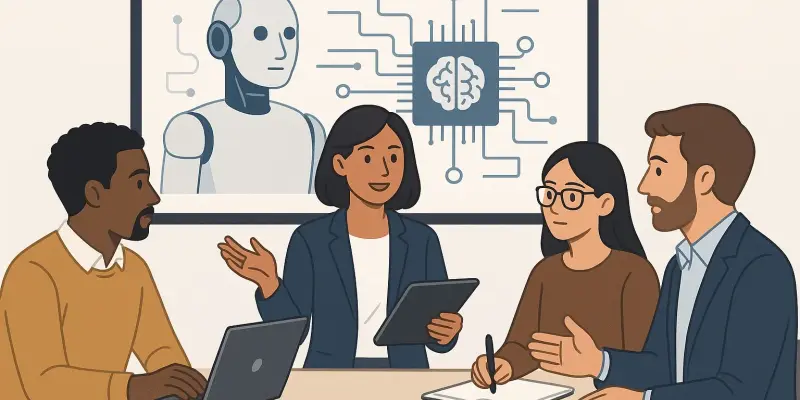
Meetings are a core element within business operations, yet they often come with their own set of challenges, including inefficient processes, time-consuming manual note-taking, and communication gaps. In recent years, the rapid development of artificial intelligence (AI) technologies has revolutionized these dynamics by introducing AI meeting assistants that fundamentally change how meetings are managed. These intelligent assistants leverage sophisticated algorithms to facilitate seamless discussions, ensuring comprehensive documentation and enhancing productivity. By automating key tasks such as real-time transcription and summarization, AI assistants offer a robust solution that enables participants to focus entirely on exchanging ideas and collaborating effectively. As reliance on remote and hybrid meeting formats continues to rise, the transformative impact of AI meeting tools is applicable across diverse sectors and professions. Their integration not only streamlines communication but also creates an inclusive environment that caters to individuals who may miss meetings due to scheduling conflicts or time zone differences.
The Role and Functionality of AI Meeting Assistants
AI meeting assistants serve as a digital facilitator, optimizing meetings to achieve greater productivity and efficiency. They are equipped with cutting-edge features like automated note generation, real-time captions, and direct action item tracking. Such technologies provide streamlined solutions that minimize the need for manual input and effort during meetings. Rather than getting bogged down by administrative duties, meeting participants can instead devote their attention to meaningful dialogue and strategic planning. AI-powered tools seamlessly capture every detail, ensuring no information is lost while eliminating the discrepancies that might occur through human error. The accessibility enabled by these assistants translates to more dynamic collaboration among team members, irrespective of their physical locations. Furthermore, the intuitive interface of these tools ensures ease of use, allowing team members to integrate them effortlessly into existing platforms such as Zoom, Microsoft Teams, or Google Meet. This combination of functionalities not only facilitates the process of preparation and execution during meetings but also enhances post-meeting productivity and engagement. These AI meeting assistants have advanced to incorporate language processing capabilities that can transcribe discussions in over 100 different languages, presenting summaries that make reviewing important topics more efficient. By organizing meetings with structured timelines and follow-up reminders, they bridge the gap between initial ideas presented and subsequent actions that need to be taken. Overall consistency and precision offered by AI-driven tools help maintain accountability among stakeholders, ensuring every participant remains aware of their responsibilities. These tools have proven invaluable in the corporate setting by mitigating administrative burdens while inspiring constructive interactions that drive results. As AI technology continues to evolve within the landscape of remote work, it becomes increasingly essential in bridging communication gaps that exist between geographically dispersed teams. The unique value proposition of these assistants lies in their ability to transform fragmented dialogue into structured action, contributing to more efficient team collaboration.
Diverse Applications and Industry Impact
The significance of AI meeting assistants transcends conventional office settings and extends into varied sectors, including education, healthcare, sales, and human resources. For instance, HR specialists utilize these tools to streamline recruitment processes by documenting candidate interviews in real-time and generating insightful summaries to assist in decision-making. Similarly, educators employ AI assistance to record detailed session notes, which encapsulate every aspect discussed, aiding future reference and knowledge dissemination within academic institutions. The ability to capture, organize, and share valuable information ensures that key insights remain accessible across roles, enriching the decision-making process and information flow across teams.
Healthcare professionals benefit from these assistants by ensuring accurate record-keeping and dissemination of vital patient data. This facilitates improved collaboration during interdisciplinary team meetings and enhances patient-centered care approaches. Sales and marketing teams leverage AI meeting assistants to elevate client engagement, keeping detailed accounts of strategic discussions and presentations pivotal to nurturing partnerships. Using AI to retain clarity offers workers the advantage of revisiting critical information, empowering them with both accuracy and the assurance that no topic is overlooked in the complex landscape of client relationships. The proliferation of AI meeting assistants across various industries underscores their effectiveness in facilitating clear communication, accurate record-keeping, and seamless knowledge sharing. These tools promise a future where technology enables greater connection and understanding within organizations, driving the transformation of collaborative efforts toward successful outcomes.
Future Prospects and Integration Strategies
As technological advancements continue to foster innovation, AI meeting assistants will undoubtedly evolve, incorporating more advanced features and capabilities. These assistants will increasingly utilize AI algorithms for predictive analysis and trend identification, providing valuable insights that can guide strategic decision-making. This trajectory promises to enhance personalization, tailoring solutions to meet the unique demands and changing dynamics of individual organizations and industries. Effective integration of AI tools into business processes necessitates careful selection and planning, ensuring compatibility with existing systems while striving toward optimized performance and productivity.
Organizations should consider deploying AI assistants that cater to their specific requirements and align with their operational objectives. Integration strategies can include syncing applications with existing virtual platforms, setting clear objectives for meetings, and thoroughly training employees on utilizing these technologies to their full potential. The profound implications of AI meeting assistants in shaping how meetings are conducted cannot be understated, underscoring the need for business leaders to recognize their value and integrate them into workflow strategies efficiently. An investment in these tools not only signifies a commitment to embracing technological advancements but also reflects a focus on driving transformational change within organizational dynamics. Businesses will benefit immensely from tapping into the potential that AI offers, building infrastructures that support both modern communication and comprehensive collaborative efforts.
Empowering Business Efficiency
Meetings are a crucial part of business operations, but they often come with challenges like inefficient processes, time-consuming manual note-taking, and communication gaps. In recent years, AI technology has significantly reshaped these dynamics with the introduction of AI meeting assistants, revolutionizing the way meetings are managed. These intelligent assistants utilize advanced algorithms to facilitate seamless discussions, ensuring thorough documentation and enhancing overall productivity. By automating critical tasks like real-time transcription and summarization, AI assistants offer a strong solution that enables participants to focus on exchanging ideas and collaborating effectively. As the trend of remote and hybrid meetings grows, the transformative impact of AI tools applies to various sectors and professions. Their integration not only streamlines communication but also fosters an inclusive setting for individuals who may miss meetings due to scheduling conflicts or time zone differences. With AI, meetings become more efficient and accessible, promoting better engagement for all involved.