

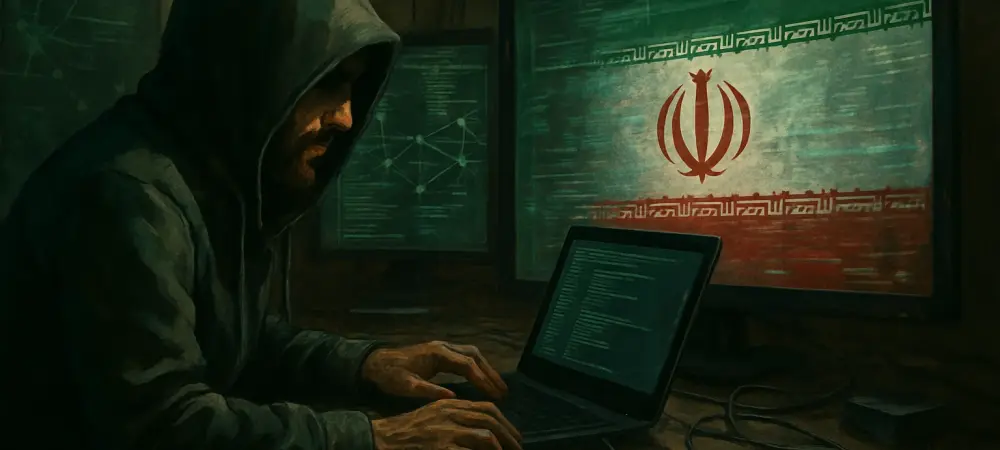
Introduction to Iranian Cyber Threats
A staggering revelation from recent cybersecurity reports indicates that state-sponsored cyber espionage from Iran has surged by over 40% in frequency over the past two years, positioning it as a formidable player in the global threat landscape. This escalation underscores a critical need to dissect and understand the tactics employed by Iranian threat actors, especially as their operations increasingly target high-value individuals and institutions integral to international policy-making. The significance of these cyber activities extends beyond mere data breaches, influencing geopolitical dynamics and challenging global cybersecurity frameworks. This analysis delves into the latest trends in Iranian cyber espionage, spotlighting specific tactics and groups such as UNK_SmudgedSerpent, while exploring the broader implications for defense strategies and international policy responses.
Evolution of Iranian Cyber Espionage Strategies
Growth and Sophistication of Attacks
Recent data from leading cybersecurity firms reveal a marked increase in the complexity of Iranian cyber operations, with a notable shift toward precision and customization. Reports highlight that between June and August of this year, Iranian threat actors transitioned from broad phishing attempts to highly targeted spear-phishing campaigns, achieving a success rate of nearly 25% in compromising high-value targets. This represents a significant leap from previous years, indicating a refined approach to victim selection and attack execution.
The technical prowess of these operations has also evolved, with attackers leveraging advanced social engineering to craft convincing lures. Cybersecurity analyses point to a doubling in the use of personalized content in phishing emails over the last 12 months, demonstrating an acute understanding of targets’ professional and personal contexts. Such sophistication signals a strategic intent to penetrate well-guarded networks, often focusing on individuals with access to sensitive geopolitical insights.
This trend of increasing intricacy is further supported by industry observations of Iranian actors adopting multi-layered attack chains. These often combine initial deception with secondary exploitation methods, ensuring higher chances of success even against cautious targets. The growing adaptability in these methods poses a substantial challenge to traditional cybersecurity defenses, necessitating a deeper dive into specific case studies for clearer insights.
Real-World Examples of Tactical Deployment
A prominent example of these evolved tactics is seen in the activities of UNK_SmudgedSerpent, an Iranian-aligned group targeting US think tanks and policy experts. Their recent campaign involved impersonating respected figures such as Suzanne Maloney and Patrick Clawson, using meticulously crafted emails with subtle misspellings in Gmail addresses to deceive recipients. These emails often proposed collaboration on topics tied to Iranian geopolitical affairs, exploiting the trust associated with familiar names.
Technically, the group employed malicious URLs disguised as links to legitimate platforms like OnlyOffice or Microsoft Teams, redirecting victims to phishing pages mimicking Microsoft 365 login portals. These pages were tailored with the victim’s email address and employer logo, enhancing their authenticity and increasing the likelihood of credential theft. Such attention to detail in phishing design marks a departure from generic templates, showcasing a calculated effort to breach specific targets.
When initial attempts failed, UNK_SmudgedSerpent resorted to secondary tactics, sending decoy documents and zip files containing installers for remote monitoring and management (RMM) software. This approach, though less common among Iranian groups, mirrors tactics associated with known actors like MuddyWater, highlighting a blend of innovation and borrowed strategies. These real-world deployments illustrate the persistent and adaptive nature of Iranian cyber threats, demanding robust countermeasures from affected sectors.
Insights from Cybersecurity Experts
Industry leaders have weighed in on the critical role of attribution in tackling Iranian advanced persistent threats (APTs). Saher Naumann, a senior threat researcher at a prominent cybersecurity firm, emphasizes that identifying the actors behind these campaigns is not just an academic exercise but a cornerstone of intelligence-driven security. Understanding the origin and intent of attacks enables organizations to anticipate similar threats and allocate resources effectively, fortifying their defenses against state-sponsored espionage.
Further analysis reveals a complex web of overlapping tactics, techniques, and procedures (TTPs) among Iranian groups such as TA453 (Charming Kitten), TA455 (Smoke Sandstorm), and TA450 (MuddyWater). Experts note similarities in phishing message tone and infrastructure use across these entities, suggesting potential collaboration or shared resources within Iran’s cyber ecosystem. This convergence complicates efforts to isolate and counter specific groups, as shared methodologies blur distinct identities.
The challenge of defending against these evolving threats is a recurring theme in expert discussions. Many stress the importance of adopting proactive, intelligence-led approaches over reactive measures. Staying ahead of Iranian APTs requires continuous monitoring of TTPs and rapid adaptation of security protocols to address emerging patterns, a task made difficult by the fluidity and innovation displayed in recent campaigns. Such insights underscore the need for a dynamic and collaborative cybersecurity posture.
Future Outlook for Iranian Cyber Operations
Looking ahead, Iranian cyber espionage is likely to see increased collaboration among APT groups, potentially leading to more unified and potent attack frameworks. The sharing of infrastructure and malware could streamline operations, making threats more difficult to predict and mitigate. While this trend might improve attribution efforts by revealing commonalities, it also risks creating hybrid groups with enhanced capabilities, challenging existing defense mechanisms.
The adoption of emerging technologies by Iranian actors is another area of concern, with possibilities including the integration of artificial intelligence for more convincing social engineering or automated attack processes. Such advancements could amplify the scale and impact of espionage efforts, particularly against critical infrastructure and policy influencers. Balancing the benefits of improved detection with the challenges of sophisticated tools will be crucial for cybersecurity stakeholders.
On a broader scale, these developments carry significant implications for international cybersecurity and US policy toward Iran. As cyber operations influence diplomatic and strategic decisions, there is a pressing need for organizations to adapt to state-sponsored threats through enhanced threat intelligence and cross-border cooperation. Policymakers must prioritize frameworks that address both the technical and geopolitical dimensions of these challenges, ensuring a comprehensive response to an ever-evolving landscape.
Conclusion: Addressing the Iranian Cyber Challenge
Reflecting on the past, it has become evident that Iranian cyber espionage tactics, exemplified by UNK_SmudgedSerpent’s targeted campaigns, showcase a remarkable level of sophistication and adaptability in their approach to high-value targets. The intricate phishing strategies and multi-stage attack chains employed by these actors highlight a persistent threat to global security frameworks. Moving forward, actionable steps include the urgent enhancement of cybersecurity measures through advanced threat intelligence, ensuring defenses keep pace with evolving methodologies. International collaboration emerges as a vital component, with a focus on sharing insights and resources to counter state-sponsored risks. A renewed emphasis on attribution stands as a key consideration, guiding organizations and policymakers to anticipate future challenges and fortify their strategic responses against such dynamic adversaries.