

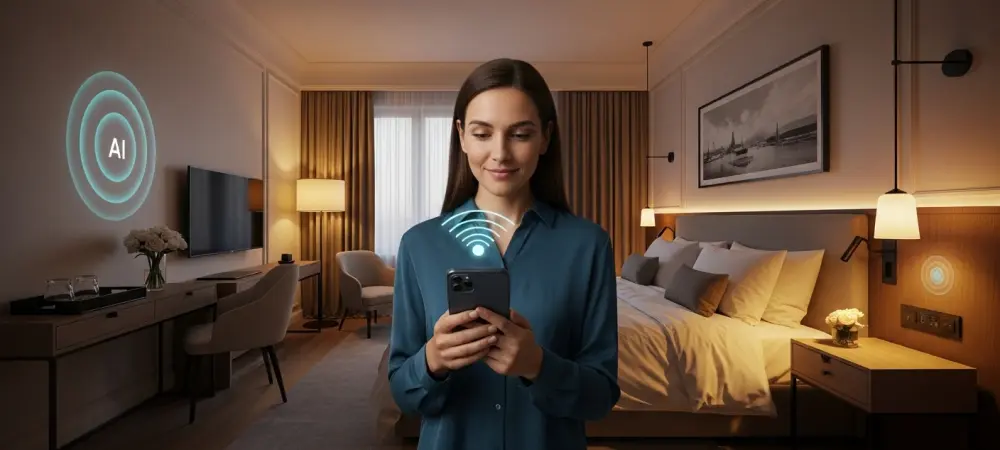
The traditional concierge desk and manual booking spreadsheets have transitioned from operational staples to relics of a bygone era in the wake of a massive technological shift. This transition is most visible in the recent executive restructuring at Choice Hotels, where the appointment of Tony Pallas as Chief Technology Officer signaled a decisive pivot toward a machine-led future. By placing a digital architect at the helm of operations, the hospitality sector is moving beyond simple automation into a period of deep, AI-integrated infrastructure. This shift is not merely about replacing human tasks but about redefining the very nature of service and profitability in an increasingly crowded global market. The integration of artificial intelligence represents the culmination of years of digital refinement, moving from basic data collection to sophisticated decision-making. Current developments focus on creating a “central nervous system” for hotels, where every interaction is recorded, analyzed, and used to optimize future performance. This framework allows brands to scale their operations with unprecedented precision, ensuring that a single guest’s preference in one city can inform their experience across the globe. By treating technology as a foundational element rather than an elective upgrade, the industry is preparing for a landscape where speed and personalization are the only remaining competitive advantages.
The Evolution of Digital Infrastructure in Modern Hospitality
Modern hospitality infrastructure has undergone a radical transformation, moving away from fragmented, site-specific hardware toward unified cloud ecosystems. Historically, individual hotel properties operated as digital islands, maintaining separate databases for guest history, inventory, and staff scheduling. This lack of cohesion made enterprise-level data analysis nearly impossible and slowed the adoption of emerging tools. The current trend toward modernization has replaced these silos with integrated platforms that allow for real-time data synchronization across thousands of global locations, creating a truly interconnected network.
The relevance of this shift in the broader technological landscape cannot be overstated, as it mirrors the “agentic” revolution seen in finance and logistics. For hospitality providers, this evolution is not just about staying current; it is about survival in an economy where guests demand instantaneous responses and seamless digital experiences. As these systems mature, they provide the necessary stability to support advanced machine learning models. This transition from “legacy tech” to “living systems” ensures that hotels can adapt to shifting market conditions with the agility of a software company rather than the rigidity of traditional real estate.
Key Technological Foundations of the AI Transformation
Cloud-Native Standardization via Amazon Web Services
The partnership with Amazon Web Services (AWS) serves as the backbone of this transformation by providing a scalable environment for data consolidation. By moving core operations to the cloud, hospitality brands have eliminated the physical limitations of on-site servers, allowing for much faster processing of guest information. This standardization ensures that every property, regardless of size, has access to the same high-level computational tools and security protocols. The result is a more resilient infrastructure that can handle the massive influx of data generated by modern booking platforms and mobile interactions.
Beyond mere storage, the significance of AWS lies in its ability to power complex predictive models that forecast demand and pricing. These systems analyze historical patterns and real-time market data to suggest optimal rates, ensuring that franchisees maximize their revenue without manual intervention. This technological foundation has transformed data from a passive record into an active driver of business strategy. Consequently, the reliance on cloud-native environments has become the industry standard, providing the reliability required to run mission-critical applications 24 hours a day.
Intelligent Agent Integration Through Salesforce Collaboration
Deepening the technological stack involves a strategic collaboration with Salesforce to deploy intelligent agents that manage complex workflows. These agents are far more sophisticated than the simple chatbots of the past, as they can interpret intent and handle multi-step tasks across different departments. By integrating these tools into the enterprise architecture, hospitality companies can automate everything from guest inquiries to internal corporate requests. This functionality bridges the gap between high-level data strategy and the daily realities of property management, making sophisticated technology accessible to non-technical staff.
The performance of these intelligent agents is rooted in their ability to leverage natural language processing and institutional knowledge to solve problems in real time. For example, an agent can automatically update a guest’s profile, suggest a room upgrade based on loyalty status, and notify the cleaning staff—all without human oversight. This level of technical synergy reduces the administrative burden on hotel associates, allowing them to focus on high-touch service. Such implementations demonstrate how AI is being used to humanize the guest experience by removing the friction points that typically slow down hotel operations.
Emerging Trends and the Competitive Landscape of AI
The hospitality sector is currently witnessing a massive technological arms race as major players vie for digital dominance. While Choice Hotels focuses on cloud-native infrastructure and franchisee efficiency, competitors like Marriott International are pursuing a multi-pillar strategy aimed at associates and owners alike. These brands are no longer just competing on room quality or location; they are competing on the quality of their algorithms. This shift in industry behavior indicates that data processing capabilities have become a core metric of brand value, influencing everything from franchise agreements to investor confidence.
Hilton has taken a different route by establishing deep partnerships with AI developers like Anthropic to revolutionize the trip-planning phase. Their focus on consumer-facing AI planners highlights a trend toward hyper-personalization, where the technology acts as a digital travel agent for the guest. This competitive landscape is characterized by a rapid move from experimental pilots to full-scale deployments. As these innovations become more commonplace, the standard for what constitutes a “modern” hotel is being rewritten, forcing smaller independent operators to seek out technology partners to maintain their market relevance.
Real-World Applications and Value for Stakeholders
Tangible evidence of this AI transformation can be found in specialized tools like Charlie, a virtual teammate designed to assist hotel associates. Charlie serves as a centralized hub for institutional knowledge, providing instant answers to procedural questions that would otherwise require manual research. This implementation has proven particularly valuable for onboarding new staff in a high-turnover industry, ensuring that service standards remain consistent. By automating these internal queries, companies are effectively reducing the training gap and improving the day-to-day work environment for employees across the network.
Another notable use case is the EasyBid platform, which utilizes AI to streamline the process of responding to corporate requests for proposals. In the past, managing these bids was a time-consuming manual task that often led to missed opportunities due to slow response times. Since the deployment of AI-driven bidding, response speeds have improved by roughly 30%, allowing owners to capture a larger share of the lucrative corporate travel market. This direct impact on the bottom line illustrates how AI provides concrete financial value for stakeholders, transforming administrative efficiency into a measurable increase in revenue and market share.
Navigating the Obstacles of Technological Integration
The road to complete AI integration is not without significant hurdles, particularly concerning the high cost of upgrading older property locations. Many franchised hotels still rely on aging hardware that lacks the connectivity required for advanced AI tools, creating a digital divide within the same brand. Overcoming this technical debt requires substantial capital investment and a clear incentive for individual owners to modernize. Furthermore, the process of training staff to work alongside intelligent agents can be slow, as it requires a fundamental shift in traditional hospitality culture and workflows.
Regulatory challenges and data privacy concerns also present ongoing obstacles to widespread adoption. As AI models become more adept at predicting guest behavior, they must navigate a complex landscape of global data protection laws that vary significantly by region. Ensuring that guest information is handled ethically while still providing a personalized experience is a delicate balancing act. Companies are continuously working to build “privacy-first” AI models that mask sensitive information without compromising the utility of the insights. Mitigating these risks is essential for maintaining the trust of both the guests and the regulatory bodies.
The Strategic Road Ahead for Automated Hospitality
Looking forward, the next phase of development will likely center on autonomous property management and hyper-personalized guest stays. We are moving toward a standard where technology anticipates needs before they are voiced, such as adjusting room temperatures based on a guest’s previous habits or suggesting local activities in real time. These future breakthroughs will likely involve more biometric integration and voice-controlled environments, making the stay as intuitive as possible. The goal is to reach a level of “invisible hospitality” where the technology handles all logistics while the guest experiences only the benefits.
The long-term impact of this transformation will be a complete restructuring of the hotel labor model. As machines take over routine tasks like check-ins and inventory management, the role of human employees will shift toward hospitality-specific emotional labor and problem-solving. This will lead to a more efficient use of human capital, where staff are empowered by data rather than burdened by it. Eventually, the most successful brands will be those that strike a perfect balance between high-tech efficiency and the high-touch human connection that remains at the heart of the travel experience.
Conclusion: A New Standard for the Hospitality Sector
The transformation of the hospitality sector through artificial intelligence represented a fundamental shift in how global brands managed their assets and guest relations. The industry successfully moved beyond experimental phases and into a period of stabilized, high-impact deployment. This change demonstrated that technical infrastructure was just as important as physical property in the modern travel economy. Decision-makers recognized that the path to profitability was paved with cloud-native standardization and intelligent agent integration. By prioritizing these foundations, the sector reached a new level of operational maturity that benefited both the franchisee and the traveler.
Ultimately, the sector set a new precedent for how legacy industries could adopt emerging technologies to maintain a competitive edge. The implementation of AI-driven tools proved that automation did not have to come at the expense of personalized service. Organizations that embraced this change saw tangible improvements in their response times and overall revenue capture. The resulting digital ecosystem provided a blueprint for the future, ensuring that the hospitality industry stayed relevant in an increasingly automated world. The legacy of this transformation was a more resilient, efficient, and guest-centric global tourism market.