

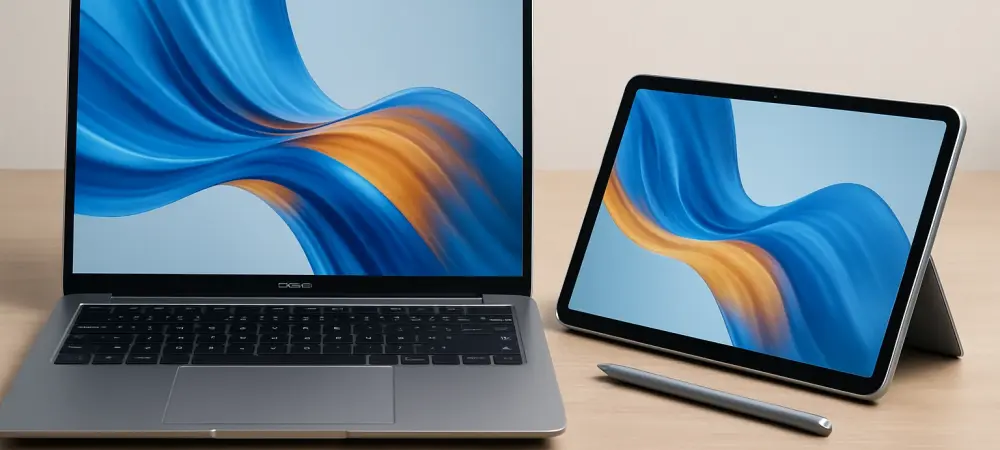
Imagine a tech landscape where premium devices blend cutting-edge performance with irresistible value, capturing the attention of enthusiasts and professionals alike across the United Kingdom. Honor, a prominent Chinese tech giant, has recently launched two flagship products in the UK market: the MagicBook Art 14 and the MagicPad 3. These devices promise to redefine user expectations with high-end specifications and bundled accessories. This roundup dives into a collection of opinions, insights, and reviews from various industry sources and tech experts to gauge the impact of these launches. The purpose is to present a balanced view of how these gadgets are perceived, comparing differing perspectives on their features, pricing, and market positioning.
Diverse Perspectives on Honor’s New Tech Lineup
MagicBook Art 14: Powerhouse Performance or Premium Overreach?
A significant number of tech analysts have praised the MagicBook Art 14 for its robust hardware, particularly the Intel Core Ultra 7 processor paired with 32GB RAM and a 14.6-inch OLED display featuring a 120Hz refresh rate. Many highlight the stunning visual clarity and peak brightness of 1,600 nits as ideal for creative professionals who demand precision in color and detail. The inclusion of a free wireless mouse at a price point of GBP 1,499.99 has also been noted as a thoughtful addition to enhance user experience.
However, not all feedback is unanimously positive. Some industry observers point out that the single color option, Emerald Green, might limit appeal for consumers seeking variety in aesthetics. Additionally, there’s a split opinion on whether the premium pricing aligns with the crowded laptop market, where competitors offer similar specs at lower costs. A few reviewers suggest that while the 10-hour battery life and fast charging are impressive, they may not justify the cost for budget-conscious buyers.
Another angle comes from user-focused blogs, which emphasize the practical connectivity options like Thunderbolt 4 and HDMI 2.1. These features are seen as a major plus for professionals needing seamless integration with other devices. Yet, there’s a lingering concern about whether the high-end specs cater too narrowly to a niche audience, potentially overlooking casual users who prioritize affordability over performance.
MagicPad 3: Versatile Tablet or Tough Competition?
Turning to the MagicPad 3, priced at GBP 599.99 in the UK, opinions gathered from tech forums commend its 13.3-inch 3.2K LCD screen with a 165Hz refresh rate, powered by the Snapdragon 8 Gen 3 chip. Many sources describe it as a strong contender for multitasking professionals, especially with the bundled Smart Touch Keyboard and Magic Pencil 3 stylus. The 12,450mAh battery is frequently mentioned as a standout for long usage sessions, appealing to media enthusiasts.
Contrasting views emerge when discussing its competitive edge. Certain analysts argue that while the tablet’s specs are top-tier, its price places it in direct competition with established brands that dominate the high-end segment. Some express skepticism about whether Honor can carve out a significant share given the loyalty many users have toward other tablet ecosystems. The regional pricing disparity, with a starting cost of CNY 2,999 in China, also sparks debate about perceived value in different markets.
A third perspective from productivity-focused reviewers highlights the device’s dual-camera setup and Android 15-based MagicOS 9.0.1 as features that blend entertainment with work efficiency. However, there’s a cautionary note that the tablet’s appeal might be limited to those already invested in Honor’s ecosystem, as cross-platform compatibility remains a question mark for some potential buyers.
Pricing Strategies and Market Reception in the UK
Honor’s approach to pricing and bundled perks in the UK has elicited a range of reactions. Many industry commentators appreciate the strategy of including accessories at no extra cost, viewing it as a smart move to boost perceived value, especially with the MagicBook’s wireless mouse and the MagicPad’s keyboard and stylus. This tactic is often cited as a way to stand out in a saturated market where differentiation is key.
On the flip side, there’s criticism regarding the pricing variations across regions. Several sources point out that the MagicPad 3’s lower cost in China raises questions about fairness and accessibility for UK consumers who pay a higher rate. Some speculate that this could lead to dissatisfaction among buyers who feel they’re missing out on better deals available elsewhere, potentially impacting brand loyalty.
A balanced take from market strategists suggests that Honor’s focus on premium positioning with high-refresh-rate displays and connectivity options like Wi-Fi 7 might justify the costs for tech-savvy consumers. Yet, there’s an underlying concern that this approach risks alienating a broader audience that prioritizes affordability. The debate continues on whether Honor’s value-driven bundles will outweigh these pricing discrepancies in shaping consumer trust.
Honor’s Premium Push: Industry Trends and Consumer Expectations
Delving into Honor’s broader strategy, numerous tech commentators see the company’s emphasis on premium specs as aligning with current industry trends toward high-performance devices. The integration of spatial audio and fast-charging capabilities across both products is often mentioned as a forward-thinking move to meet modern user demands. This direction is viewed as a clear intent to position Honor among top-tier brands.
Differing opinions arise when considering the long-term impact of this premium focus. Some industry watchers warn that targeting only high-end users could narrow Honor’s market reach, especially in price-sensitive regions like the UK where economic factors influence purchasing decisions. They argue that a more diverse product range might better capture varied consumer segments over time.
Another viewpoint from digital trend analysts highlights how Honor’s bundled accessories and connectivity features could reshape buyer expectations, setting a new standard for value in premium tech. However, there’s a cautious note that maintaining this momentum will require consistent innovation to avoid being overshadowed by competitors who adapt quickly. The consensus leans toward Honor needing to balance exclusivity with accessibility to sustain its growth trajectory.
Key Takeaways from the UK Tech Launch Discussion
Reflecting on the insights gathered, it became evident that Honor’s launch of the MagicBook Art 14 and MagicPad 3 in the UK sparked a spectrum of reactions, from admiration for their cutting-edge specs to concerns over pricing and market fit. Experts and users alike recognized the impressive hardware, such as the OLED display and powerful processors, as well as the strategic inclusion of free accessories that added value. However, debates around regional pricing differences and the premium focus revealed a divide in how Honor’s approach was perceived across different consumer groups.
Looking back, the discussions underscored a pivotal moment for Honor as it aimed to establish a foothold in the competitive tech landscape. For those intrigued by these devices, a next step could be to explore hands-on reviews or test the products at local retailers to assess personal fit. Additionally, keeping an eye on Honor’s future releases and pricing adjustments might offer clarity on whether the brand will adapt to broader market needs. This roundup serves as a starting point, encouraging further exploration into how such launches could influence tech standards moving forward.