

Dominic Jainy is a seasoned IT professional with a deep specialization in artificial intelligence, machine learning, and blockchain. Beyond his core technical expertise, Dominic has a keen eye for how hardware integration can streamline professional workflows. His fascination with the intersection of utility and innovation makes him the perfect expert to analyze the Honor Choice MouseBuds Pro—a device that challenges the traditional boundaries between computer peripherals and personal audio.
In this conversation, we explore the design philosophy behind a mouse that doubles as an earbud charging case, the practical performance of open-fit audio in professional settings, and the logistical realities of managing a shared battery life. We also delve into the evolving “hidden audio” category and how such hybrid devices might redefine the workstation of the future.
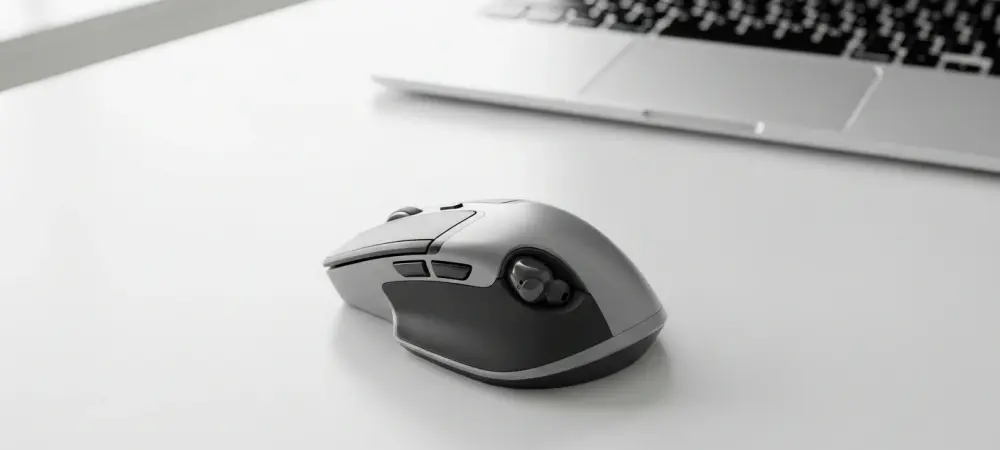
The MouseBuds Pro features a “skin-like coating” and quiet buttons for all-day use. How does this tactile design impact long-term ergonomic comfort for office workers, and what mechanical challenges arise when hollowing out a mouse to store and charge wireless earbuds?
The use of an excimer “skin-like coating” is a deliberate move to prioritize tactile comfort, which is essential for office workers spending eight or more hours at a desk. This material helps maintain “enduring freshness,” preventing that sticky or slick feeling that can develop on cheap plastic surfaces during long shifts. Mechanically, however, hollowing out the chassis to accommodate two earbuds is a significant engineering hurdle. You have to ensure the structural integrity of the mouse remains intact so it doesn’t feel flimsy or hollow under the palm, while also carving out enough internal volume for the charging pins and the buds themselves. If the weight distribution is off because of these internal cavities, it could lead to hand fatigue, meaning the design must perfectly balance internal storage with external ergonomic support.
These open-fit earbuds include active noise cancellation and dynamic drivers despite their small size. How effective is ANC in a tip-less design during a loud office call, and what are the specific audio quality trade-offs when earbuds are engineered as a secondary feature to a computer peripheral?
Implementing Active Noise Cancellation in an open-fit, tip-less design is notoriously difficult because you lack the passive physical seal that standard silicone tips provide. In a loud office, these dynamic drivers have to work double-time to cancel out ambient noise, and the effectiveness is often lower than what you’d find in dedicated premium audio gear. Since these earbuds are treated as a secondary feature to the mouse, the main trade-off is often in the richness of the sound profile, such as frequency response and impedance. While they provide the convenience of being “already paired” and ready for a quick call, they are built for utility rather than high-fidelity music sessions. You’re essentially trading acoustic depth for the ability to jump into a meeting the second your mouse clicks over to a video link.
With a reported 30-day total battery life for the package, how should users manage charging cycles between the mouse and the buds? What power-sharing logic is required to ensure the earbuds remain topped off without accidentally draining the mouse during a critical workday?
Managing a 30-day battery life for a hybrid device requires a smart power-sharing logic that prioritizes the mouse’s primary function. The internal battery must act as a reservoir, trickle-charging the earbuds whenever they are docked so they stay topped off for that “moment’s notice” call. Users should treat the mouse as their primary charging hub, perhaps plugging it in once a month to maintain that 30-day cycle, but they must be mindful that heavy earbud use will deplete that reservoir faster. The engineering must include a fail-safe where the charging of the buds throttles or stops if the mouse battery hits a critical low, ensuring you aren’t left with a dead cursor just because you listened to a long podcast. It’s a delicate balance of ensuring the “audio extra” doesn’t cannibalize the productivity of the main tool.
For professionals working in cafes or open offices, what are the etiquette and efficiency benefits of having pre-paired earbuds immediately accessible? How does this 2-in-1 approach change the workflow for someone who frequently transitions between focused data entry and private voice notes?
The primary benefit here is the elimination of “tech friction”—the seconds spent rummaging through a bag to find a separate charging case can disrupt a flow state. Having the buds stored inside the mouse allows for a seamless transition from focused data entry to a private voice note or a sudden meeting without looking like you’re struggling with your gear. In a cafe setting, it promotes better etiquette by allowing the user to quickly go “private” with their audio rather than playing it through laptop speakers, which is a common annoyance for others. This 2-in-1 approach streamlines the physical workspace, reducing the number of individual items cluttering a desk and ensuring that your communication tools are literally under your hand at all times. It turns the mouse from a simple pointer into a central communication hub.
At a price point of approximately $100, how does this hybrid device compete with high-end standalone productivity mice? Looking at previous niche tech like the Nokia 5710, why does the “hidden audio” category continue to resurface despite concerns that the components may not match specialized standalone gear?
At the £79.99 or roughly $100 price point, this device is competing with some very established standalone productivity mice that offer more advanced sensors or programmable buttons. The “hidden audio” category, much like the Nokia 5710 XpressAudio before it, persists because there is a segment of the market that values consolidation over peak performance in every single component. Even if the audio quality isn’t “top-tier,” the sheer convenience of having “some earbuds” versus “no earbuds” in a pinch is a powerful selling point. People are often willing to accept “good enough” audio if it means they have one less thing to charge, carry, or lose. It’s a niche that thrives on the idea of the “Swiss Army Knife” for the digital age, where the sum of the parts is more attractive than the individual specialized tools.
What is your forecast for hybrid peripheral devices?
I believe we are entering an era where “single-purpose” hardware will start to feel inefficient for the modern mobile professional. My forecast is that we will see a surge in “converged peripherals,” where items like keyboards might house wireless charging pads for phones, or mice will integrate more biometric security and communication tools like these earbuds. As long as manufacturers can keep the price around that $100 mark without sacrificing the core ergonomics, consumers will continue to gravitate toward gear that simplifies their everyday carry. The future isn’t just about making devices faster; it’s about making them more integrated into the physical flow of our work.