

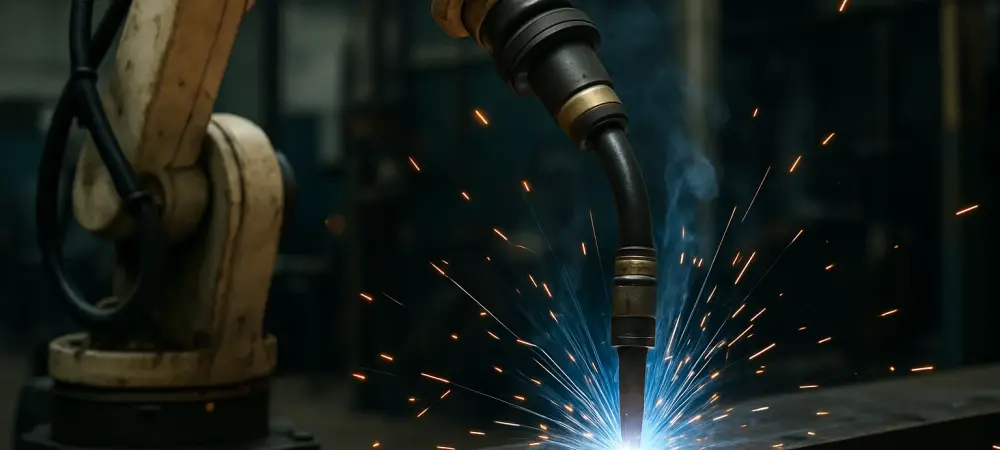
In the fast-evolving landscape of industrial manufacturing, the demand for automation solutions that deliver both pinpoint accuracy and seamless operation has never been higher, especially in high-stakes sectors like automotive and semiconductor production where precision is paramount. Welding, a critical process in these industries, often faces challenges such as inconsistent quality, operational downtime, and the complexity of integrating automated systems into existing workflows. Amid this backdrop, HIWIN has emerged as a key player with its advanced welding robot systems, designed to tackle these issues head-on. These robots promise not only exceptional precision but also a user-friendly experience that reduces the barriers to adopting automation. By blending cutting-edge hardware with intuitive software, HIWIN offers a platform that meets the rigorous demands of modern production lines, ensuring consistent results while minimizing maintenance and operational hiccups. This innovative approach positions the company as a leader in addressing real-world manufacturing needs with practical, high-performing technology.
Revolutionizing Precision in Automated Welding
Achieving flawless welds in industrial settings requires an extraordinary level of accuracy, particularly when even the slightest deviation can result in costly assembly errors or product rejections in demanding fields like automotive manufacturing. HIWIN’s welding robots stand out with an absolute accuracy of ±0.05 mm, a specification that sets a high standard for repeatability and reliability. This precision is not just a theoretical benchmark but a practical advantage, ensuring that every weld meets stringent quality requirements without the need for constant oversight. Enhanced by optional features such as laser seam tracking and touch sensors, these robots can dynamically adjust weld paths to compensate for irregular seams or misaligned parts. Such adaptability addresses common challenges like part tolerances and setup inconsistencies, delivering consistent outcomes across diverse applications and significantly reducing the risk of errors in high-throughput environments.
Beyond raw accuracy, the ability to maintain quality over extended production runs is a hallmark of HIWIN’s technology. A robust real-time monitoring system integrated into these robots provides operators with immediate visual data and error alerts, fostering proactive quality control. This capability allows for swift identification and resolution of potential issues before they escalate into larger problems, thereby preserving workflow efficiency. The system’s focus on precision is particularly beneficial in industries where uniformity is non-negotiable, ensuring that each component aligns perfectly with design specifications. By minimizing manual intervention through automated adjustments and continuous feedback, HIWIN’s robots help manufacturers achieve a level of consistency that manual welding often struggles to match. This blend of precision and real-time oversight underscores a commitment to meeting the exacting standards of modern industrial processes, making these robots a vital asset in maintaining competitive production quality.
Minimizing Downtime with Durable Design
One of the most persistent challenges in robotic welding is the inevitable downtime caused by equipment disruptions, such as collisions or torch misalignment, which can halt production and lead to significant losses in both time and materials. HIWIN tackles this issue with a pioneering tool center point (TCP) auto-recovery feature embedded in its welding robots. This innovative mechanism enables the robot to self-correct after interruptions, swiftly resuming operations without the need for extensive manual recalibration. By reducing idle time and preventing incomplete welds that could result in scrap, this feature ensures that production lines keep moving with minimal disruption. The impact of such technology is profound, particularly in high-volume manufacturing environments where every second of uptime translates directly into profitability and efficiency.
Durability forms another cornerstone of HIWIN’s approach to minimizing operational hiccups. Constructed with in-house components, these robots are engineered to withstand the harsh, repetitive conditions typical of industrial welding applications. This design choice not only ensures consistent performance but also extends maintenance intervals, allowing for sustained operation even in demanding single-cell setups or complex multi-axis configurations. The emphasis on robust construction reduces variability in performance, providing manufacturers with a reliable solution that endures over time. Whether deployed in small-scale operations or large, intricate production lines, the resilience of these robots translates into fewer breakdowns and lower long-term costs. By prioritizing both self-correction and enduring build quality, HIWIN offers a system that addresses the practical realities of industrial environments, ensuring that downtime becomes a rare exception rather than a recurring obstacle.
Enhancing Usability and Integration Flexibility
Ease of use is often a critical factor in the adoption of automated systems, as complex interfaces or steep learning curves can deter manufacturers from fully embracing robotic solutions in welding processes. HIWIN addresses this concern with a control software package that comes free of additional licensing fees, streamlining setup and operation through an intuitive teach pendant interface. This centralized control hub allows operators to manage the robot, external axes, and welding power supply effortlessly, reducing the time needed to get systems up and running. The Smart-Weld software further enhances usability by enabling direct adjustments to weld parameters and incorporating features like side-to-side weaving for improved seam filling. With onboard data visualization providing clear insights into process trends, operators can adapt the system to a wide array of tasks, making it a versatile tool for diverse industrial needs.
Integration flexibility is equally vital in ensuring that automated welding systems fit seamlessly into varied production environments, and HIWIN excels in this domain with broad compatibility options. The robots are designed to work with major welding power supply brands, accommodating a range of operational preferences and existing equipment setups. Support for seventh-axis transport units and servo positioning tables further extends their applicability, particularly for handling larger workpieces or complex geometries. This adaptability ensures that manufacturers can incorporate HIWIN’s technology without overhauling their current infrastructure, minimizing both cost and disruption. By focusing on user-friendly operation and versatile integration, the system lowers the barriers to automation adoption, offering a practical solution that aligns with the real-world constraints and requirements of modern manufacturing facilities. This dual emphasis on accessibility and compatibility makes HIWIN’s robots a compelling choice for scaling operations efficiently.
Balancing Automation with Practical Solutions
The rise of automation in welding reflects a broader industry trend toward efficiency and scalability, yet manufacturers often grapple with balancing the benefits of robotic systems against escalating costs and operational complexity in their production lines. HIWIN positions its welding robots as a solution that harmonizes technological advancement with practicality, avoiding the pitfalls of rigid ecosystems or convoluted setups. These systems are engineered to deliver exceptional performance in real-world conditions, prioritizing consistent weld quality and uptime over purely theoretical capabilities. This pragmatic approach resonates with industries seeking to enhance productivity without sacrificing reliability or incurring excessive expenses, ensuring that automation serves as a true enabler rather than a source of additional challenges in high-demand environments.
Acknowledging the irreplaceable adaptability of manual welders, HIWIN’s technology aims to complement human expertise by addressing critical gaps in precision, fatigue, and scalability that often hinder manual processes. The robots provide a platform where automation handles repetitive, high-precision tasks, allowing skilled workers to focus on complex, nuanced aspects of welding that require human judgment. This synergy between machine and operator fosters a balanced workflow, enhancing overall output without diminishing the value of human input. By offering a system that is both accessible and robust, HIWIN caters to the diverse needs of manufacturers, from small operations to large-scale production lines. This thoughtful integration of automation into practical manufacturing contexts reflects a deep understanding of industry dynamics, positioning HIWIN as a forward-thinking contributor to the evolution of industrial welding solutions.
Reflecting on a Path Forward for Industrial Welding
Looking back, HIWIN’s welding robots have proven to be a transformative force in industrial automation, adeptly addressing the intricate challenges of precision and operational efficiency that once plagued high-throughput manufacturing. Their ability to deliver consistent weld quality through tight accuracy margins and adaptive technologies sets a benchmark for reliability in demanding sectors. The reduction of downtime through self-correction features and durable design mitigates the financial and logistical burdens of production interruptions, while intuitive software and flexible integration options simplify the adoption of robotic systems across varied setups. These advancements underscore a pivotal shift toward practical automation solutions that prioritize real-world applicability over mere technical prowess, reshaping how industries approach welding challenges.
Moving forward, the focus for manufacturers should center on leveraging such technologies to further refine production processes, exploring ways to integrate these robots into even more specialized applications. Consideration of ongoing training for operators to maximize the potential of user-friendly interfaces could enhance outcomes, while collaboration with technology providers to customize solutions for niche needs might unlock additional efficiencies. As automation continues to evolve, evaluating how these systems can coexist with human expertise to tackle emerging demands will be crucial. HIWIN’s contributions lay a strong foundation, and the next steps involve building on this progress to drive innovation, ensuring that welding automation remains both a powerful and accessible tool for future industrial growth.