

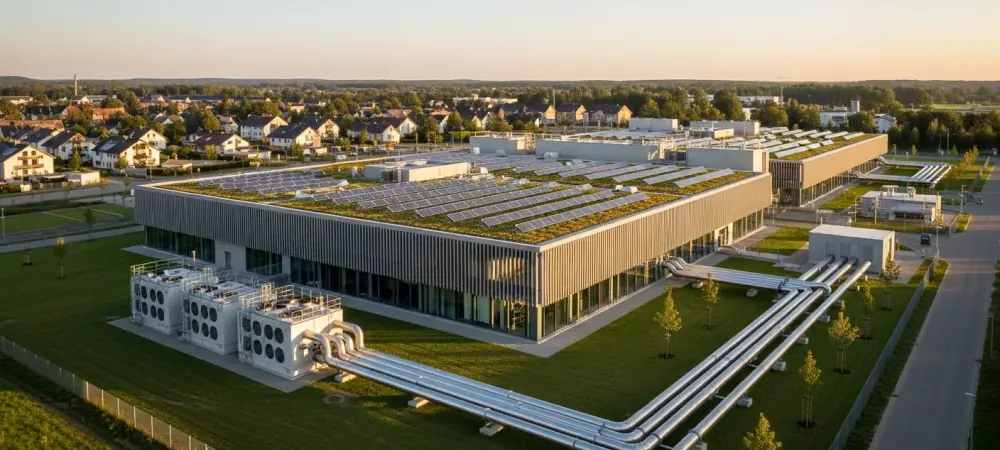
The rapid expansion of global digital infrastructure has reached a critical juncture where traditional sprawling server farms are no longer viable due to escalating land costs and environmental pressures. High-density facilities, like the €40 million site in Lower Saxony, condense massive power into small footprints. This shift reflects a move toward regional digital sovereignty, replacing centralized mega-hubs with localized centers that ensure lower latency and higher performance for the end user.
The Evolution of Compact High-Density Data Infrastructure
Maximizing server counts in limited spaces requires core engineering principles that prioritize operational stability and thermal management. Spatial efficiency is vital for reducing the environmental footprint and land requirements for critical infrastructure. By housing up to 28,000 servers in just 2,000 square feet, these sites minimize physical disruption to local ecosystems while providing immense computational capacity for modern applications.
Core Technical Pillars of Modern Data Facilities
High-Density Server Integration and Spatial Optimization
Modern engineering allows for unprecedented server concentration, which significantly enhances the performance-to-space ratio. This spatial optimization reduces the materials needed for construction and shortens internal cabling, which in turn minimizes signal degradation. Such density is essential for high-performance computing environments where physical proximity between nodes can improve processing speeds.
Sustainable Energy Integration and Heat Recovery Systems
These facilities leverage renewable energy, such as adjacent solar plants, to power operations sustainably. Performance is further optimized through district heating schemes that repurpose waste heat for community use. This technical integration turns a traditional byproduct into a valuable resource, successfully aligning industrial growth with modern environmental stewardship.
Innovative Trends in Regional Connectivity and Resilience
Recent developments include 100Gbps fiber connections to achieve sub-ten-millisecond latency for critical tasks. Trends in digital resilience focus on multi-zone protection and backup power that ensures 72-hour autonomy. Regional data hubs are now decentralizing storage away from traditional major hubs, providing more robust local connectivity and reducing the risk of single-point failures in national networks.
Impact on Mission-Critical Industries and Regional Economies
Industries like finance and healthcare rely on these facilities for high availability and stringent security protocols. These centers empower regional governments to manage digital assets locally, enhancing data sovereignty and compliance. Such infrastructure is essential for modern economic development and the creation of localized digital value in an increasingly connected world.
Navigating the Obstacles of High-Density Deployment
High-density environments must manage extreme heat loads and ensure consistent cooling to prevent hardware failure. Regulatory hurdles and high investment costs often complicate the integration of data centers into municipal heating grids. Ongoing development focuses on advanced security and modular backup systems to mitigate grid failure risks effectively while maintaining high efficiency.
The Future of Decarbonized Data Processing
The trajectory of the industry points toward total carbon neutrality through AI-driven energy management. Innovations in liquid cooling will likely increase server density even further by removing heat more effectively than air-based systems. These technologies represent a marriage of industrial growth and environmental responsibility, shaping a sustainable digital future for years to come.
Conclusion and Final Assessment
The project in the Hanover region established a new benchmark for efficiency and sustainability. This assessment confirmed that high-density centers provided the security and power required by mission-critical sectors. These advancements redefined standards for industrial infrastructure in a digital-first world, offering a clear path for future regional developments.