

Dominic Jainy is a seasoned IT veteran who has seen the evolution of data centers from standard air-cooled racks to the cutting-edge liquid cooling solutions defining the artificial intelligence era. In this discussion, we explore the operational shift from training to inference-led production, the necessity of hands-on infrastructure testing, and how facilities in the London Docklands are integrating quantum computing to meet the extreme density requirements of modern workloads. Jainy’s expertise helps demystify the complexities of high-density computing at the new Digital Realty Innovation Lab, providing a roadmap for enterprises navigating the physical constraints of the digital frontier.
How are modern data centers evolving to handle the immense thermal loads of high-density environments reaching 150kW or more?
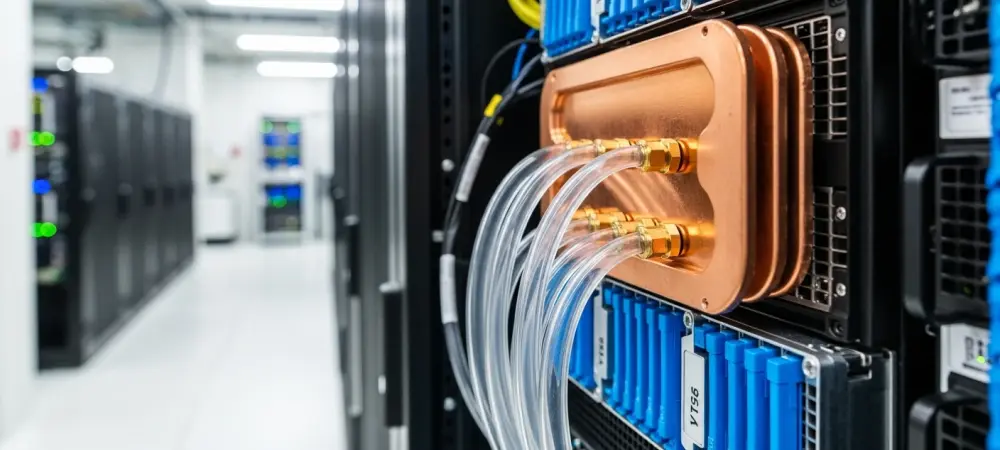
Traditional air cooling simply cannot keep up with the intense heat generated by the latest AI chips, necessitating a pivot toward more aggressive thermal management. In the new 100-square-meter lab at the LHR19 facility, we are pushing densities of 150kW or more, which is truly staggering for such a compact footprint. This is achieved through a combination of direct-to-chip liquid cooling and cold aisle containment on a raised floor. The 1.5MW coolant distribution unit from Innova acts as the heartbeat of this environment, managing thermal loads that would easily overwhelm standard setups. It is a striking sensory experience to stand in a room of only 1,100 square feet and realize that this small space is managing more power than some small towns.
What does the transition from training-led pilots to distributed, inference-led production mean for the physical design of data center infrastructure?
The economics of the industry have fundamentally shifted because the bottleneck is no longer just model capability, but the design of the physical infrastructure. Enterprises are moving away from training-led pilots toward private, hybrid, and interconnected architectures that can actually support production-level AI at scale. In London, this means validating workloads across ServiceFabric and the Private AI Exchange before a single switch is flipped. We are building infrastructure that actually pays back by ensuring that inference-led production is reliable and efficiently distributed. This level of meticulous planning prevents the costly “oops” moments that happen when a pilot fails to translate into a live, high-pressure environment.
Why is the London Docklands area becoming such a critical hub for these advanced liquid cooling testing facilities?
London is one of the densest interconnection points in Europe, making it the perfect proving ground for EMEA enterprises looking to optimize their digital footprint. The LHR19 facility, also known as Cloud House West, spans 138,800 square feet across five stories, providing the massive scale needed for this kind of innovation. Bringing a dedicated lab here gives customers the confidence they need to move forward with complex AI use cases without the risk of full-scale deployment failure. There is a palpable sense of progress in the Docklands as players like Telehouse and Global Switch also launch liquid cooling initiatives. It creates a vibrant ecosystem where the proximity to other facilities allows for a level of connectivity and engineering that is hard to find elsewhere.
How does the inclusion of quantum computing technology in these labs change the way enterprises approach hybrid infrastructure?
Seeing a photonic quantum system like the Orca PT Series running inside a production-grade data center is a fascinating glimpse into the future of hybrid computing. It is no longer just about standard server racks from Oracle; it is about integrating highly specialized hardware into the same environments that enterprises already depend on. This natural fit allows customers to experience how quantum systems operate alongside their existing infrastructure without needing separate, specialized facilities. The lab provides a unique space to test how quantum and AI workloads will interact in a live setting, which is crucial for end-to-end validation. Watching these photonic systems work as part of a larger, interconnected strategy proves that quantum is no longer just a laboratory experiment.
What is your forecast for the adoption of liquid cooling technology across the global data center market?
I expect a rapid expansion of these specialized testing environments, with new labs appearing in major global hubs like Singapore, São Paulo, and Johannesburg by 2026. As the network grows to six locations, high-density computing will shift permanently toward liquid-based solutions as the industry standard. Liquid cooling will move from being a niche requirement for high-performance computing to a baseline standard for any facility hosting modern AI workloads. Data centers that fail to adapt to these thermal demands will quickly find themselves obsolete as the industry gravitates toward the efficiency and power density that only liquid can provide. This global transition is driven by the urgent need for infrastructure that is ready for the next decade of inference-led innovation.